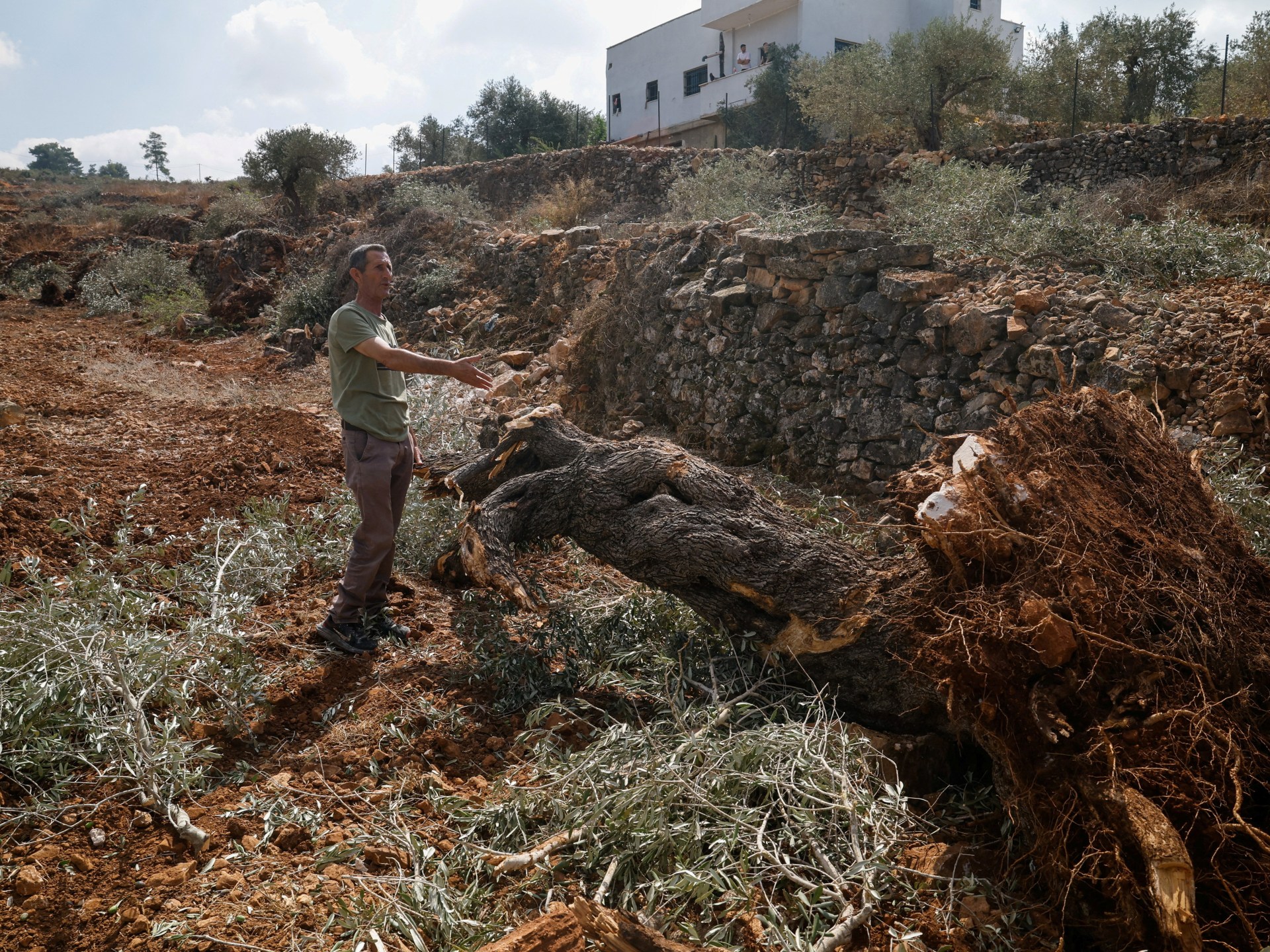
Israeli bulldozers razed olive groves near Ramallah in the occupied West Bank weeks before the annual harvest. Published September 24, 2026 September 24, 2026 Israeli army bulldozers have plowed rows of olive trees in a village near Ramallah in the occupied West Bank, just as Palestinian farmers prepared to begin their annual harvest, residents told Reuters news agency. Palestinian farmer and landowner Abd Alfattah Tamimi said the army had destroyed olive trees planted on his family’s and his neighbors’ land. Recommended stories list of 3 itemsend of list Demolition in the village of Deir Nidham began on Monday and continued on Tuesday, the Palestinian news agency Wafa reported. “They don’t care about anyone, but God is up there, and we are standing here with our souls,” he said. “They are uprooting, and we will plant again with God’s help,” he said. Another farmer, Nather Tamimi, told Reuters the timing of the demolition was designed to inflict maximum damage before the harvest season, which traditionally begins in October. He said his family produced about 120 barrels of olive oil from the land each year. The Israeli army also “uprooted all kinds of trees, even between houses,” Nather Tamimi said. Israeli military machinery uproots olive trees near the Palestinian village of Deir Nidham near Ramallah in the occupied West Bank, September 23, 2026 [Mohammed Torokman/Reuters]Israel’s military said it was verifying Reuters’ request for comment but had not responded by Wednesday evening. In the past, Israel has cited the need to clear land of olive trees to prevent security threats or ambushes against troops. Palestinian human rights groups reject this, saying the destruction effectively deprives Palestinian farmers of income from the sale of olives and olive oil, while uprooting trees which they see as a symbol of their connection to the land. The Commission said Israeli attacks on agricultural land in August affected 21,508 trees, including 19,375 olive trees. They estimated this year’s olive production at 21,000 tons, compared to local demand of around 15,000 tons.