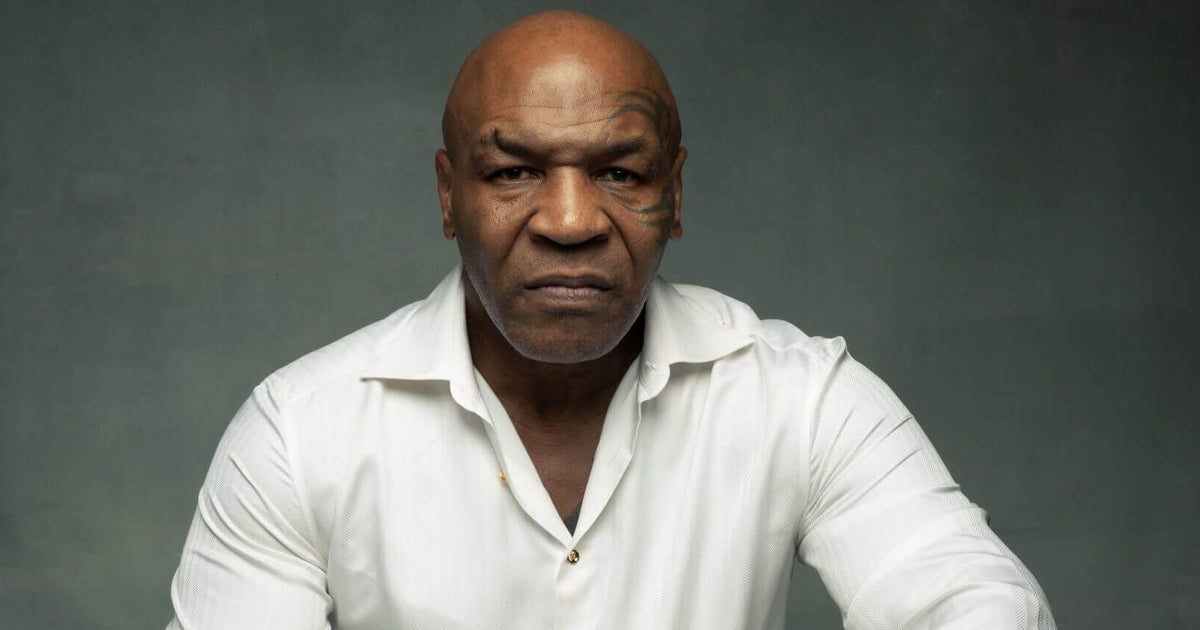
Mike Tyson frowns and shifts a little in his seat. “I was just telling the truth, you know. It is what it is… I lived a dark life. I say dark things.” Tyson is taking stock of what it felt like to relive some of the bleakest moments of his tumultuous and extraordinary existence for a new Netflix documentary about his life. There are moments on screen in ‘Tyson’ where he bursts into tears, wiping them with a towel and questioning himself for being so emotional (“There’s got to be something wrong with me. This shit shouldn’t bother me”). At other times, he doesn’t dare say anything more than “I’m sorry.” Now, speaking to The Athletic via video link on Monday night, the emotions feel less raw. Did you ever wonder why you were putting in that effort? “I mean, I’m always up for a dollar or two, so if they want to do a story, I give them a story,” he says. “People are going to believe what they want about you anyway. You can’t stop someone from thinking their opinion about you.” Tyson’s story is not a fairy tale. Yes, there was the improbable rise from a childhood surrounded by poverty, drugs and violence to becoming the youngest heavyweight champion in history, the hottest ticket in the sport, earning millions of dollars every time he stepped into the ring. But there were also the drugs, accusations of domestic violence, a rape conviction, biting an opponent’s ear and the tragic death of his four-year-old daughter Exodus in an accident in 2009. However, the only man who doesn’t seem to believe his story is worth retelling is Tyson himself. “I have a lot of documentaries,” he says. “I’m curious, do I constantly change that when they want to make another documentary? Maybe they think that maybe I’ve grown up and have a different outlook on life.” Do you think it has changed? “As you get older, you change, that’s true. I become more conservative. I never thought I would be a conservative person when I was younger.” Syracuse, New York, last week, but mostly talks about his lifestyle. The young man who once reveled in his nickname, “the meanest man on the planet,” is now 60 years old and more inclined to care for his beloved pigeons, a fascination that began during his school days but persists even now. The recent loss of 200 birds after they “became sick and contaminated” while he was away was, he says, a blow. He would also love more “big cats” like Kenya, the 550-pound white tiger he had as a pet for 14 years. “But my wife won’t let me because we have small children.” Mike Tyson is a big supporter of President Donald Trump (Alex Wong/Getty Images). He describes himself as “in dad mode” these days and says he can’t wait for one of his six children to tell him they’re going to be a grandfather. “I’m not going to pressure my kids,” he says, “but damn it, why can’t you just have a kid? When we were young, in the ’80s, everyone had kids. They don’t even do that anymore.” He speaks with pride about the fact that it’s been 10 years since he last used cocaine or alcohol, and attributes it, in part, to something he calls “the toad.” In the last of four episodes of his documentary, which premiered yesterday, Tyson encourages director Floyd Russ to join him in smoking the dried secretion of the Bufo alvarius (Sonoran Desert toad), which contains the powerful psychedelic compound 5-MeO-DMT (often called the “God molecule”). It has attracted a following among people who have turned to psychedelics to treat mental disorders and addictions. In the US, 5-MeO-DMT became a Schedule I controlled substance in January 2011, meaning it has a high potential for abuse. It currently has no accepted medical use in the US and there is a lack of accepted safety for use of the medication under medical supervision. Studies are being carried out on the safety of the drug and in some retreats in which the substance plays a leading role, the organizers have paramedics prepared in case of adverse reactions. Ahead of his most recent fight against Jake Paul in 2024, Tyson said it was while experiencing the hallucinogenic effects of smoking toad venom that God told him to come out of retirement. In the documentary, he backs that up and says, “Every time I have to make an important decision about something, I take the toad.” Now, however, he says it’s been “probably more than a year” since he last did it. “This is the longest I’ve gone without doing it,” he says. “I used to do it every day for a while, but I think I need to start again.” Tyson hasn’t fought since facing YouTuber and promoter Jake Paul in 2024 (Tayfun Coskun/Anadolu via Getty Images) Why? “I need to balance myself,” he says. “Sometimes I did it three times a day. I abused it and that was the wrong way to use it. It’s not good to do it every day, all day. That doesn’t help yourself. That’s just being abusive. If you abuse it, it will abuse you. The feeling of doing it is “like being reborn,” he says. “My only coordination with this feeling is that I feel like you’ve met God. If I had to think about how God feels, that would be my feeling.” When asked if he credits her with helping him break the cocaine addiction that led to his life-threatening overdoses, he says the first time he did it was 10 years ago and he hasn’t touched cocaine or alcohol since. “I haven’t been with any bad people, no prostitutes or any shit like that. Ten years. I’m very proud.” Aside from his emotional response to the death of his coach and life mentor, Cus D’Amato, when Tyson was 19, there are two other occasions in ‘Tyson’ when he is visibly uncomfortable with the experiences that the documentary’s director, Russ, asks him to revisit. The first of these are the rape accusations Tyson faced after meeting 18-year-old student Desiree Washington at a rehearsal for the Miss Black America pageant in Indianapolis in July. 1991. Tyson always denied the allegations (and does so again in the documentary: “I thought it was steamy. But I didn’t cross the line… I think it was consensual”) but was convicted of rape and criminal deviate conduct and sentenced to six years in prison. He was released after serving three. “This is a really low point in my life and I don’t want to talk about it,” he says when pressed by Russ about the conviction. show him repeated footage of his rematch with Evander Holyfield in 1997, when he bit off part of his opponent’s ear, and a 2002 press conference, when Tyson appeared to bite the leg of his future opponent, Lennox Lewis. “It’s my fault,” he says in the documentary about Holyfield’s bite. “I can’t blame anyone for that. I’m a spoiled brat, especially a spoiled brat in boxing.” And the Lennox bite? “I was really crazy back then, uh… sorry.” Why is it so hard for him to watch those scenes now? “Because I’m a totally different person,” he tells The Athletic. “It took a lot of violence in my life to make me the person I am now. “So when I see the old me, it makes me recoil.” Referee Mills Lane stops Mike Tyson’s fight with Evander Holyfield after Tyson bit his opponent’s ear (Jeff Haynes/AFP via Getty Images) Given that Tyson once lent his name to a variety of marijuana gummies in the shape of Holyfield’s ear, with a piece taken from it, it seems unlikely that he would regret it, but it still seems worth checking out. “No, I don’t,” he says quickly. “I would like to regret it, but if I did, I wouldn’t have the situation in life that I have now. I have to accept that it gave me the great life that I have. “I heard (actress) Demi Moore say something to this effect, so I don’t feel bad anymore. I’m not a bad person. I don’t say bad things about anyone, but I have one of those deep, dark holes in me that’s hard to fill. I’ve felt this way all my life. I’m just never enough. “I need to be more.” Low self-esteem is a theme throughout the documentary, starting with Tyson’s school days where he was bullied for having dirty clothes and not “talking tough.” The guard at a juvenile detention center where Tyson ended up when he was 12 describes him as “very insecure” and there is footage of him crying on coach Teddy Atlas’s shoulder as he tries to calm down before competing in the Junior Olympics in 1982. “I’ve come a long way, remember?” he says. “I’m Mike Tyson, everyone likes me. I’m proud of myself.” Later in the documentary, he says that the ego that accompanied his rise to prominence was “always the precursor to my low self-esteem.” In many ways, it seems remarkable that Tyson’s long list of transgressions has not been a major obstacle to public life. Instead, in some cases his notoriety almost seems to have facilitated it: after all, he landed cameos as himself in two of The Hangover films, one of the most successful Hollywood franchises of the century. The role included knocking out Zach Galifianakis. Now, he reflects on his success as “harder to deal with than failure. “I wanted to be the young champion, the main guy, the bully,” he tells The Athletic. “That’s what I wanted to be. I wanted the world to be afraid of me. I was so insecure. I needed people to be afraid of me.” Is that something that’s still in him, even in his seventh decade? “You know what, that’s one of my superpowers,” he says. “I don’t see it as a flaw. I see it as a superpower. Because it pushes me to be better than I really am. One hundred percent, that’s what always drives me: fear. While Tyson was still in prison, his promoter Don King was preparing things for his return, reaching a deal with the MGM Grand and broadcaster Showtime that would guarantee the former world champion a $73 million (£55.1 million) signing bonus and between $30 and $35 million for fight for 15 fights. He was worth $395 million in total. ear bite, the Nevada Athletic Commission voted 4-1 to reinstate him, and president Elias Ghanem said the fighter had made a lot of mistakes but deserved another chance Don King in promoting Tyson’s rematch against Holyfield in 1997 (Timothy A Clary/AFP via Getty Images) “Who’s going to turn down a guy who can make $100 million in a fight? weekend?” asks Steve Wynn, former president and CEO of Wynn Resorts in the documentary. How does Tyson now reflect on how the sport handled him during that time? “Boxing gave me everything I asked for,” he says simply. Do you think sport could, or should, have offered you more help? “No, then he might have been a good guy. Listen, which sounds better: ‘Hey, he’s a good guy’ or ‘He’s a fierce savage’? “It’s been almost two years since Tyson last stepped into a boxing ring for the fight against Paul, which Netflix said was the most streamed sporting event in history, with a peak of 65 million simultaneous streams. Tyson lost an eight-round unanimous decision that night, but has since flirted with the idea of making another appearance. “The way my body felt the next morning, I was like, ‘What the hell did I do this?’ It really wasn’t worth it. But I would do it again. If my wife said it was okay and my kids said it was okay, I would do it.” Because? “Ego,” he says. “Nothing but ego. But my excuse would be money, because everyone will understand that. Ego is hard to understand, so I’ll say money all the time. But I just want to be the best, I’m obsessed with that.” Not that you have to be inside the ring to experience that, he adds. “There are more forms of greatness than just athletics.” Have you found other ways to feel that, then? “Yes, it just exists,” he says, seriously. “Me, myself, Mike. I just have to exist for that feeling. I’m the best of them all. Everybody knows my name, right?”