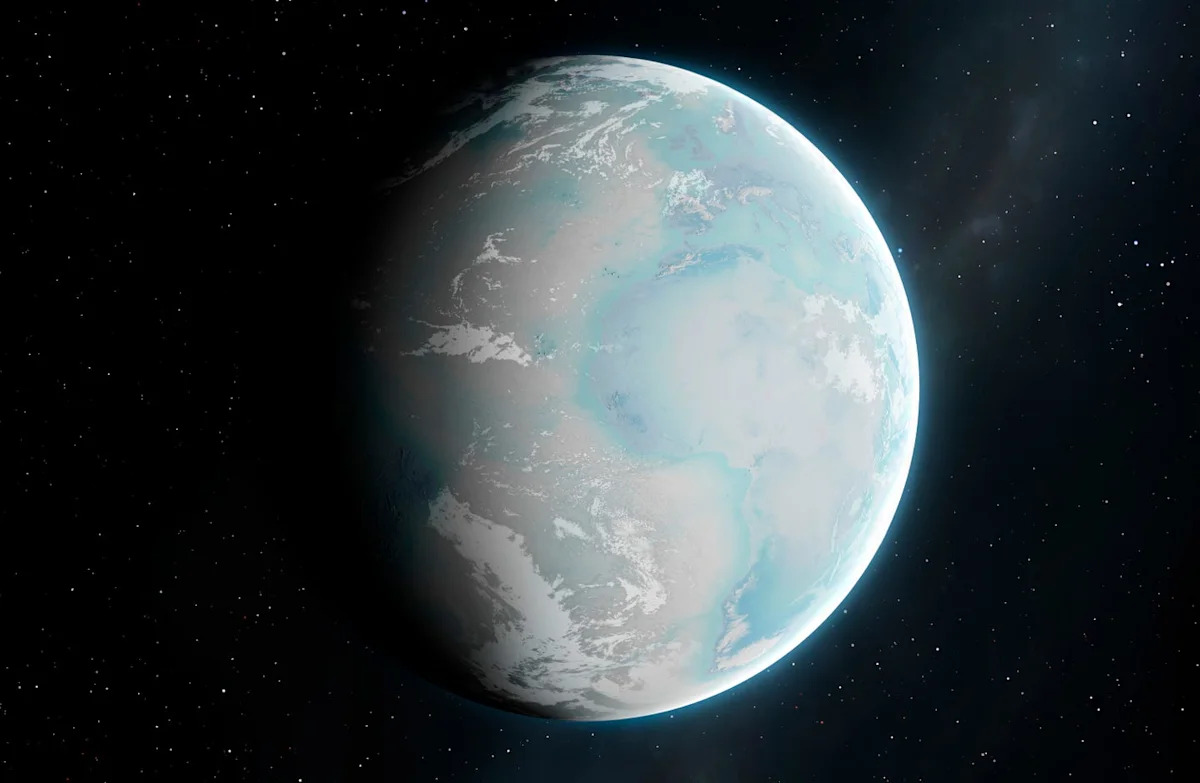
“Hearst and Yahoo magazines may earn commissions or revenue from some articles through these links.” Here’s what you’ll learn when you read this story: 2.4 billion years ago, not much oxygen could be found in a poisonous atmosphere of methane and carbon dioxide, but that began to change when the frozen Earth began to melt. It wasn’t always stable. For 200 million years, levels fluctuated dramatically before becoming stable enough for life to truly flourish. Earth was a very different planet 2.4 billion years ago. Shrouded in a haze of carbon dioxide, methane and water vapor, its atmosphere was more similar to that of Saturn’s moon Titan than the mixture of nitrogen and oxygen that dominates today. Any atmospheric oxygen would react with methane and surface rocks, locking it in the crust and leaving it out of reach of early life forms. The nascent Earth was also atmospherically unstable. Asteroid impacts released immense amounts of hydrogen and methane, and that methane reacted with sunlight and small amounts of oxygen, slowly oxidizing to carbon monoxide and carbon dioxide over millions of years, a mixture that is still lethal for most living things to breathe. As impacts became less frequent, the climate cooled and the carbon dioxide that remained was eventually absorbed into the crust, leaving a frozen surface. However, at some point oxygen began to accumulate in the atmosphere. How that oxygen managed to keep the planet habitable remains a mystery, but now researchers from the University of California, Riverside and the University of Leeds have found evidence of how it emerged and persisted. Life as we know it needs phosphorus to thrive, and 2.4 billion years ago, a thawing planet finally began supplying it. Based on rocks from the Transvaal Supergroup in South Africa, researchers believe the chain reaction began when the ice sheets covering the Earth began to melt, and the meltwater washed phosphorus and sulfur from the newly exposed land into the oceans. There, sulfur bonded with oxygen to form sulfates, which fed microbes as they broke down organic matter on the seafloor. That decay released the phosphorus locked inside the dead cells, and the phosphorus is what life had been waiting for. The released phosphorus fueled an increase in biological productivity, and as those organisms died and sank, they transported carbon to seafloor sediments. Carbon burial is the key step, because decaying organic matter normally consumes oxygen, so sealing it beneath the seafloor allows oxygen to build up in the atmosphere. Better yet, the cycle fed itself. Each bloom delivered more organic matter to the seafloor, where microbes recycled even more phosphorus back into the water. That self-reinforcing loop drove the Great Oxidation Event. “Following an increased…influx of phosphorus that stimulated oxygenation after glaciation, sedimentary recycling of phosphorus was controlled by feedback-driven fluctuations in sulfate availability and ocean waters. [chemical reactions]”Through diagenesis, that sediment slowly turned into rock. The rock kept a record of the phosphorus released from organic matter, and along with the carbon in the Transvaal shale, that record shows how much oxygen reached the atmosphere. Previous studies had measured phosphorus levels in ancient rocks, but those measurements didn’t necessarily show how much of that phosphorus was actually bioavailable. What this research team wanted to know was how much phosphorus the organisms had. Inside the rocks there was a history of changes in oxygen levels. which made the Earth more habitable during some stretches and less habitable during others. The pyrite was buried in ocean sediments, until that burial overwhelmed the sulfate released by the erosion of the land exposed by melting ice. The pyrite locked up the sulfur in the form of iron sulfide instead of leaving it in the water as sulfate, and with less sulfates available, there was less microbial processing of the organic matter to bury the carbon and release phosphorus. It meant less carbon burial, and less carbon burial meant that oxygen could no longer accumulate in the atmosphere. “The extreme climate fluctuations that were a defining feature of the Great Oxidation Event caused dramatic variability in atmospheric and seawater oxygenation levels,” the researchers said, “and this instability persisted for more than 200 million years.”