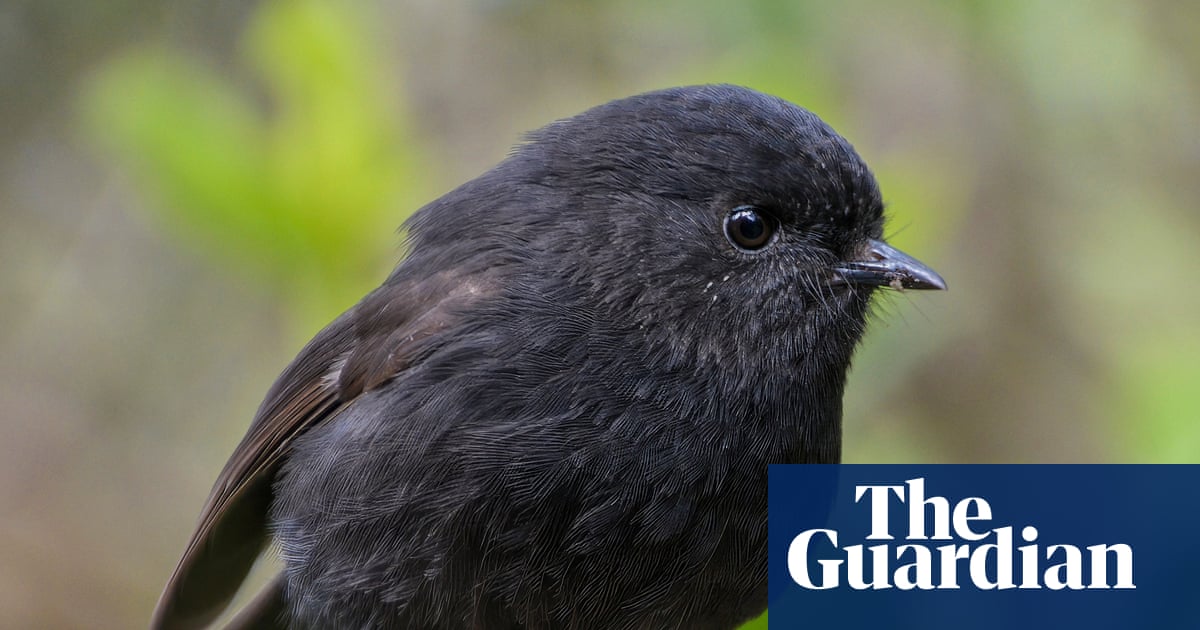
The black robin, once the world’s rarest bird before an extraordinary conservation project brought it back from the brink of extinction, has been crowned New Zealand’s bird of the year, after a record voter turnout. The small bird is found only on the Chatham Islands, 800 kilometers east of mainland New Zealand. Called kakaruia in Maori and karure in Morori (the indigenous language of the Chatham), these birds are also affectionately known as the “goths” of the New Zealand bird world, for their striking black plumage, black eyes and small pointed black beak. Habitat loss and introduced pests devastated its population, and by the 1970s there were five birds left. Only one breeding pair remained: Old Blue, the matriarch, and Old Yellow. A breeding program that pioneered the use of other species to raise robin eggs proved successful, and their numbers have steadily increased to 350 adult birds, although they are still classed as ‘threatened’. “They’re really cute,” said Jess Mackenzie, spokesperson for the Chatham Islands Landscape Restoration Trust, adding that the black robin has been in the top five birds for the past few years but has never scored a win. “It’s a bird that New Zealanders definitely love and I know that,” he said. Despite the name, the black robin is not in the same family as overseas robins and is a distinct species. In the Chathams, they live in lowland coastal forests in two restricted, pest-free nature reserves. While it is a conservation success story, the black robin is not “saved” yet, Mackenzie said. The habitat on their islands is almost at capacity and a third pest-free island is needed. A Chatham Island black robin collects material to build a nest. Photograph: Leon Berard The Bird of the Year competition, organized by conservation group Forest and Bird, was launched 20 years ago to raise awareness of the plight of New Zealand’s native birds, many of which are threatened, on the verge of extinction or already extinct due to the introduction of pests, human activity and the deterioration of their habitats. The 2026 contest attracted a record 105,000 votes. About 88% of the votes came from New Zealand. The world’s heaviest parrot, the kākāpō, came second and the 2025 winner, the country’s only falcon, the kārearea, finished third. Shag in 2018.In 2023, British-American comedian and talk show host John Oliver led a global campaign for the threatened pūteketeke, which was later crowned the winner that year.