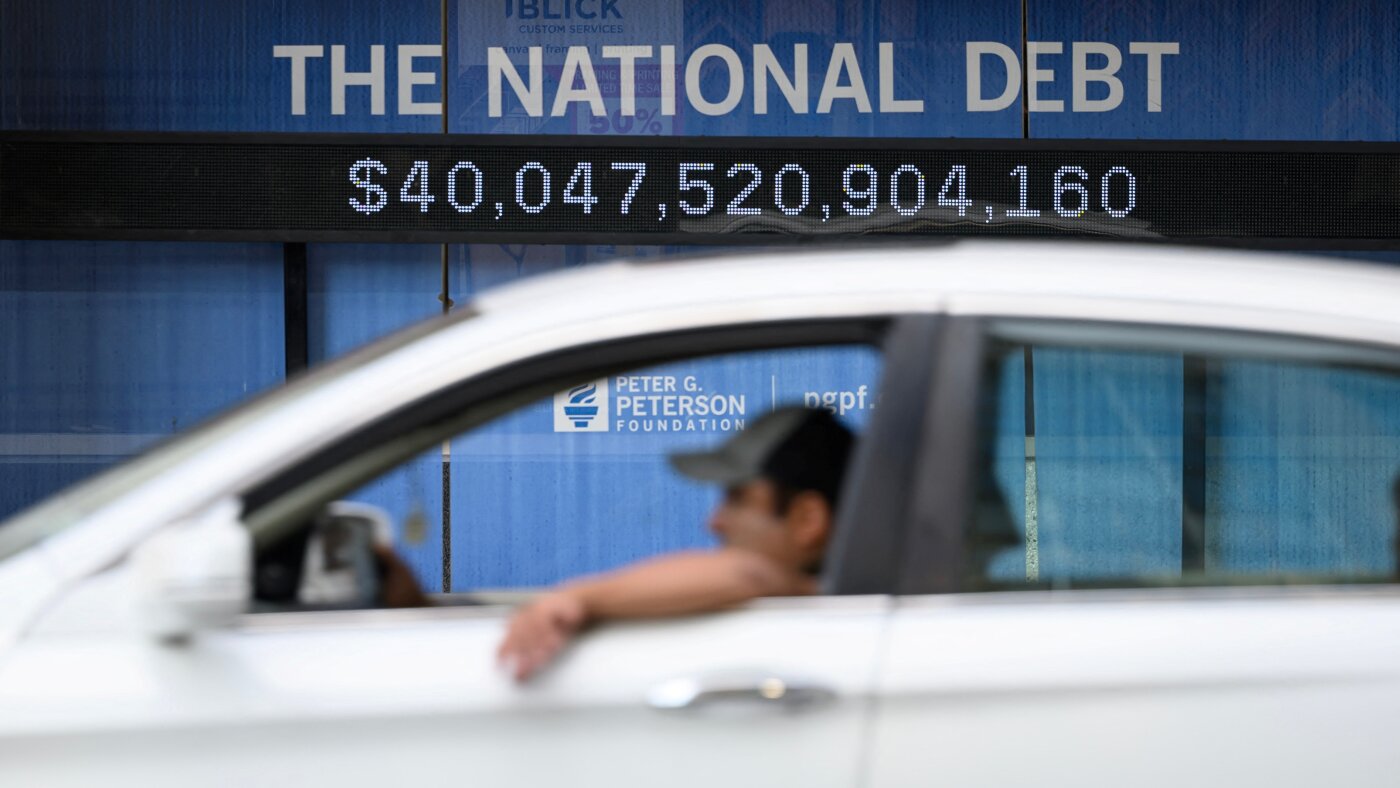
The federal debt surpassed $40 trillion for the first time this week. Investors buying government bonds are demanding higher interest rates to finance the growing debt load. Mandel Ngan/AFP hide title toggle title Mandel Ngan/AFP Subscribe to the Planet Money newsletter. The world is confusing. The economy can help. The Treasury Department reported this week that U.S. federal debt had reached $40 trillion, a staggering level of red ink. The annual interest on that accumulated debt alone now exceeds $1 trillion, making it the second largest government expense, only behind Social Security. Here are three things to know about the deepening financial hole the government finds itself in. How did the debt become so large? For years, the government has spent more money than it collects in taxes. Some of that has been driven by political decisions: waging war, cutting taxes or providing a more generous social safety net during the pandemic. But much of the spending growth occurs automatically as baby boomers retire, leading to higher costs for Social Security and Medicare. Historically, debt as a percentage of the economy tended to rise during recessions and then stabilize during economic expansions. More recently, the government has run large deficits even as the economy has been growing. The debt has doubled since 2017. And now the people who lend money to the government are demanding higher interest rates. How does this affect me? Federal debt indirectly affects all Americans because it limits the government’s ability to address other priorities. But it also affects some people more directly, by making it more expensive to borrow money. “When the government borrows so much and Treasury bond rates go up, rates on everything else go up, from mortgages to auto loans to credit cards,” says Michael Peterson, executive director of the Peter G. Peterson Foundation, which advocates for fiscal responsibility. Mortgage rates, for example, tend to rise and fall with the yield on 10-year Treasury bonds, and the 30-year mortgage rate has risen about 6.7%, according to Freddie Mac. Is anyone in Washington working to address the debt? The Treasury Department has taken steps to limit the rise in long-term bond yields. Yields fell on Wednesday after Treasury Secretary Scott Bessent announced the department would increase its government bond buyback program. But the measure does nothing to solve the underlying problem, and the effect was short-lived; Yields on 10- and 30-year Treasury bonds rebounded Thursday. Previously, the Treasury had taken steps to shore up the Japanese yen so that Japan would not be tempted to sell some of its own U.S. Treasuries. (Buying bonds drives down yields, while selling drives them up.) Ultimately, Congress will have to raise taxes, cut spending, or, most likely, do both. While some lawmakers used to proudly say they were deficit hawks, fiscal discipline has generally fallen out of favor in Washington. But signs of bond market anxiety could change that. “$40 trillion should be a wake-up call,” said Carolyn Bordeaux, executive director of the Concord Coalition, a deficit watchdog group. “Both sides helped bring us here, and now both sides have a responsibility to change course.”