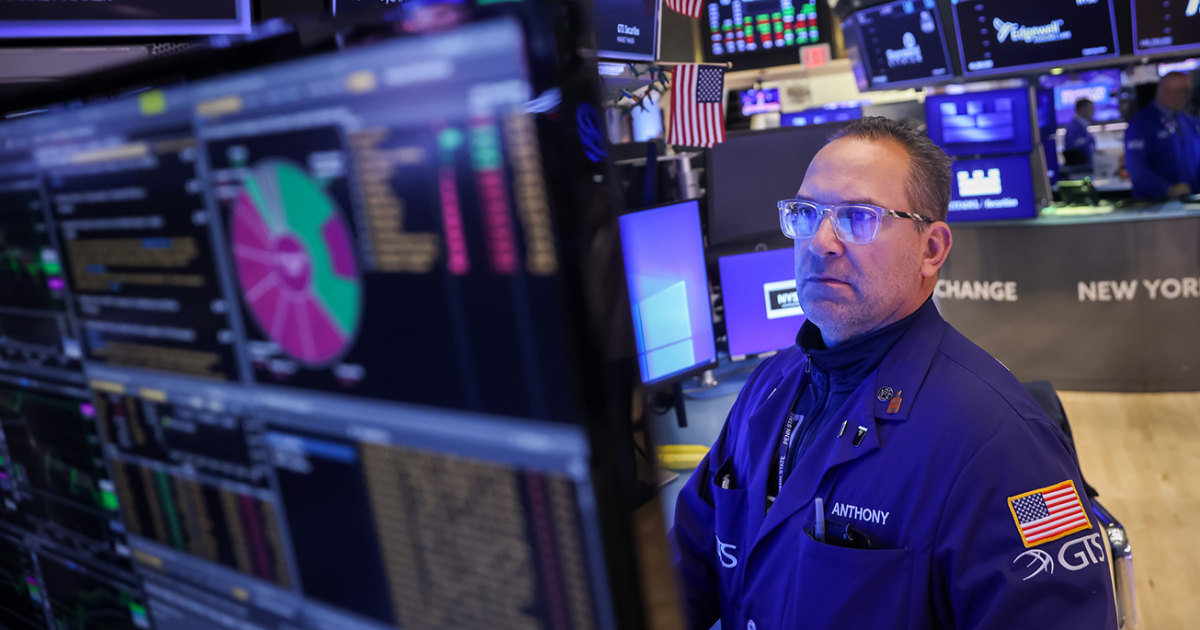
Tech stocks plunged on Friday, erasing more than $1 trillion in value. The Nasdaq 100 index fell 3.4% in afternoon trading, its worst one-day drop since mid-June. The selloff pushed the Nasdaq 100 close to what is known as “correction territory,” which is a drop of 10% or more from an index’s last all-time high. The broader S&P 500 also fell sharply 1.8%. The S&P technology sector was by far the worst performer of the day, falling more than 4.2%. As trillion-dollar tech companies spend hundreds of billions of dollars to build AI data centers, investors are looking for clearer signs that all that spending is actually generating returns. These questions underpinned one of the day’s worst-performing stocks, Intel, which plunged 29% in its worst single-day decline, according to data dating back to the 1980s. Several of Intel’s big peers followed its downward steps. SanDisk plunged 13%, chipmakers AMD, ARM Holdings, Qualcomm and Marvell fell about 10%. However, the seeds of Friday’s massive losses were sown on Thursday, when Amazon and Intel reported quarterly earnings that failed to reassure investors and analysts. Amazon shares fell as much as 10% in post-market trading on Thursday, before recovering throughout Friday. The company’s shares closed down just 1.4% on Friday. The Philadelphia Semiconductor Index, of which Intel is a member, sank 7.2% on Friday. The “DRAM” ETF, which tracks companies linked to computer memory and storage, fell 7%. Shares called “neocloud” were also sold. These startups aim to build data centers for software companies to use. Nebius and CoreWeave fell more than 10%. The broader Nasdaq Composite, which tracks the more than 3,000 publicly traded companies, fell 2.8%. Amazon Spending On Thursday, Amazon reported that its spending to develop AI had continued at a faster-than-expected pace in the latest quarter, while growth in its core online shopping business had slowed. The last time Amazon told investors it was increasing its AI spending budget, the market rewarded the decision by sending its shares up more than 15%. But a lot has changed in the last three months. Some of the large companies that pay to use AI models have adjusted their token budgets. Others have raised questions about exactly how much benefit they are getting from all the time and resources they are investing in AI adoption. In response, some investors now view Big Tech’s massive AI spending through a more skeptical lens. However, Amazon CEO Andy Jassy told shareholders on Thursday to prepare to spend even more. “We still expect cash by 2026 [capital expenditures] of approximately $220 billion, most of it for AWS, and we expect to spend significantly more in 2027,” he said on the company’s earnings call. Amazon’s spending had already been scheduled to double from 2025. Friday’s losses follow a significant selloff in Alphabet stock on Thursday. Google’s parent company lost about $500 billion in market value, its worst day and the second-worst loss in value in market history. On Friday, the stock fell another 1.4%. Intel’s supply chain woes Intel, meanwhile, told investors that its fourth-quarter profits and sales would be lower than expected, sending shares tumbling. Intel’s shares have risen in recent months as its management implements a sweeping overhaul of the long-troubled chip company. June Tan cited supply chain issues in the company’s lackluster performance. Citigroup analysts described the report as “two steps forward, one step back.” One major issue highlighted by Intel CEO Lip-Bu Tan that contributed to the company’s lackluster performance in the quarter was supply chain issues. Meanwhile, the selloff in technology stocks appeared to increase demand for U.S. Treasuries, briefly pushing down government bond yields. Big artificial intelligence companies that are borrowing hundreds of billions to build data centers have turned to debt markets for funds, which in turn has created more competition for capital. Treasury bills have risen in recent months, in part to keep up with the private market.