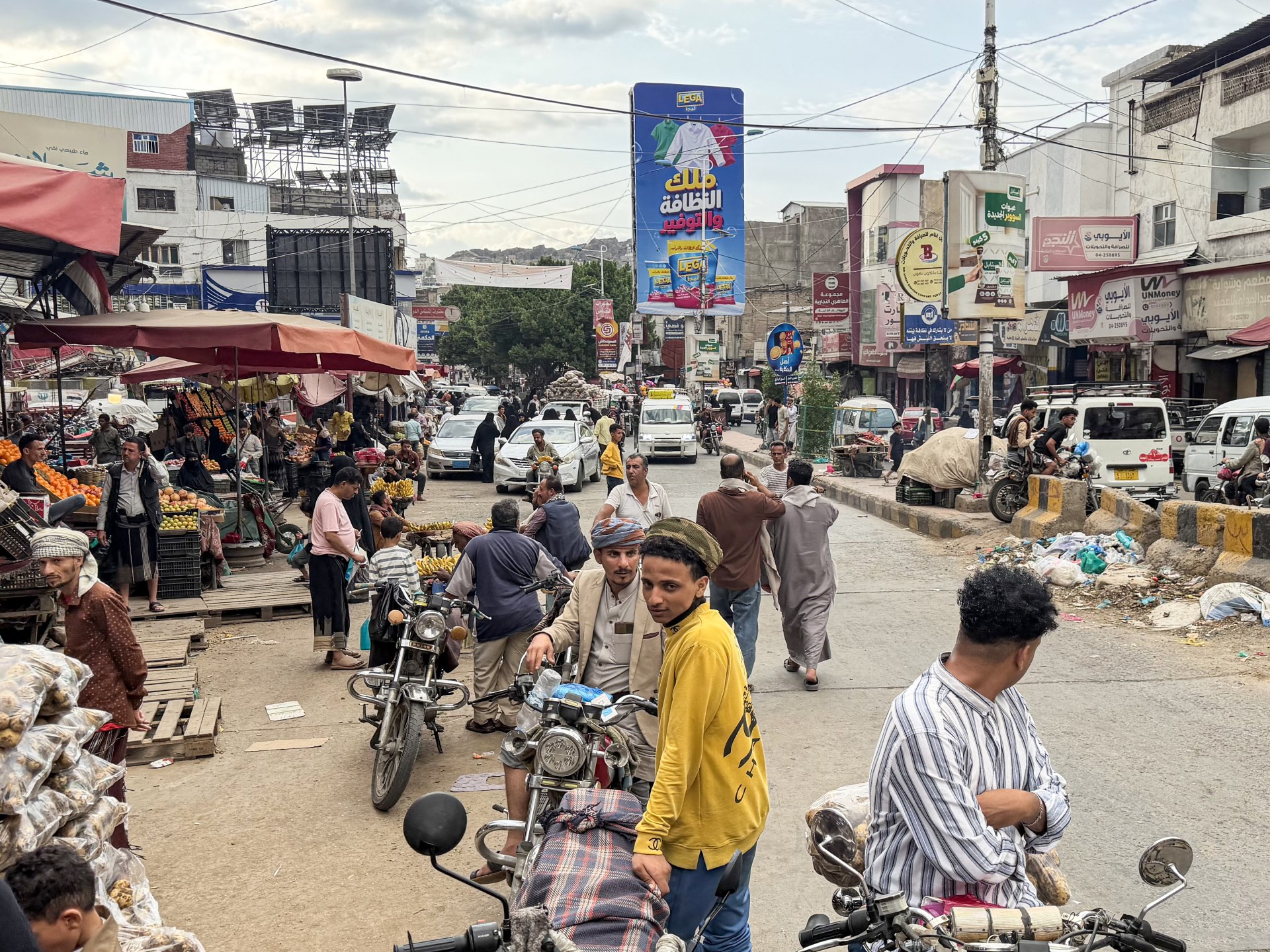
Medical services in Taiz are at risk of being shut down as fuel, medicine and supplies are running alarmingly low under the Houthi blockade. Yemen’s internationally recognized government has warned of an “imminent health and humanitarian catastrophe” in the besieged city of Taiz in the country’s southwest, as the Houthis continue their siege and “clog essential supplies.” The city’s health facilities were “almost exhausted.” He demanded that the siege be lifted immediately and supply routes reopened, with safe passage for patients, ambulances, health workers and humanitarian aid. He called on the United Nations and humanitarian organizations to “deliver medicines, intravenous fluids, medical supplies, oxygen and fuel” to the city’s health facilities. “Each delay increases the risk of service disruption and loss of life,” the ministry said. Renewed siege The Houthis, an Iranian-backed armed group also known as Ansar Allah, seized Yemen’s capital, Sana’a, by force in 2014 and then imposed their own government. They control the north and northeast of the country. Taiz endured a devastating Houthi siege between 2015 and 2016, when Yemeni government forces were confined to an enclave in the center of the city. The siege was broken in 2016, although the Houthis maintained a partial blockade at other access points. In 2024, they agreed to reopen a route from the east, but it was closed after fighting resumed. The renewed siege took shape in early October. The Houthis launched an offensive along the Red Sea coast of Taiz governorate in September, capturing the port city of Mocha, and by October 4 had taken the city of At Turbah, cutting the last main road between Taiz city and other government-controlled areas. Yemeni government forces, backed by Saudi Arabia, began a counteroffensive in early October. October. Nabil Jamil, director general of the Yemeni government’s planning and development office in Taiz governorate, told Al Jazeera that the current siege is “more comprehensive and its impact more severe than in 2015.” He said around 2.8 million people live in government-controlled areas of the governorate, along with 200,000 who have been recently displaced. (5.2 gallons) of gasoline has increased from 30,000 Yemeni rials ($19) to 90,000 ($58). “We are still waiting for a response or intervention on the ground,” Jamil said. The United Nations refugee agency and the World Health Organization have warned that the fighting is endangering Yemen’s fragile health system. “Civilians should never become a means of exerting pressure in any conflict,” said Nabil Sharyan, a Lawyer and director of the Justice for Rights and Development Organization.