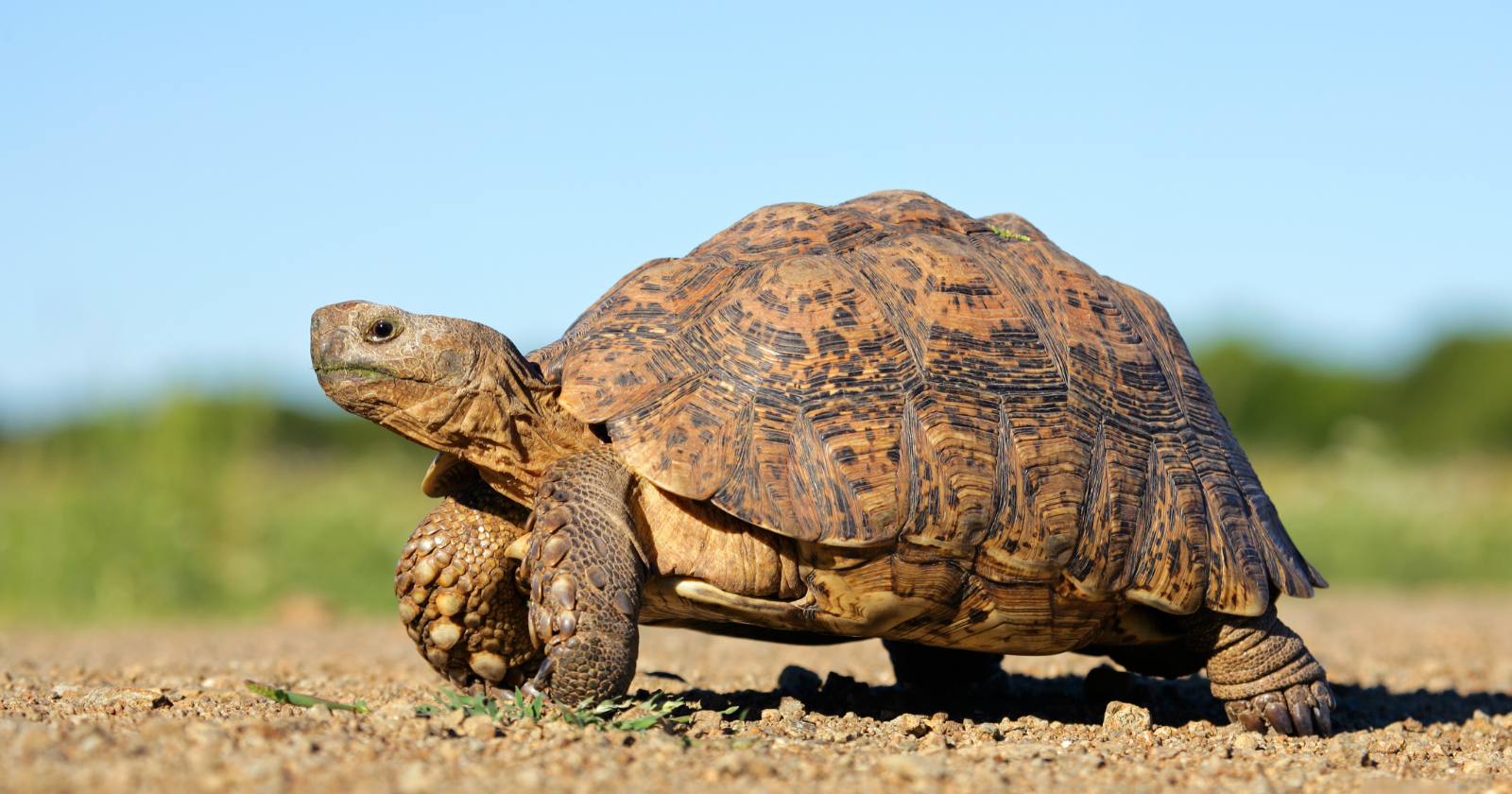
Before the bulldozers entered the Ivanpah Valley in California’s Mojave, just before the Nevada line, biologists walked around and counted. Their first survey of the 3,500-acre footprint found 16 desert tortoises. Refined estimates raised the likely total to a few dozen, with 32 commonly cited as the upper limit. Federal regulators wrote the permits accordingly: The $2.2 billion BrightSource solar project could relocate a maximum of 38 adult tortoises, with a strict limit of three accidental deaths per year. If any of these numbers are exceeded, the entire project could be shut down. Then construction began and the desert began to deliver turtles. The count that wouldn’t stop desert tortoises is almost comically difficult to study. They spend up to 95 percent of their lives underground in burrows, and a juvenile is the size of a cookie, the color of earth, and silent. A walking tour shows the surface of a landscape whose inhabitants are almost all beneath it. In Ivanpah, that sampling error exploded. As crews cleared land during 2010 and 2011, workers and monitors continued to find animals that studies had missed, until biologists’ estimates of the site’s population reached 162 adults and 608 juveniles, about 770 turtles on land certified to hold a few dozen, and federal reviewers concluded that more than 2,300 additional juveniles lived within a couple of miles of the sites. fences. Each discovery brought the company closer to its federal thresholds, and in 2012 the turtle did what almost nothing else could do with a flagship energy project: So many animals were found in the excavations that construction was halted for three months. America’s Most Expensive Reptiles What followed became the most elaborate and expensive turtle rescue ever undertaken. BrightSource hired teams of consulting biologists, some of whom billed up to $1,000 a day, to locate, excavate and move the animals according to protocols negotiated line-by-line with state and federal agencies. The company built a turtle nursery on site, agreed to five years of post-move monitoring and put up about 50 miles of buried turtle-proof fencing at a cost of up to $50,000 per mile to prevent relocated animals from burrowing again. By the time the plant’s mirrors were up, the company had spent $56 million protecting and relocating the turtles. Divide that by the animals actually handled and the Ivanpah tortoises are among the most expensive wild animals ever relocated, tens of thousands of dollars per head. Money couldn’t buy a clean result. The Los Angeles Times, which chronicled the effort, cataloged the mishaps: tortoises crushed under vehicle tires, army ants swarming their hatchlings in the makeshift nursery, and a small tortoise plucked from the desert and carried to a golden eagle’s nest, the microchip embedded in its shell still ringing faintly as it scurried out of reach. The relocation itself is hard on the species; Translocated turtles often attempt to walk home, and studies of past translocations have found high rates of death from predators, exposure, and stress. Why Polls Failed Ivanpah’s undercount was not so much due to incompetence as the nature of the animal clashing with the nature of a deadline. Turtle numbers fluctuate with rainfall: in dry years, the animals remain sealed in their burrows and are effectively invisible, and pre-construction studies were conducted under drought conditions. Wetter seasons during construction brought the population to the surface just as heavy machinery arrived to meet them. The lesson was costly enough to change the industry. Mojave solar projects were subsequently implemented with multi-station studies, larger relocation budgets included from the beginning, and, in some cases, redesigned footprints. BrightSource itself had already reduced Ivanpah by 12 percent and cut its planned power towers from seven to three during permitting, sacrificing about a tenth of its output to reduce the cost of turtles before a single mirror was installed. The Stubborn Desert Survivor It’s an irony that the species stopped the bulldozers. The desert tortoise is one of the most durable in evolution, a lineage that watched the dinosaurs and stayed out of the ice ages, capable of living a year in water on a single spring meal. What can’t easily survive is the pace of the modern Mojave: freeways, landfill-subsidized crows, off-road traffic, and now utility-scale construction of America’s sunniest land, much of it prime turtle habitat. Ivanpah became the case study cited by both sides. For critics of solar power, it’s proof that renewable energy comes with an ecological price paid in razed habitats and six-figure animal expulsions. For its defenders, it is proof that the system worked: the turtles were found, the project was paid for, and the presence of the species renovated a two-billion-dollar construction. Both readings agree on the underlying fact, which is where the polls were wrong. The desert that seemed empty was never empty. It was full of turtles, underground, waiting for the dry years to pass, until the day the ground began to move. Standards Space Daily articles are edited and fact-checked before publication. We use artificial intelligence tools in the newsroom. See our editorial standards and masthead.