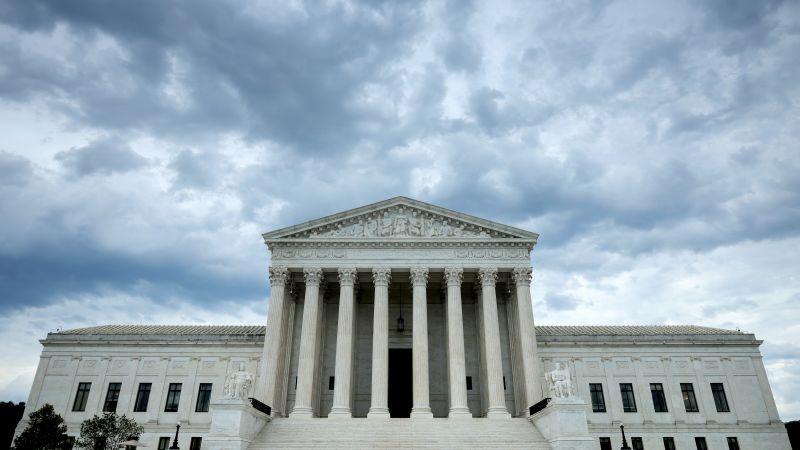
The Supreme Court on Tuesday denied Missouri’s request to use a congressional map for the November midterm elections that would have given Republicans a chance to flip one seat, a rare setback for the GOP’s effort to maintain control of the House next year by taking advantage of its political boundaries. Missouri moved to the Republican map 7-1 under pressure from President Donald Trump, who has inspired an unusual mid-decade redistricting war in Republican and Democratic states. With the Missouri map locked in, Republicans are poised to gain a net nine seats in the U.S. House of Representatives from that effort. The decision was issued Tuesday by conservative Justice Brett Kavanaugh, who handles emergency cases arising in parts of the Midwest. Kavanaugh did not explain his reasoning and there were no disagreements. Missouri’s new map, which was enacted last year, was used in the state’s primary election in August. But the state’s highest court ruled last week that Missouri officials wrongly dismissed a petition with more than 300,000 signatures to allow the state’s voters to decide on the map in a referendum before it took effect. The map targeted Democratic Rep. Emanuel Cleaver’s 5th Congressional District by dividing his base in Kansas City and extending it to rural and Republican-leaning parts of the state. Missouri officials rushed to the U.S. Supreme Court, arguing that the state court’s decision would create a “federal election administration disaster” and “unprecedented chaos.” One of the referendum organizers who sued over use of the map, Richard von Glahn, responded in his own report that if there was an electoral emergency it was Missouri’s own fault. Opponents of the map had filed their petition for a referendum late last year, but state officials waited until Aug. 4, the latest possible date, which happened to be the day of the state primary, to declare that the state constitution’s right for voters to weigh in on legislation does not apply to redistricting measures. The state supreme court rejected that interpretation. The 6-3 conservative U.S. Supreme Court has played a major role in shaping the outcome of this year’s midterm elections. The court’s landmark decision earlier this year that gutted a significant part of the Voting Rights Act led to new redistricting in several southern red states. Meanwhile, the court allowed Texas to use a map favorable to Republicans and allowed California to use a map that benefits Democrats. This story has been updated with additional details.