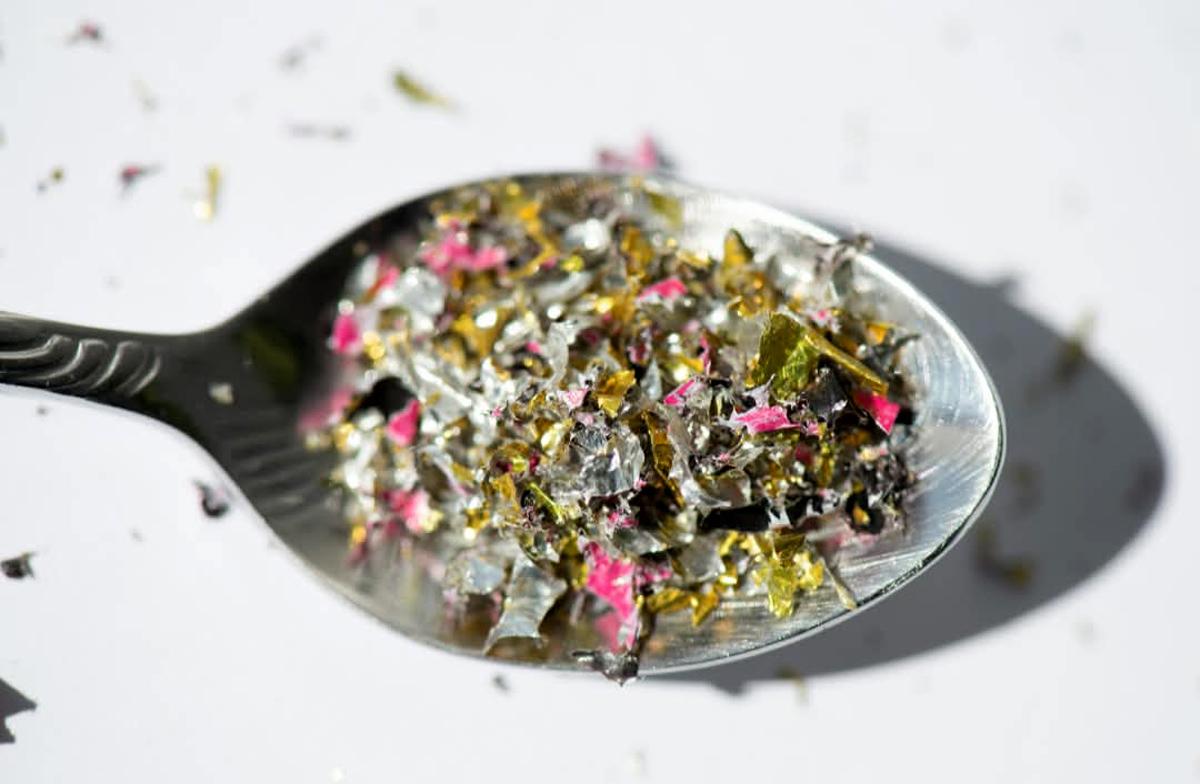
IMAGE: A spoonful of microplastics. Photograph: Kind courtesy European Commission (Lukasz Kobus)/Wikimedia Commons
The galloping rates of colorectal cancer has troubled researchers and doctors for decades. For instance, in the US, colorectal rates have been rising year on year. As per a study released in American Cancer Society’s journal, Cancer, and quoted by The Washington Post, these rates rose by 3 per cent annually for adults between the ages of 20 and 49 from 2013 to 2022.Researchers have, over the years, put the rapid increase down to a couple of things — too sedentary routines, over-processed foods and gut toxins (like food additives, fungal toxins etc). But now, as large a cause, or a larger cause, might be the microplastics found in Styrofoam cups and takeaway containers.The Washington Post highlights a study that was published last month, ‘Researchers at Central South University in China found that long-term exposure to polystyrene nanoplastics — the plastic that is used in Styrofoam cups and take-out containers — promoted tumour growth in mice that were genetically modified to be predisposed to colon cancer for research purposes’.These nanoplastics acted as endocrine disruptors, accumulating in the gut and affecting the cells lining the gut and hurting important gut bacteria.Studies on the toxic effects of nanoplastics is happening at several research centres around the world and views largely coincide, indicating it was something affecting populations everywhere, which easily be something as common as takeaway dishware.Lorne Hofseth, professor and associate dean for research, director of the Center for Colon Cancer Research, College of Pharmacy, University of South Carolina, Columbia, told The Washington Post: ‘There’s been a rise in consumption of ultra-processed foods. There’s been a rise in ‘forever chemicals.’ There has been a rise in the synthetic food dyes. But there’s also been a rise in microplastics, a significant rise.” The spike in colorectal cancer among young people was hard to fathom, given that the younger generation everywhere eats less meat, exercises, has better fruit and vegetable intake, drinks and smokes less. Hence pointing a finger at microplastics was the obvious answer, Frank Frizelle, professor of surgery, University of Otago, New Zealand, explains to The Washington Post.All plastic containers have microplastics but takeaway containers and cheaper plastic receptacles abound in microscopic versions of the same particles ie nanoplastics, says Cleveland Clinic, a leading US medical centre.The strong message is: Avoid heating food in takeaway containers or consuming hot drinks in Styrofoam cups and reduce usage or recycling of these containers.– REDIFF HEALTH