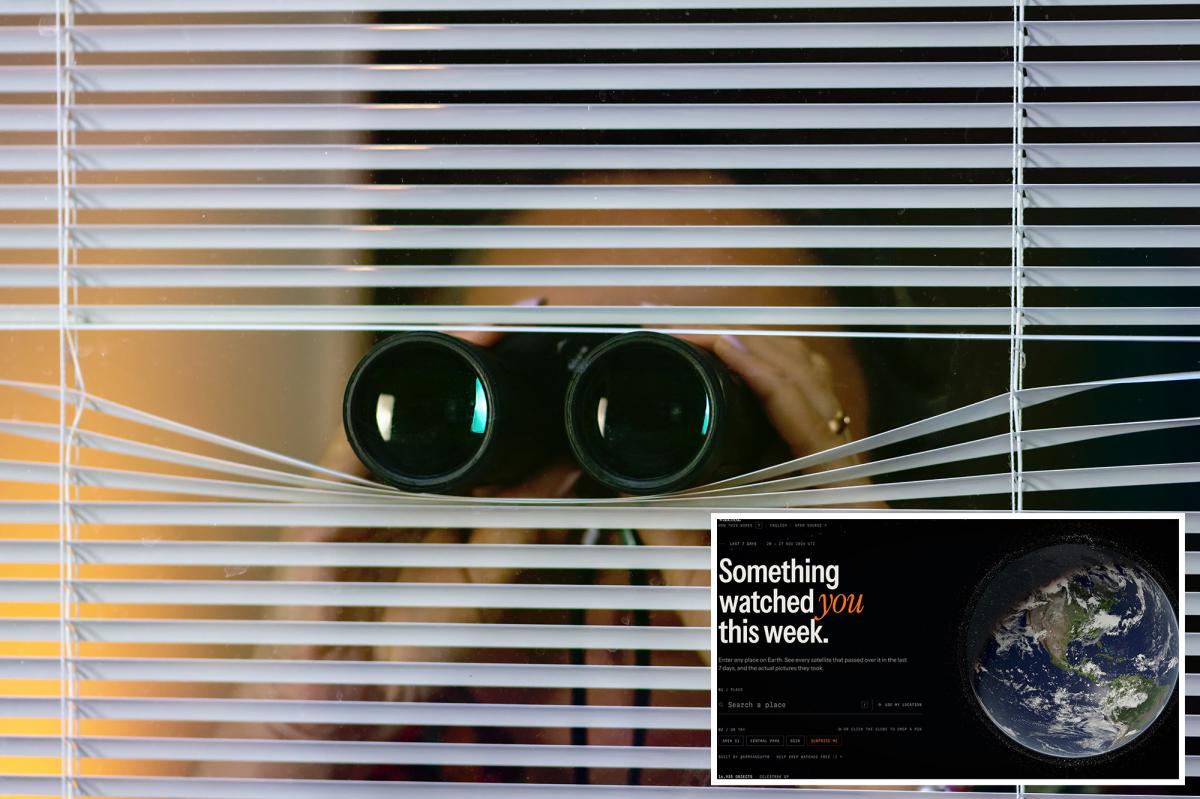
Maybe it’s time to close the blinds. If giving up your credit card and Social Security number wasn’t enough, now your home is online and can be monitored. Eager Americans have discovered a new website that allows anyone in the world to view a snapshot of any location. The website is called Watched and is essentially the new digital version of a voyeur, but less extreme. The site allows anyone to see which satellites have passed over virtually any location on Earth and whether they may have photographed it. The new watch.earth tool allows users to choose any global location to view satellite images collected over the past seven days. Observed This is how it works: simply enter any place on Earth, your home, workplace (even an ex) to see how many satellites have passed over it and if there are any publicly available images. The website makes tangible a form of surveillance that would otherwise go unnoticed. It’s free, requires no registration, and performs its orbital calculations from within your browser. The company can track locations using around 400 images, weather, radar and manned satellites over the previous seven days, so it’s pretty up to date. Users can find out if those satellites took photos by searching public archives of satellite images, including NASA, Sentinel-2, and Landsat. Watched also recreates the satellite’s actual flight path and shows how its camera scans the ground. Does this mean that any unwanted digital voyeur can physically see you? Not quite. The website clearly states that its publicly available images have a resolution of about 10 meters per pixel at best. This means that people, cars and other small objects are too small to be identified. The Post entered its own address and discovered that it had been “surveilled” 225 times in the last seven days. Ernest – stock.adobe.com Watched has four levels of watch: Watched, Probably Watched, Could Have Aimed Here, and Overlooked. Observed: An actual image of the location exists in a public file. Probably seen: an always-on satellite camera covered the area, but no image was released. It could have been targeted here: a steerable or commercial satellite was within range and it could have been targeted. Passed Over: A satellite crossed overhead with no known camera recording. The Post entered its own address and discovered that it had been “observed” 225 times in the last seven days. The site also revealed that 2,046 images of the office were made public. The historic landmark, Central Park, cannot be freed from the deep state either. The icon has been caught on camera at least 30 times by satellites with publicly available images. Users can even visit the deeply clandestine Area 51 military base, which has 265 satellites capturing 2,048 images, according to the site. So how do people feel about being watched digitally? It’s a mix of things. X users wrote how truly terrified they were by the intrusive website. “It’s actually a little scary,” one wrote. Others like the idea, commenting: “Very cool” and “The real pictures make it even better.” Whatever you think, the next time you feel like someone is watching, don’t just stare at the windows; you might want to look up.