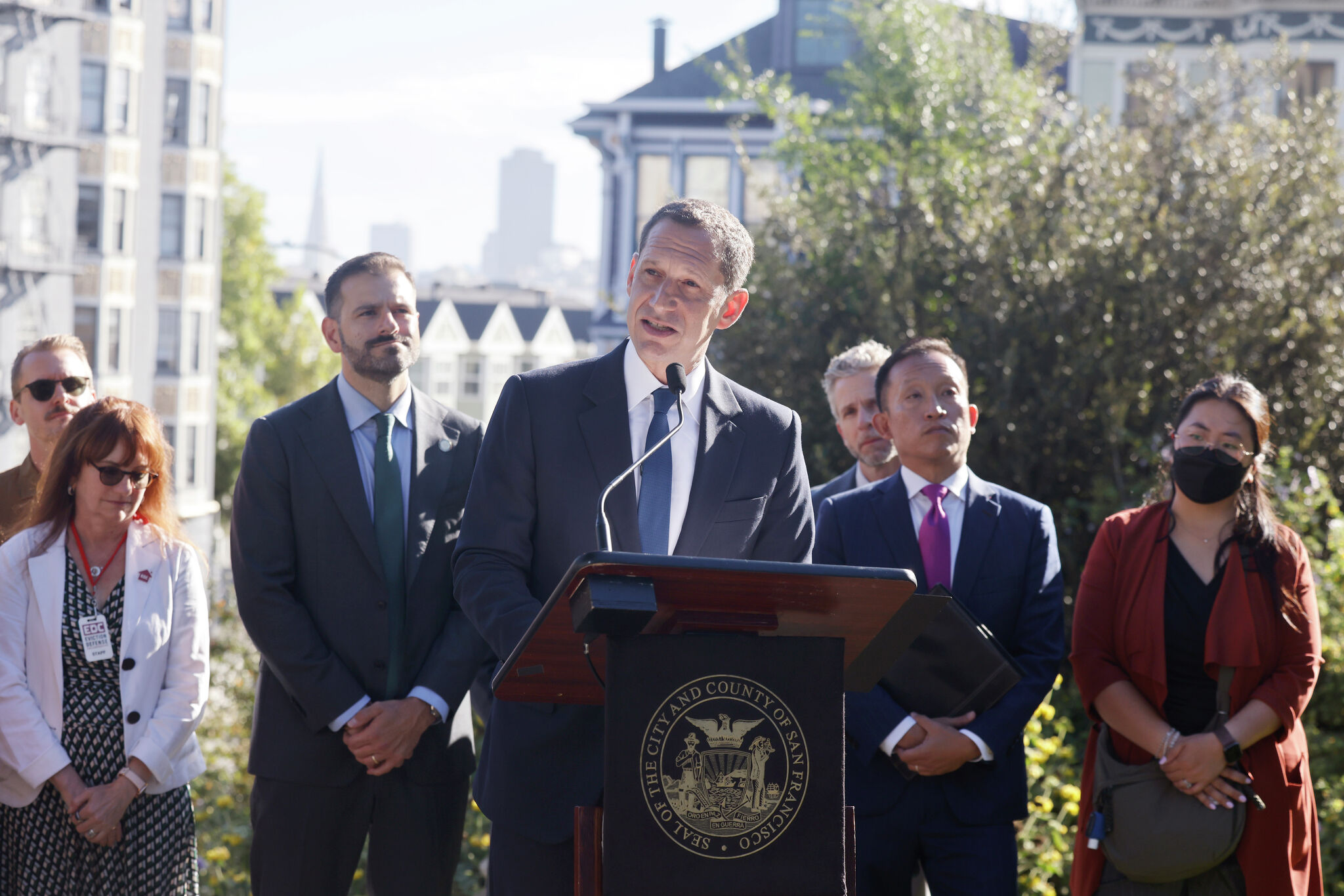
Mayor Daniel Lurie on Thursday announced a package of six ordinances to prevent tenants from being evicted and protect more people from large rent increases as part of his efforts to address what he called “San Francisco’s rental emergency.” Lea Suzuki/SF Chronicle Mayor Daniel Lurie is stepping up efforts to counter skyrocketing rents sweeping San Francisco amid the AI boom, in a bid to address concerns that the city is too expensive for all but its wealthiest residents. Lurie on Thursday announced a package of six ordinances to prevent tenants from being evicted and protect more people from large rent increases as part of his efforts to address what he called “San Francisco’s rental emergency.” He also said the city would launch a new public education campaign designed to inform residents at risk of displacement about their legal rights. The proposals come as the mayor faces growing pressure to take bolder steps in response to the city’s worsening affordability problems. While San Francisco has long had one of the most expensive real estate markets in the country, rents have risen at a surprising rate as well-paid workers at artificial intelligence companies flock to a city that has built very little new housing in recent years. Median rents in San Francisco last month rose nearly 26% from a year earlier, according to rental platform Apartment List, which described rental growth in the Bay Area as “truly staggering” and “far outpacing all other markets in the country.” Additionally, eviction notices increased 44% in the city’s latest one-year period tracked, although they remained below levels seen in the last two tech booms. All of that has created a political problem for Lurie, a popular mayor who has repeatedly pushed the narrative that he is leading San Francisco to brighter days after its economy plummeted during the pandemic. It has recently faced criticism from housing advocates who say it should do more to spur construction of new housing and from progressives who argue it is not doing enough to help renters stay in the city. Most San Franciscans are unlikely to see immediate relief from the mayor’s package, but it could help prevent some of the most vulnerable from being kicked out of their homes. San Francisco already has some of the strictest eviction protections in the country. At a news conference Thursday morning at Alamo Square Park, Lurie said that while most residents “feel like the city is finally moving in the right direction,” many of them are also “asking another question: Can I still afford to live here?” “San Francisco is in a rental emergency, and as elected leaders in this city, we must take action that fits the moment,” Lurie said. “Rising rents are making it harder to stay here for people who have built their lives here.” Article continues below this advertisement. Lurie said San Francisco should welcome new residents and businesses that want to invest in the city, but past economic booms have shown that “new opportunities can also lead to rising cost pressures and a cycle that leaves too many people behind.” ordinance that would increase payments owed to tenants if they are evicted under the state Ellis Act by 25%, or about $3,000 per person. The law allows landlords to kick tenants out of rent-controlled housing if the landlord plans to take the units off the market. Another of the mayor’s ordinances would add $3 million to a city program that provides free legal representation to tenants threatened with eviction. The money would allow 400 households that would otherwise have received only partial assistance through the program to obtain comprehensive legal support, according to the mayor’s office. Additionally, Lurie’s homeless department will support legislation that would spend $27 million on rental subsidies to cover the loss of federal housing vouchers that are set to expire at the end of the year. That money would help about 650 extremely low-income households, the mayor’s office said. Article continues below this advertisement. Lurie previously announced his support for Supervisor Jackie Fielder’s legislation that would ban evictions unless a tenant owes more than one month of fair market rent as defined by the federal government. He included that ordinance in the six he detailed Thursday, along with two additional ones backed by Supervisors Matt Dorsey and Danny Sauter. Sauter’s legislation would place a 10% limit on “roll-up” rent increases, which is when owners of rent-controlled units do not impose an allowable rent increase and save it for later. Meanwhile, Dorsey’s legislation would ensure tenants receive annual reminders about rent increase limits and legal barriers surrounding evictions. At the Alamo Square news conference, Sauter said “the core of what makes up San Francisco” was threatened by runaway rents. “We can no longer be a sanctuary city if the entry fee is $5,000 for a one-bedroom apartment,” Sauter said. “And we can’t be a city of opportunity if our small business owners, our creatives and our artists choose to live somewhere else because they can’t afford to live here.” Beyond the six ordinances, the city will also spend $1 million on a “Know Your Rights” public awareness campaign that will educate tenants and landlords about legal safeguards and responsibilities. The mayor’s office said the Chamber of Commerce had agreed to recruit its members to help with that campaign. Article continues below this advertisement. San Francisco will also make an effort to direct more tenants to a City Attorney’s Office complaint form where residents can report problems with business or property owners who may be violating the law. “Tenant protection laws can only help if tenants know about them and they are enforced,” City Attorney David Chiu said at Thursday’s news conference. Chiu said his office would focus on “eliminating systemic bad behavior, patterns of illegal behavior, that are forcing people from their homes.” Lurie’s office said his announcement was a continuation of the “Family Opportunities” agenda he launched earlier in the year to focus on affordability. The first part of that agenda expanded free and subsidized child care. Furthermore, the centerpiece of his housing work so far has been his “Family Zoning” plan, which allows for the construction of taller, denser housing on the west and north sides of the city. But the mayor’s critics want him to go further. Last week, former Supervisor Dean Preston criticized Lurie in a two-minute video on social media that compared him unfavorably to New York Mayor Zohran Mamdani. In the video, Preston said Mamdani was “using the power of government to lower rent and improve the lives of workers,” while San Francisco landlords “got everything they wanted from Lurie as rents went up, up, and away.”