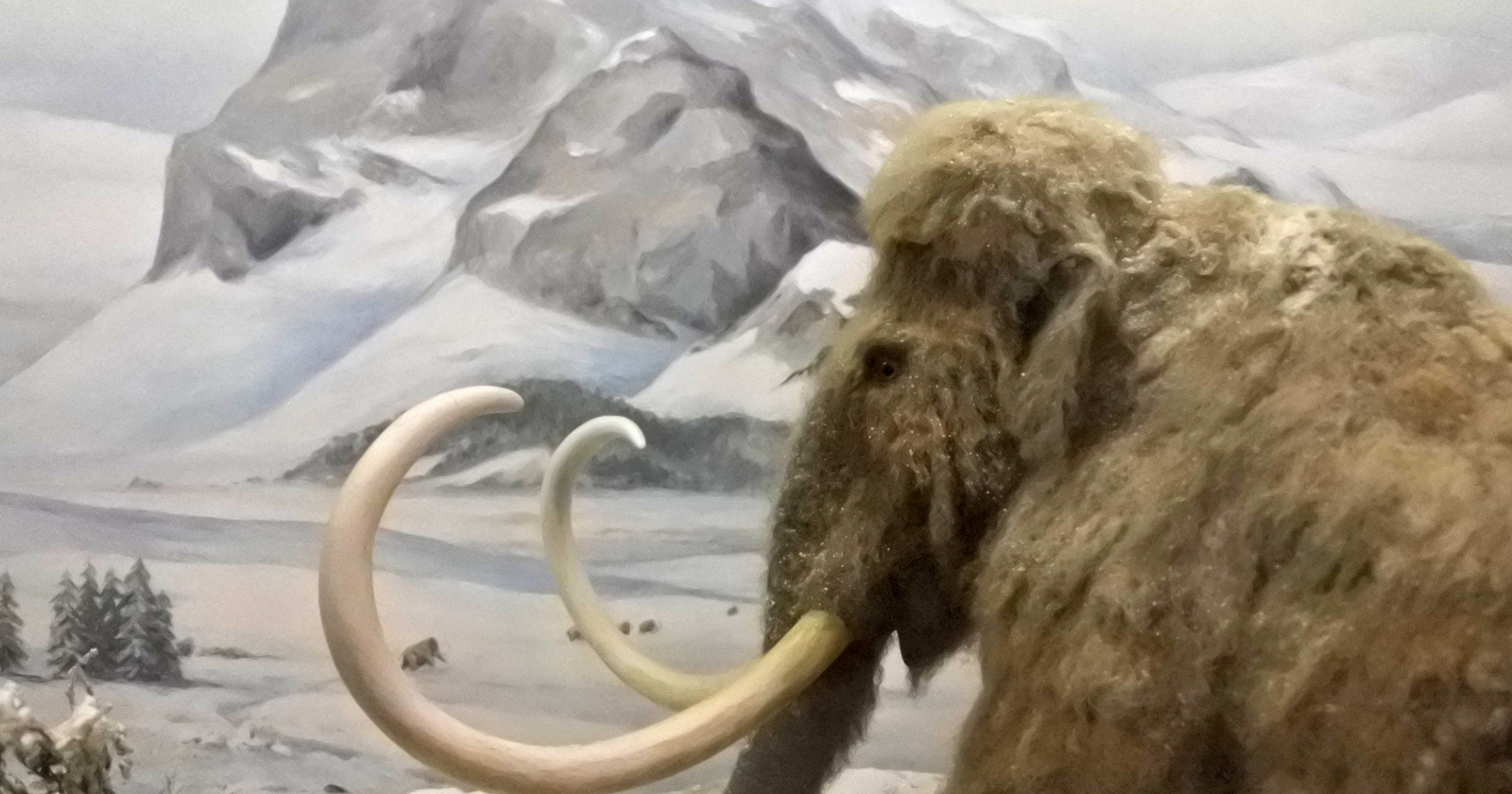
RNA is the molecule that biologists generally consider disposable. Unlike DNA, which is designed to be a long-term stable file, RNA is made, used and broken down by a cell in a matter of hours, sometimes minutes, as part of an ordinary task: converting genetic instructions into proteins and then discarding the messenger after the job is done. Outside a living cell, with nothing actively protecting it, most RNA is expected to degrade within hours or days. That’s the basic assumption that researchers have worked with for decades. A team led by Emilio Mármol Sánchez, now at the Globe Institute at the University of Copenhagen, in collaboration with Love Dalén at the Center for Paleogenetics at Stockholm University and colleagues including Marc Friedländer and Bastian Fromm, has recovered and sequenced RNA from muscle tissue belonging to a woolly mammoth frozen in the Siberian permafrost for approximately 39,000 years. The work was published in Cell in November 2025. This is a study built around a specific set of samples, not a set claim about how long RNA can survive in any condition. Permafrost offers something close to ideal preservation: sustained subzero temperatures that slow down the chemical and microbial processes that normally break down RNA. What the paper shows is that under those particular conditions, during that particular time frame, enough RNA survived intact to be read. Yuka’s latest stress signal The most comprehensive results came from Yuka, a juvenile woolly mammoth recovered from Siberian permafrost and one of ten permafrost-preserved mammoths sampled for the study. Genetic analysis in this study revised the sex of Yuka to male, correcting previous field assessments. The woolly mammoth genome contains more than 20,000 protein-coding genes, and from Yuka’s frozen leg muscle the team recovered several hundred active transcripts, a small fraction of that total, but a surprising number to find intact in such ancient tissue. Among them were genes associated with muscle contraction and metabolic regulation under physiological stress, the type of activity that a cell increases when an animal’s body is under acute stress. Marmol clearly described the meaning in comments posted on EurekAlert: “We found signs of cellular stress, which is perhaps not surprising since previous research suggested that Yuka was attacked by cave lions shortly before his death.” That earlier finding, that Yuka had wounds consistent with a cave lion attack, came from separate prior research into the specimen’s remains. What the new RNA data adds is a molecular echo of the same event: evidence that Yuka’s muscle cells were actively responding to stress at or near the time of death, rather than simply a body that happened to be carrying old wounds. Dalén, speaking with NPR, put it this way: “You’re actually seeing processes happening inside the cells right at the moment they died. And then these processes have been frozen in time for 40,000 years.” Demonstrate that the signal is real, not contamination. Research into ancient biomolecules has a persistent contamination problem. Any sample handled by modern researchers, stored in modern facilities, or exposed to modern environmental microbes runs the risk of picking up genetic material that has nothing to do with the sample itself. For DNA, researchers have developed decades of authentication techniques to separate genuine ancient signals from contamination. RNA authentication is a newer and less established discipline, which makes the question of proof unusually important here. The team relied on microRNAs, short regulatory RNA molecules, as an authentication tool: Rare mutations within specific microRNA sequences matched known mammoth genetic markers rather than anything from a modern contaminant. Fromm called this, in comments published in the same EurekAlert release, “an irrefutable demonstration of their gigantic origin,” while Friedländer described muscle-specific microRNAs as “direct evidence of gene regulation occurring in real time in ancient times.” The distinction matters: Without that authentication step, a stress response signal recovered from 39,000-year-old tissue would be much harder to support. What this opens up and what it doesn’t open It’s tempting to read a result like this as an opening to a new field of ancient physiology, one that reconstructs to scale the last moments of long-dead animals. This is a single study, working from a small number of well-preserved specimens in unusually favorable freezing conditions, and permafrost mammoths are a poor model of what can be recovered from remains preserved elsewhere on Earth. Hotter, wetter, or more disturbed burial environments degrade RNA much faster, and nothing in this article suggests those boundaries have moved. What the study does establish is a lower limit: RNA can survive for tens of thousands of years, under the right conditions, in a form complete enough to say something specific about what an animal’s cells were doing shortly before it died. Whether that finding extends to other frozen samples, other tissue types, or other time scales is a question that remains to be asked. Standards Space Daily articles are edited and fact-checked before publication. We use artificial intelligence tools in the newsroom. See our editorial standards and masthead.