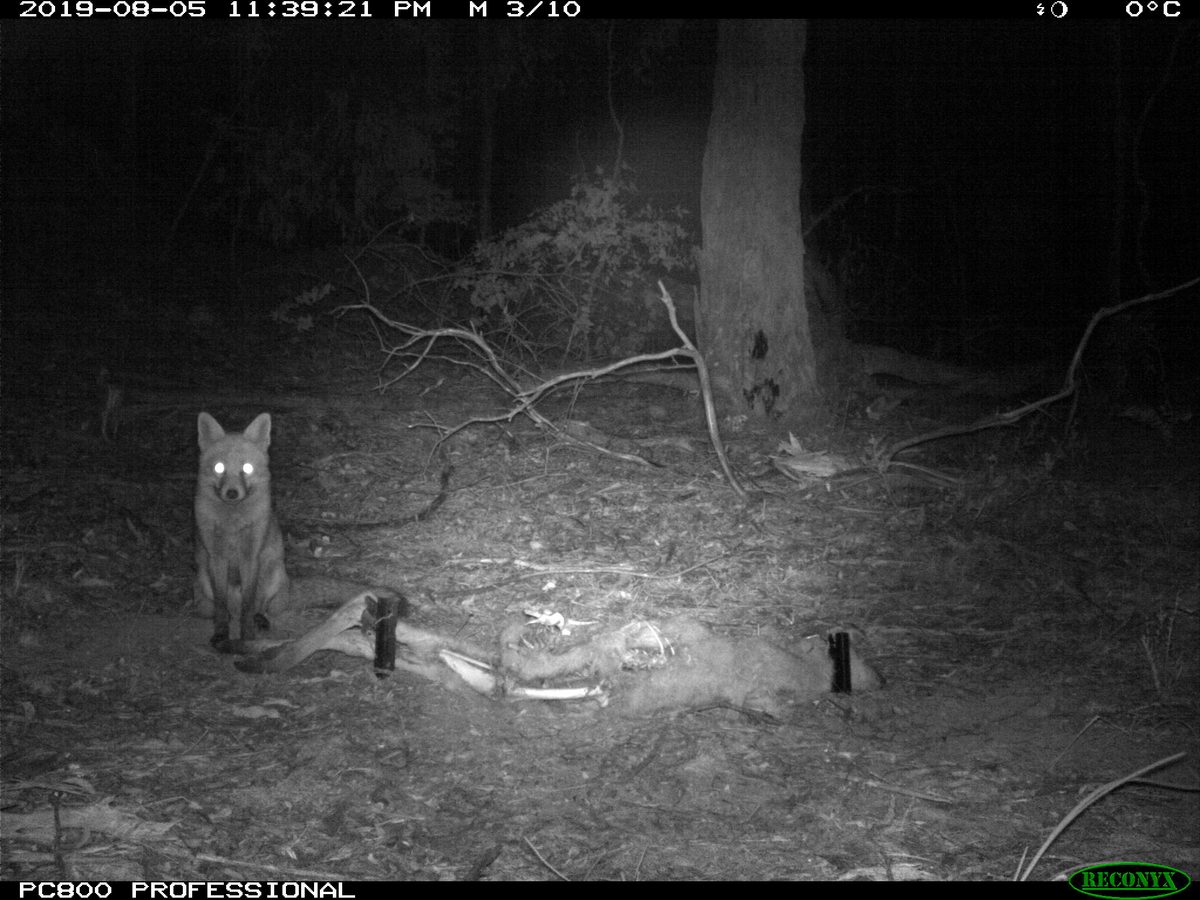
You may be familiar with apex predators, but what about apex scavengers? These large animals play an equally important role in ecosystems as nature’s clean-up crew, feeding on carrion (animal remains) and preventing the spread of disease. Apex scavengers can help structure scavenger communities and often dominate trophic levels (the position in which an organism is located within a food web). But little is known about their selective feeding behaviors, specifically which parts of carcasses they target and whether this changes over the seasons. “We knew that recent work had found that wild animals feed quite specifically to meet their nutritional needs and we thought it would be a fantastic opportunity to test this in carnivores, which have had little or no research in this space,” explains Niraj Meisuria, a PhD student working in the Disease Ecology Laboratory at the University of Sydney. So Meisuria, as well as other researchers from the University of Sydney and the University of Glasgow, deployed 40 eastern gray kangaroo carcasses across the Wolgan Valley, on the edge of the Great Blue Mountains National Park in New South Wales. Twenty carcasses were distributed in both the warm and cold seasons so that scientists could study whether temperature influenced feeding behaviors. The kangaroos came from damage mitigation culls in the local area, and the carcasses showed evidence of high parasite loads. The researchers then set up camera traps near the corpses and left them for 30 days. Caught on camera Cameras captured the activity of dingoes and wedge-tailed eagles (both superior scavengers), as well as red foxes (a smaller, more opportunistic scavenger, known as a mesos scavenger). The findings, published in the journal Royal Society Open Science, showed that although apex scavengers demonstrated clear food preferences, they all targeted non-protein energy sources. Wedge-tailed eagles frequently prioritized the head and abdomen of carcasses, feeding on the head more frequently than the other species in the study. Dingoes preferred the kangaroo’s tail. Both also outcompeted red foxes for these body parts, indicating that superior scavengers could affect the survival and fitness of meso-scavengers. However, the team found that the behavior of apex scavengers changed over the seasons, with both eagles and dingoes feeding more from the abdomen in the cold season. As the decomposition of the carcasses progressed, the favorite body parts of the eagles and dingoes changed, while the foxes showed little change. “The most significant finding was observing, for the first time, the selective feeding behaviors of scavengers and how this is affected by season and time,” says Meisuria. “This study provides evidence that it is not just herbivores that selectively forage to meet nutritional targets. It is always very exciting when your suspicions about a natural phenomenon turn out to be correct.” Cover image: a red fox captured by one of the camera traps next to the carcass of a kangaroo. Credit: Meisuria, N. et al.