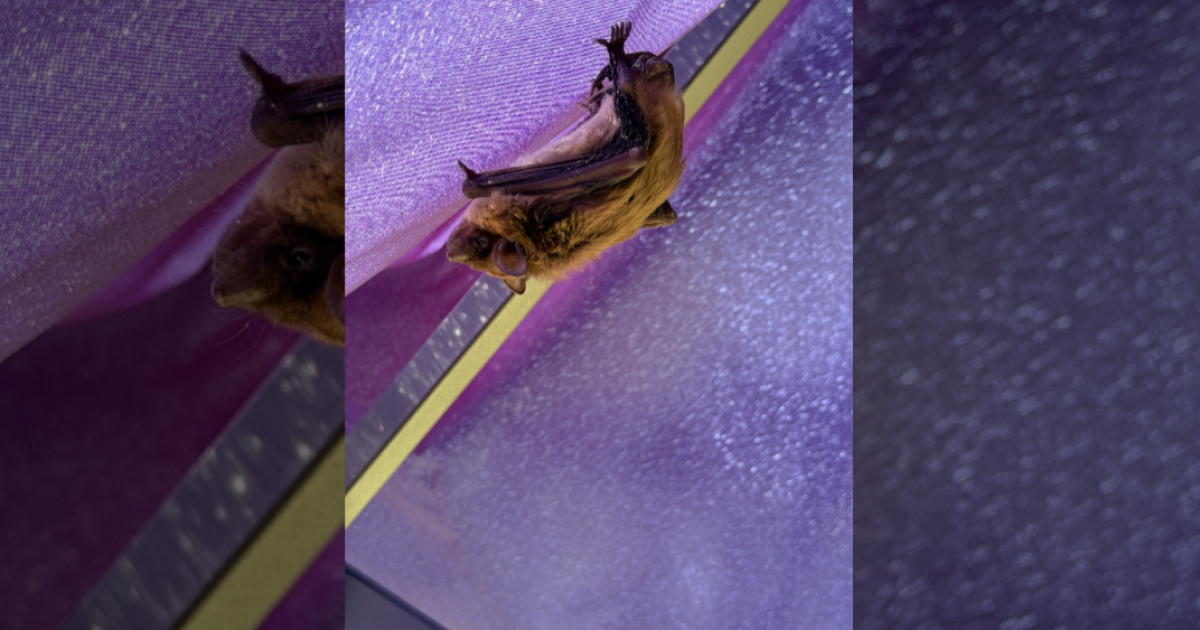
KANSAS CITY, Mo. — KSHB 41 reporter Lily O’Shea Becker covers Franklin and Douglas counties in Kansas. Share your story idea with Lily.—The Kansas City, Missouri, Health Department is urging awareness and precaution as it has noted an increase in both human exposure to bats and bats testing positive for rabies.
Rabid bats are on the rise in Kansas City. Rabies treatment can cost thousands.
On Sept. 10, the Centers for Disease Control and Prevention (CDC) issued a health advisory saying communities across the country have reported an increase in human exposure to rabid or possibly rabid animals since July. Both the Kansas Department of Health and Environment and KCMO Health Department have issued similar messages, primarily about bats.
Chris Morrison/KSHB
Dr. Dana Hawkinson, University of Kansas Health System
“It is 100% fatal, but getting vaccinated, getting the proper evaluation and treatment will save your life,” Dr. Dana Hawkinson, medical director of infection prevention and control for the University of Kansas Health System, said of rabies. Hawkinson said it’s important to contact a local health department after a possible exposure to assess the risk of rabies. He also recommends getting an expert to capture and remove bats from living spaces. Rabies transfers from animal to animal via saliva. Saliva can enter a body through a bite or scratch. “It does take time for that rabies virus to travel up your nerves, so that is why we do have time,” Hawkinson said. “But it is important to get vaccinated or immunoglobulin after exposure.”Marvia Jones, director of health for the KCMO Health Department, says immunoglobulin injections are only available in emergency rooms. In May, I woke up to a bat flying around my apartment in Kansas City’s Midtown neighborhood. “Certainly, waking up in a room and you see a bat, that can be basically an exposure because you just don’t know,” Hawkinson said. “Bats are very tiny animals. They have very tiny teeth, very sharp teeth. It is always really hard to know or tell if you have been bitten and exposed to rabies in that way.”Because I woke up to a bat, I visited a local emergency room where I was advised to start the rabies shot series. For the initial round, I was billed $41,589.84 before insurance. During the emergency room visit, I received six shots — the immunoglobulin injection and the rabies vaccine.
Lily O’Shea Becker
Lily O’Shea Becker’s emergency room bill for the first round of the rabies shot series.
Experts say bats can squeeze through spaces that are the size of a dime. I suspect a bat entered my room through a crack in my window screen and escaped before it could be captured for testing. Because I was unable to get it tested, I had to follow through with the remaining three rounds of the rabies shot series, including the rabies vaccine. I received the final rabies vaccinations at the infusion clinic of the hospital I initially visited for the first round.Those three rounds would have cost me $16,020.06 without insurance. I was billed $206.25 for the final three rounds and paid $1,731.89 in total for the rabies shot series.
Lily O’Shea Becker
Lily O’Shea Becker’s bill for one of the final three rounds of the rabies shot series.
“I just have sort of casually heard people talking about, ‘Man, going to the ER is expensive,’ and we do empathize with that,” Jones said. The KCMO Health Department administered 52% more rabies vaccinations in 2026 compared to 2025, according to the department’s senior disease investigator, Caylin Henry. While the health department does not provide the immunoglobulin shot required in the first round, it can administer the rabies vaccine for the following three rounds.
Chris Morrison/KSHB
Marvia Jones, Kansas City, Missouri, Health Department
Jones said the health department has resources to help with the cost of those shots. The city’s animal control also provides free services to capture the bat for testing “If we can find that the bat was negative for rabies, that saves the person time and money,” Jones said. Seven bats have tested positive in Kansas City in 2026. It’s the highest number of rabies-positive bats in the city in more than 10 years, according to the health department. Jones said the health department is not trying to scare residents, but is trying to make the public aware of the increase in rabies activity in the city. “We want people to understand there are some steps they can take to prevent exposures in the first place in terms of bats getting into homes and also remind them of the process of what to do when you find a bat,” Jones said. You can learn more about what to do if you encounter a bat by visiting the KCMO Health Department’s website.—