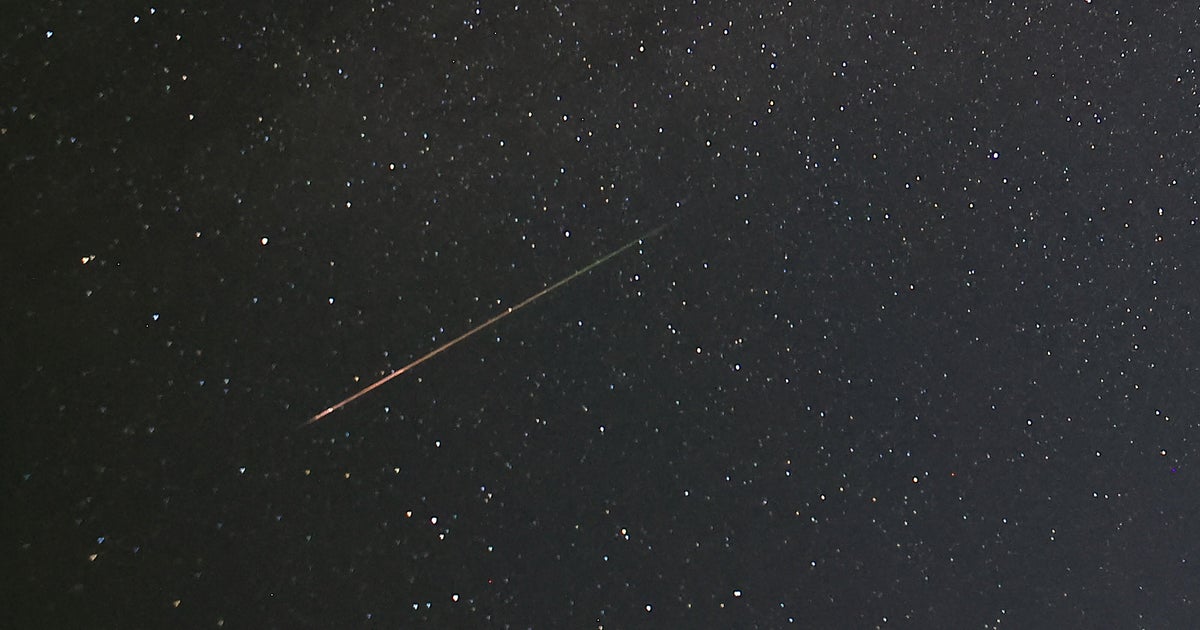
The Perseid meteor shower will put on a late summer spectacle in the skies over the United States. The meteor shower, which NASA considers the best of the year, will peak on August 12 and 13. “With fast, bright meteors, Perseids often leave long ‘trails’ of light and color behind them as they pass through Earth’s atmosphere,” according to NASA. “The Perseids are one of the most abundant showers, with around 50 to 100 meteors seen per hour.” For those trying to see the meteor shower on Wednesday night, the best time to see it in the Northern Hemisphere is during the pre-dawn hours of August 13, but if you don’t want to get up too early, you can still see them as early as 10 p.m. the night before. Random meteors are visible in dark skies on any given night. Meteor showers tend to offer dazzling celestial spectacles and occur at predictable times each year as Earth passes through debris trails left by comets and sometimes asteroids. Those debris collide with Earth’s atmosphere at extremely high speeds, producing rays of light known as shooting stars. The Perseids are remnants of Comet 109P/Swift-Tuttle, an icy ball that orbits the Sun every 133 years and is not scheduled to return until 2125. Observations of this meteor shower date back more than 2,000 years. The Perseids are a perennial favorite because they tend to produce bright stars. fireballs Summer temperatures also make this shower popular. “We don’t have to suffer a cold winter night to get a good view of meteors,” said astronomer Zach Vanderbosch of the McDonald Observatory in Texas. The moon will be in its new moon phase during the peak of the Perseids, making viewing conditions even better. “The moon is beautiful, but it’s a diva,” said astronomer Aparna Venkatesan of the University of San Francisco. “The new moon means we don’t have moonlight flooding the sky and, as a result, you tend to see a lot more meteors.” To spot meteors, go outdoors after dark, away from clouds and city lights. Venkatesan plans to drive to the Sierra Nevada. The best views will be between midnight and dawn, when the constellation Perseus is high in the northern sky. The meteors will appear to radiate from that constellation. Look up and give your eyes half an hour to adjust to the darkness. Vanderbosch recommends choosing a patch of sky to focus on until a fast, bright bolt passes by, even in your peripheral vision, and avoiding looking at your phone. “There’s something magical about this,” Vanderbosch said. More from CBS News Go deeper with The Free Press in: