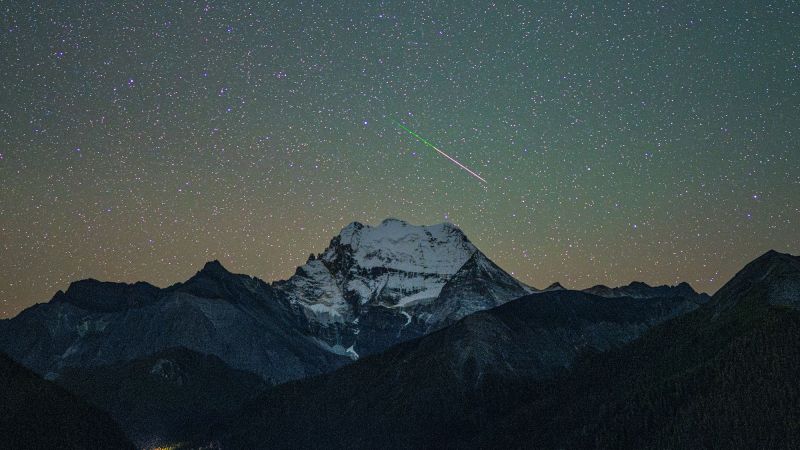
The Orionid meteor shower creates one of the brightest displays in the night sky each fall, but this year’s celestial event may look dimmer due to a bright moon. Unlike the recent Draconid meteor shower, a treat for early sleepers, the Orionids will reward those who stay up late or get up in the dark hours before dawn. The shower, which appears every year as Earth passes through the debris trail left by Halley’s Comet, is expected to peak at 2 p.m. ET on Wednesday. That means the best time to spot the rapidly flashing meteors will be during the nighttime hours between Wednesday and Thursday, according to EarthSky. Skywatchers in the northern and southern hemispheres should start seeing meteors after midnight local time. Just days before the full moon rises on October 26, the crescent gibbous moon will be 76% illuminated Wednesday night, according to the American Meteor Society, which could make it difficult to detect the shower during parts of the observing period. But the bright moon is expected to set a few hours before dawn, so skywatchers will have an optimal window to spot up to 20 meteors per hour. Orionid meteors are known to fly at high speeds, passing through Earth’s atmosphere at 41 miles per second (66 kilometers per second). Some of the bright space rocks can leave lingering trails that remain visible for seconds or minutes, while larger pieces of debris can create exceptionally luminous fireballs as they disintegrate in the atmosphere, according to NASA. The Orionids appear to originate in the direction of the constellation Orion, hence the shower’s name, but the meteors will be visible in the night sky. Halley’s Comet completes an orbit around the Sun approximately every 76 years, spewing dust and debris along the way. Earth intersects this trail every October and again every May, resulting in the Eta Aquarid meteor shower. But unlike our planet, Halley’s Comet moves in a retrograde orbit, meaning it moves in the opposite direction around the sun. For the best view of the Orionids, avoid areas with heavy light pollution, such as urban areas with streetlights. Sit in a reclining lawn chair or lie on your back for a wide view of the sky. There are more meteor showers to look forward to as the end of the year approaches. These are the peak dates to glimpse these dazzling celestial events, according to the American Meteor Society. Southern Taurids: November 4-5 Northern Taurids: November 11-12 Leonids: November 16-17 Geminids: December 13-14 Ursids: December 21-22 Subscribe to CNN’s Wonder Theory science newsletter. Explore the universe with news about fascinating discoveries, scientific breakthroughs and more.