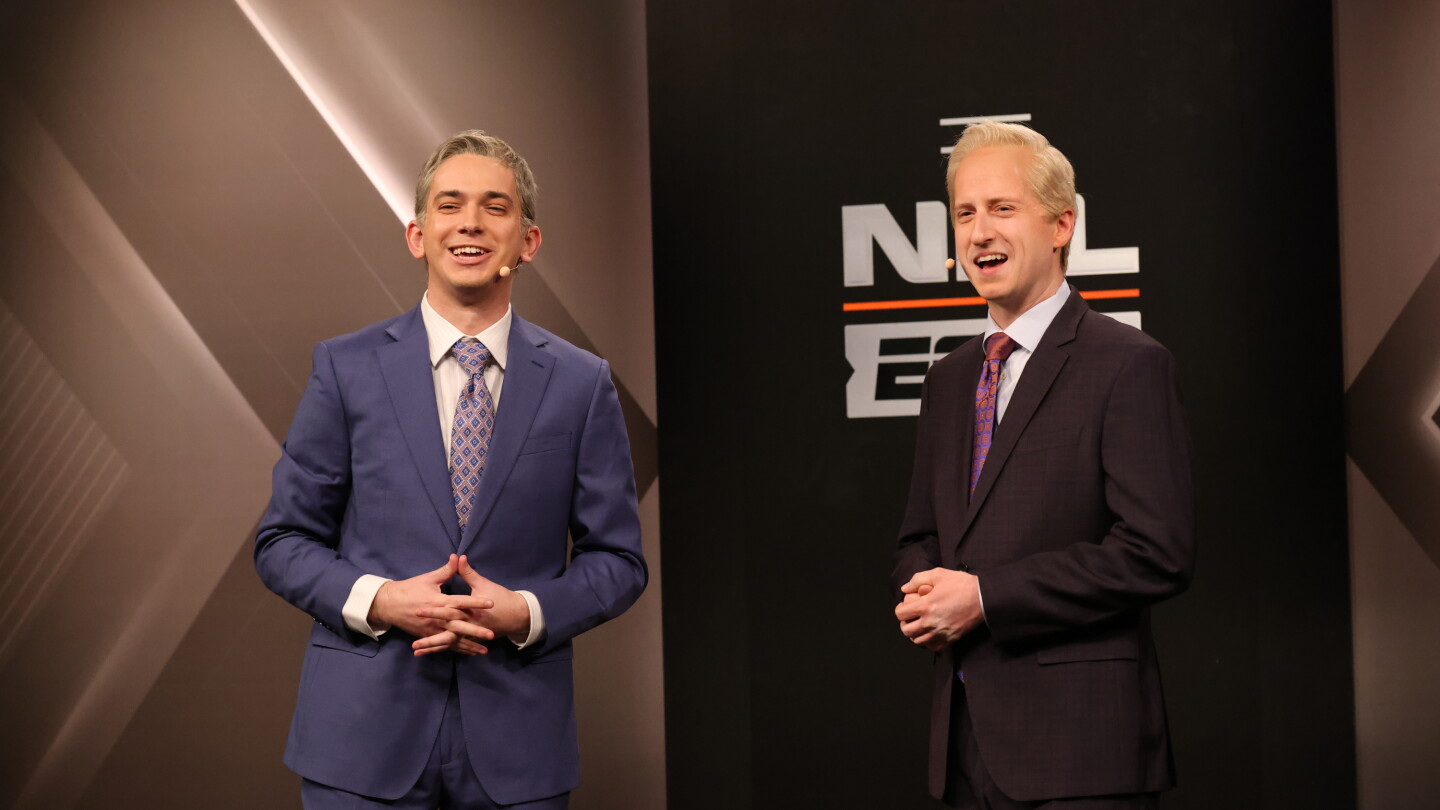
The inevitable Saturday Night Live parody should be very entertaining. But maybe it’s not as entertaining as reality. As the dysfunction between Troy Aikman and Joe Buck continues to simmer, The Athletic’s Andrew Marchand has provided the clearest and most complete details yet about what happened, in a lengthy article that delves into the nooks and crannies of a 25-year relationship gone sour. There’s a lot in there, and it’s worth reading the whole thing. For these purposes, here are the facts that seemed to be the most significant. First, Marchand reports that before Monday night’s Week 5 game in Los Angeles between the Bills and Rams, ESPN president Jimmy Pitaro “had a tense hour-long chat” with Aikman. According to the report, Aikman and Pitaro “discussed the breakup” between Aikman and Buck, “and whether there is a future for the duo.” “Could you still work with Joe?” Pitaro asked Aikman. Aikman said he could. But then came the verbal altercation between Buck and Aikman, with Buck telling Aikman (according to Marchand), “Aren’t you going to talk to me?” Marchand reports that Aikman believed that Buck was hoping to provoke Aikman into a reaction that would leave Buck looking like “the good guy.” During their back-and-forth, Buck allegedly told Aikman, “I’m not the reason you don’t have a contract.” Aikman reportedly suggested that Buck manipulated the constant turnover in the ranks of Monday Night Football producers and directors, telling Buck, “I never thought you would do this to me.” (At some point, Aikman allegedly told Buck more clearly, according to Puck’s Dylan Byers, “You fucked with me!”). Buck said of the now-former producers and directors: “They got rid of them because you were yelling at them.” The hard feelings, according to Marchand, stemmed from Aikman’s perception that Buck and ESPN secretly worked out a new contract “early in the spring” while Aikman had to wait. That said, Marchand notes that Aikman agreed to leave Fox for ESPN at a time when it was unclear whether Buck would be able to follow him into Monday night. It’s unclear when Buck and ESPN specifically made their deal. In mid-April, Buck was talking as if he didn’t have a new contract. An August report from Front Office Sports created the clear impression that neither Buck nor Aikman had a new contract, and that their mutual agency (CAA) would likely approach negotiations as a package deal. And although, as Puck’s John Ourand reported, Aikman’s team at one point sought a raise from $18 million per year to $30 million (thanks to Tom Brady’s $37.5 million annual payday), Marchand reports that Aikman was ultimately willing to accept the same Buck received an 18 percent raise. ESPN passed. As Marchand explains, ESPN has now decided not to deal with Aikman because: (1) it doesn’t want to invest further in a relationship that has gone sour; (2) the network is generally in cost-cutting mode (except when it is not); and (3) ESPN believes “there is depth in the NFL game analyst market.” Aikman’s secondary role with the Dolphins, according to Marchand, is not a factor in ESPN’s reluctance to proceed. However, Aikman allegedly admits that he should have told Pitaro about his plan to work for the Dolphins before embarking on creating an obvious conflict of interest. From ESPN’s perspective, negotiations are simply “on pause.” Marchand reports that ESPN does not have a plan for a post-Aikman stand on Monday night. Given that ESPN believes “there is depth in the NFL game analyst market,” does it need it? ESPN probably realizes that if it makes the decision after Super Bowl LXI to move on from Aikman, his seat will easily fill. Through it all, Buck and Aikman share close quarters for three hours or more every Monday night. Many people are studying every word spoken and every hint of facial expressions and body language for evidence of a possible mid-air fight to come. For now, Aikman sees the writing on the wall. He said this week that there is a “50-50 chance” he won’t work in television next year. His public comments about possibly working for the Cowboys (which he now says he regrets) make it clear that he is available and willing to explore a full-time football role with one of the NFL’s 32 franchises. Regardless of how it plays out, it is unprecedented to have a primetime broadcast team in the midst of such public acrimony. For one thing, it tarnishes ESPN’s first Super Bowl season. On the other hand, it adds another layer of reality show to the ultimate reality show that is the NFL.