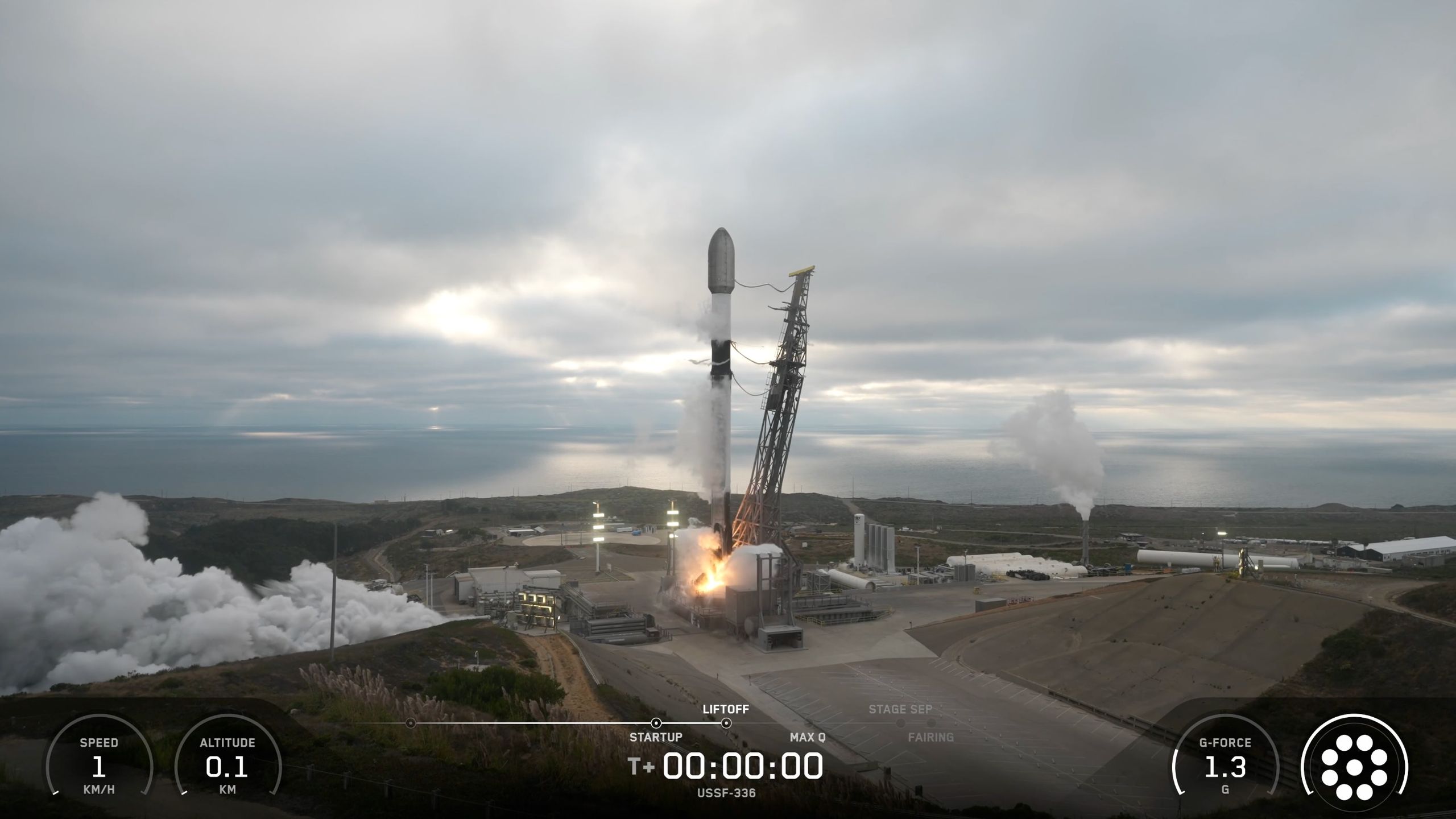
SpaceX continues to set records in spaceflight. Elon Musk’s company launches far more frequently than any other team and operates the largest satellite constellation ever created: the Starlink broadband network, consisting of nearly 11,000 satellites (and counting). On Saturday night (August 15), SpaceX set another record, for the shortest time between orbital flights: it launched two Falcon 9 rockets just 38 minutes apart, surpassing its old mark, set on August 1. December 31, 2024 with two Starlink missions, for 27 minutes. A SpaceX Falcon 9 rocket launches eight satellites for telecommunications company Globalstar from Cape Canaveral Space Force Station in Florida on August 15, 2026. (Image credit: SpaceX) The first liftoff, from Cape Canaveral Space Force Station in Florida, occurred Saturday at 9:12 p.m. EDT (0112 GMT August 16) and carried eight satellites to low Earth orbit (LEO) for Louisiana-based telecommunications company Globalstar. The spacecraft were successfully deployed and separated within six minutes starting 56.5 minutes after liftoff, SpaceX announced via social media. You may like As the Falcon 9 headed toward LEO, another one launched from Vandenberg Space Force Base on California’s central coast. That liftoff, at 9:50 pm EDT (6:50 pm local time; 01:50 GMT on August 16), began a mission for the US Space Force called USSF-366. A Globalstar satellite deploys from the upper stage of its Falcon 9 rocket on August 15, 2026. (Image credit: SpaceX) We know very little about USSF-366, which is not surprising given its classified status. However, rocket observers have made some inferences from the limited information available. “It is possibly a batch of classified LEO satellites for a US government entity based on SpaceX’s Starshield satellite bus, based on rocket stage drop zone locations exactly matching previous Starlink Group 15 launches,” NextSpaceflight.com wrote in its mission description. (Starshield is a SpaceX project that uses modified versions of Starlink spacecraft to perform national security missions for the US government.) It is unclear when and where the rocket’s upper stage will deploy the USSF-366 payload; SpaceX’s mission description does not reveal that information. And the company ended its livestream shortly after the first stage landed, as is typical for national security flights. Both missions on Saturday included successful rocket landings. The first stage of the Falcon 9 that launched the Globalstar mission returned to land at Cape Canaveral about eight minutes after launch. It was the fourteenth flight of that particular booster. Meanwhile, the first stage of the USSF-366 Falcon 9 returned to Earth about 8.5 minutes after launch, landing in the Pacific Ocean on the SpaceX “Of Course I Still Love You” spacecraft. That booster now has 18 missions under its belt. Saturday’s doubleheader brought the number of Falcon 9 launches in 2026 to 96. The vast majority of them, about 75%, have been Starlink missions.