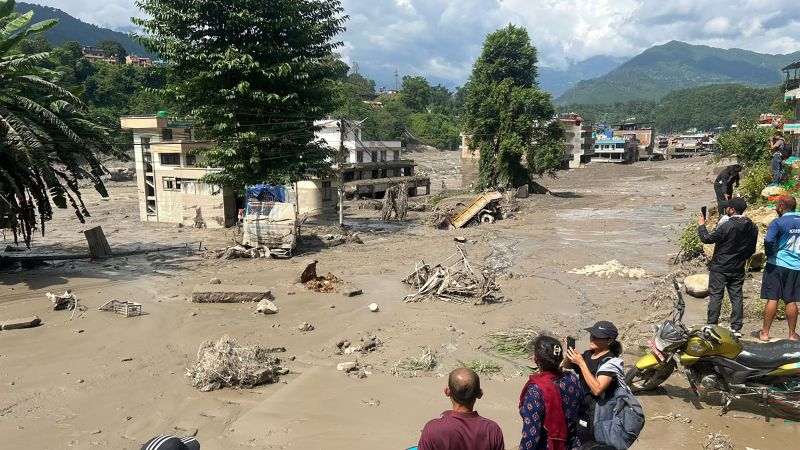
The cause of the devastating floods in Nepal is still unclear, but initial reports suggest that an earthquake triggered an avalanche of ice and rocks. This avalanche probably “blocked the (Bhotekoshi River) and caused a sudden surge downstream,” said Saswata Sanyal of the International Center for Integrated Mountain Development (ICIMOD) in Kathmandu, a regional climate organization. “These are cascading dangers,” he added, and what happens in the frozen mountains can quickly flood cities downstream. While avalanches can be caused by a number of factors, climate change often plays a role, scientists say. Nepal, in the rapidly warming Himalayan region, is home to thousands of glaciers that are melting and destabilizing as temperatures rise. Rates of ice loss from glaciers in the Hindu Kush Himalaya, a region that includes Nepal, have doubled since 2000, according to new research, with enormous risks for the nearly 2 million people who live downstream from them. Nepal is particularly vulnerable to “glacial lake outbursts,” sometimes described as inland tsunamis, where pools of water formed by melting glaciers become so full that they overflow, sending water and debris cascading down steep mountain slopes. A similar flood in the same region last year was blamed on a glacial lake burst in neighboring Tibet, but experts cannot yet say what role, if any, a burst may have played in the current devastating flood.