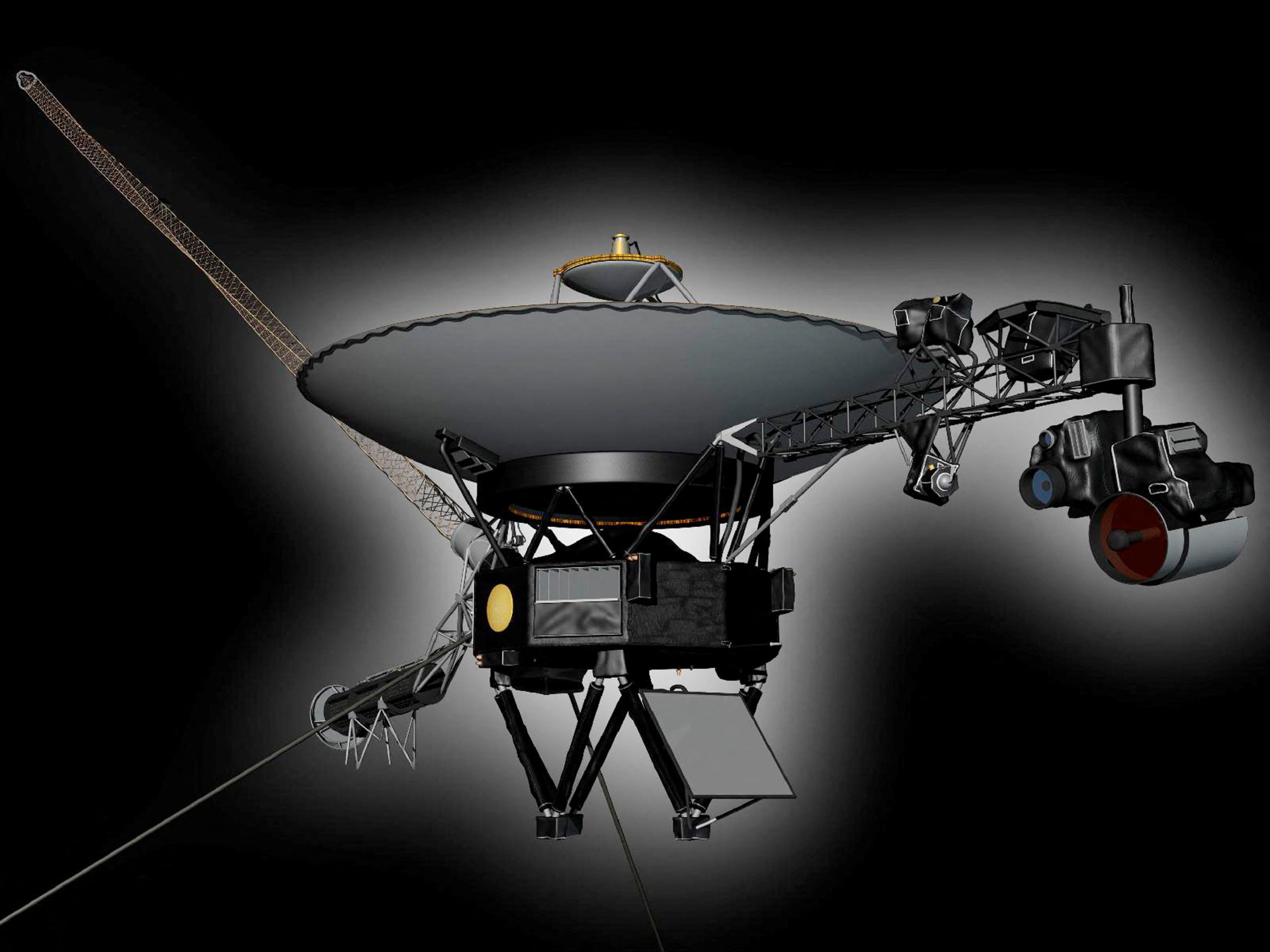
Voyager 1 reaches the milestone on Wednesday and is now about 26 billion kilometers away, according to NASA. Recommended Stories 3-item listend of list A light day is the distance light can travel in 24 hours, meaning it takes one day for messages sent from Earth to reach Voyager 1, and another day for teams on the ground to receive a response. The feat is “the best illustration of how vast space is,” said NASA scientist Tiffany Kataria. “Much of what we dream about is traveling to other star systems,” he told the AFP news agency. “And it took Voyager 1 almost 50 years to reach the edge of our own solar system, let alone within one light day.” Many exoplanetary systems, he noted, are at least several light years away. NASA expects Voyager 1 to take about 18,000 years to travel a full light year. Interstellar space Launched in 1977, Voyager 1 and its twin Voyager 2 are the only spacecraft to have reached interstellar space, the region beyond the Sun’s heliosphere. Voyager 2 is expected to reach one light day in 2035. Some of Voyager 1’s equipment, including its cameras, has been turned off remotely to save power, but the probe continues to study invisible phenomena such as magnetic fields. The data helps researchers study “the gas, dust and other materials that exist between stars,” Kataria said. Both ships carry “Golden Records”, 30cm gold-plated copper records intended to transmit the history of our world to extraterrestrials. Early in their voyages, Voyagers explored the giant planets Jupiter, Saturn, Uranus, and Neptune. Images of Jupiter taken by Voyager 1 revealed for the first time the existence of rings around the planet and helped scientists understand the “really extreme vortices and weather” in its atmosphere, Kataria added.