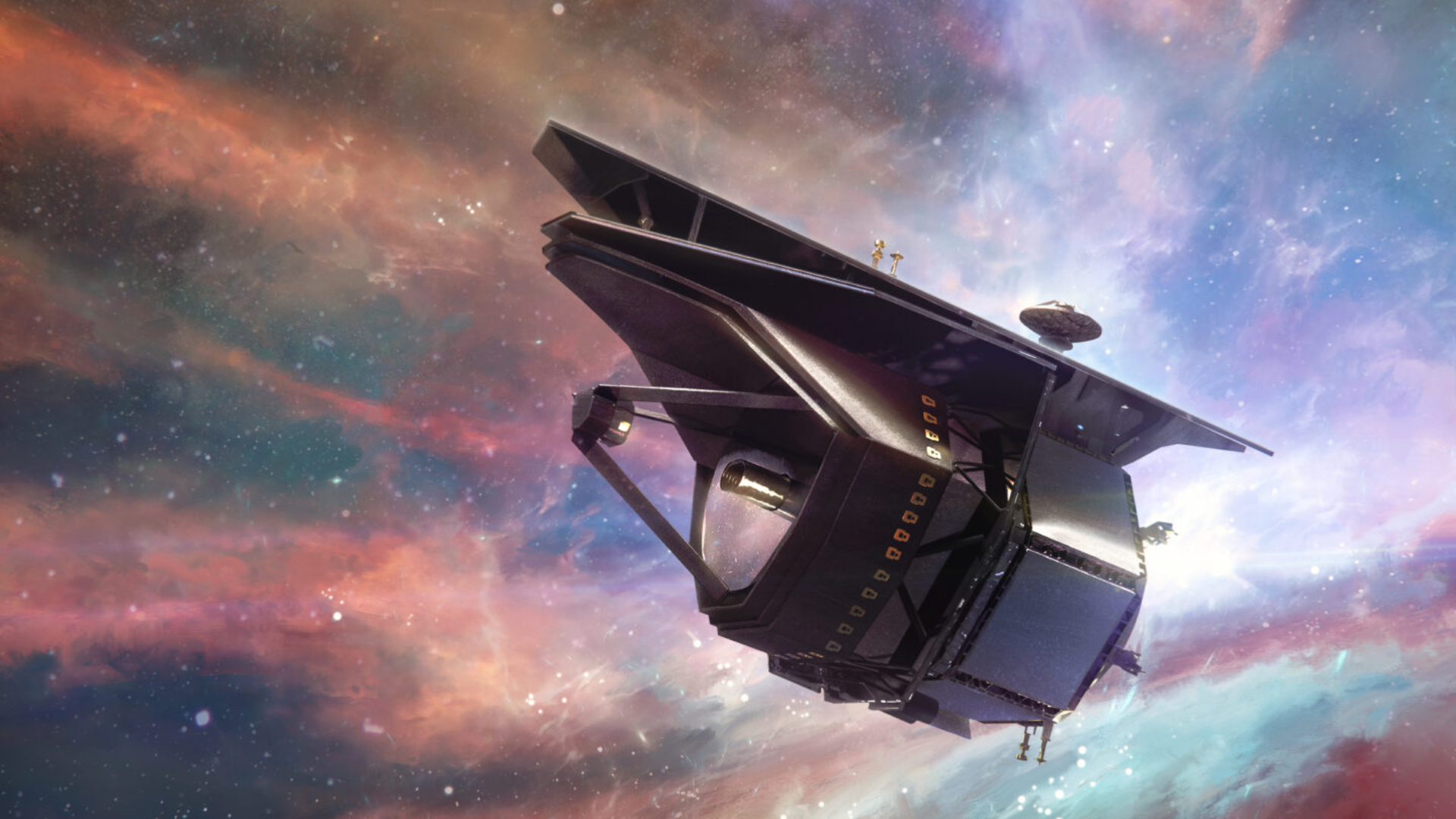
NASA is moving forward with a new mission that is the first of its kind. Last week, NASA announced that it had selected the PRIMA (Probe Far-Infrared Mission for Astrophysics) mission to advance to Phase B of development. This advances the design and technological development of the project, although the mission must still undergo a confirmatory review after this phase. If confirmed, PRIMA will usher in a new astrophysics for the agency, conducting studies of the universe at far-infrared wavelengths as its first mission in the “Probe Explorers” class. “The PRIMA mission is humanity’s next window into the deep universe. It will reveal the dark throughout cosmic time to better understand the formation of planets, stars, black holes and even how water arose on Earth,” said Nicky Fox, associate administrator of NASA’s Science Mission Directorate. a statement. NASA missions are classified by size, scope and cost. Since the launch of Explorer 1, the first US satellite to reach orbit, in 1958, the agency has launched a wide range of missions as part of its Explorers Program. PRIMA is the first mission within this program, a measure that arises from a recommendation of the 2020 Decadal Astronomy and Astrophysics Study, a 10-year plan published by the United States National Academies to outline scientific objectives for the next decade. So what will NASA’s first Probe Explorers-class mission do? Well, the agency hopes PRIMA can fill the gap in infrared spacecraft observations. NASA’s powerful James Webb Space Telescope studies the cosmos in near- and mid-infrared light. PRIMA, which is being designed with a 1.8-meter (5.9-foot) telescope, will be optimized to see in the far infrared. You may like Researchers hope that by expanding our view of the universe to include far-infrared wavelengths, they can explore the origins and evolution of everything from exoplanets or planets outside our solar system, to galaxies and black holes. Their goal is to use PRIMA as a lens that looks through history, allowing us to better understand how the dust, gas and debris scattered throughout the universe have evolved, over time, into the cosmos we see today. “A single mission cannot probe all the mysteries of the universe. But by expanding our fleet’s exploration capabilities to far-infrared wavelengths with PRIMA, we are enabling an incredibly comprehensive look at the cosmos,” Shawn Domagal-Goldman, director of NASA’s Astrophysics Division, said in the same statement. “With our Webb and Roman space telescopes, we established a cadence of launching world-class missions in both halves of the decade. We will maintain that pace and begin the next decade with PRIMA, as part of a portfolio that will consistently have missions of this caliber ready to go.” PRIMA, which will be managed by NASA’s Jet Propulsion Laboratory in Southern California, is a $1.2 billion mission. If development and confirmation continue as planned, PRIMA will launch in 2033 and study the cosmos for at least five years.