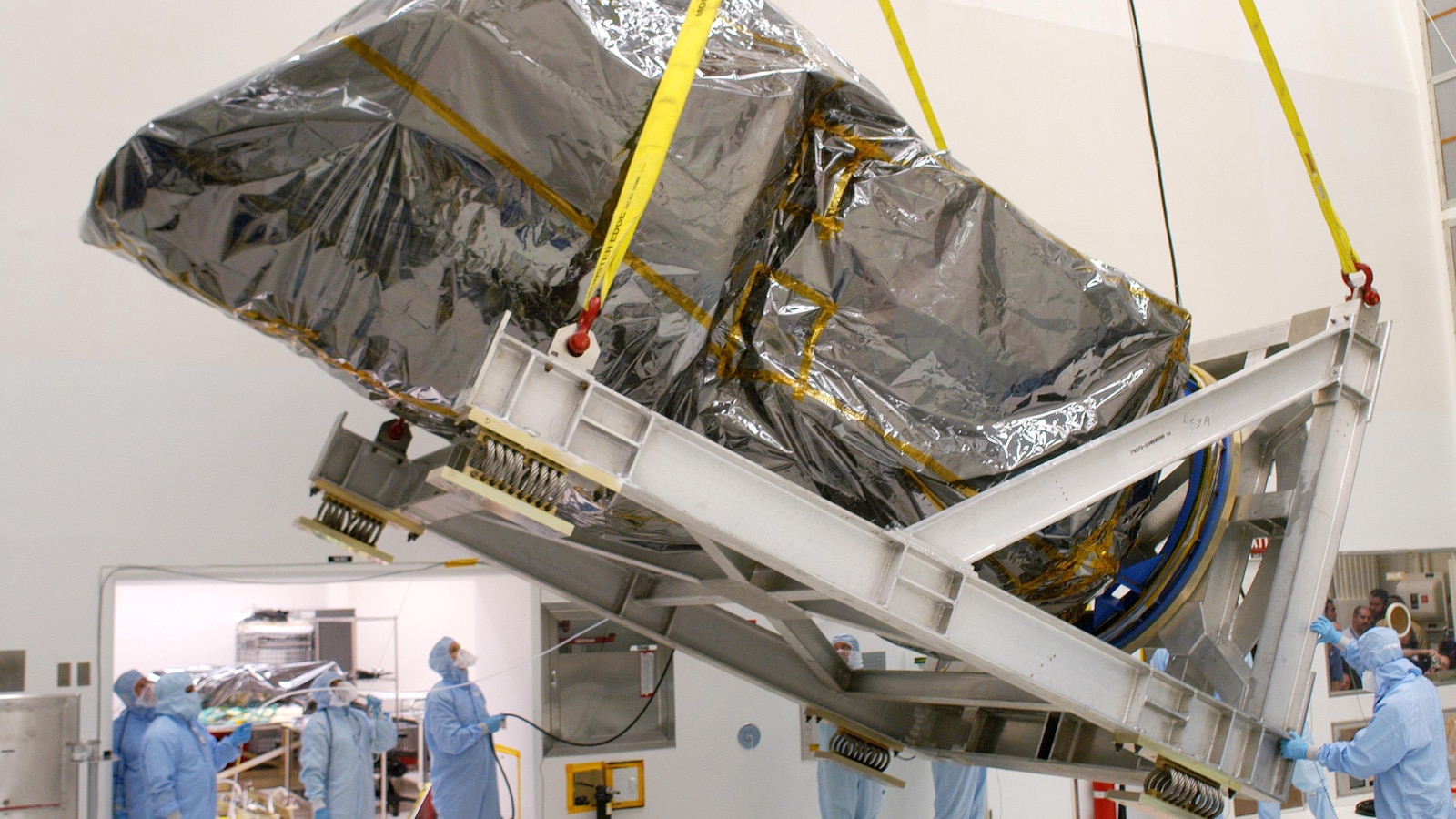
CAPE CANAVERAL, Fla. — An old NASA telescope is barely clinging to space after a botched rescue effort left it increasingly wobbly. The US Space Force predicts that the Swift Observatory will crash on or around Friday. Most of the 1 ½ ton telescope is expected to burn up in the atmosphere. But a handful of pieces made of tungsten denser than lead and some mirror parts could survive reentry, according to Brad Cenko, NASA’s chief scientist for the mission. Any surviving remains will most likely sink into the ocean. But swaths of Africa, Australia, India, Southeast Asia and Central and South America are within the reentry zone. The Space Force is following the telescope’s diminishing trajectory. His cosmic cremation has the Swift team in mourning but full of gratitude for the observations the telescope made during its 22 years in orbit. Swift took off on November 20, 2004 to search for some of the biggest explosions in the universe: gamma ray bursts and supernovae. “We knew this day would come before Swift launched. At least in low-Earth orbit, what goes up must come down. And that end is catastrophic,” said John Nousek, an astronomer at Pennsylvania State University who led the monitoring team. Intense solar activity in recent years dragged Swift down. faster than usual. NASA hired Katalyst Space a year ago to organize an urgent rescue. But the company’s three-armed robot called Link ran into trouble after its launch in July and didn’t come within 12 to 15 kilometers (7 to 9 miles) of the telescope. Link fell back to Earth in September. Swift resumed observations once the rescue attempt was called off, discovering even more gamma-ray bursts and other ultra-high-energy events. But in late October, the telescope was too low to remain stable during observations and its systems were shut down. Their final tally: more than 2,000 gamma-ray bursts and 1,400 exploding stars, not to mention a host of comets, asteroids, and star-shattering black holes. The telescope’s superpower was its ability to rotate rapidly (hence its name) towards erupting celestial events. NASA considered Swift the first responder for the Hubble and Webb space telescopes and others that would follow its alerts and provide deeper investigations. Scientists are still figuring out how to fill the gap. “Our fervent hope is that the lessons learned from Swift’s successes can be applied to new generations of space missions to accelerate our discoveries about the universe,” Nousek said in an email.___Associated Press science and health coverage receives financial support from the AP Fund for Journalism and private foundations. AP is solely responsible for all content. Find AP’s standards for working with philanthropies, a list of supporters and funded coverage areas at AP.org