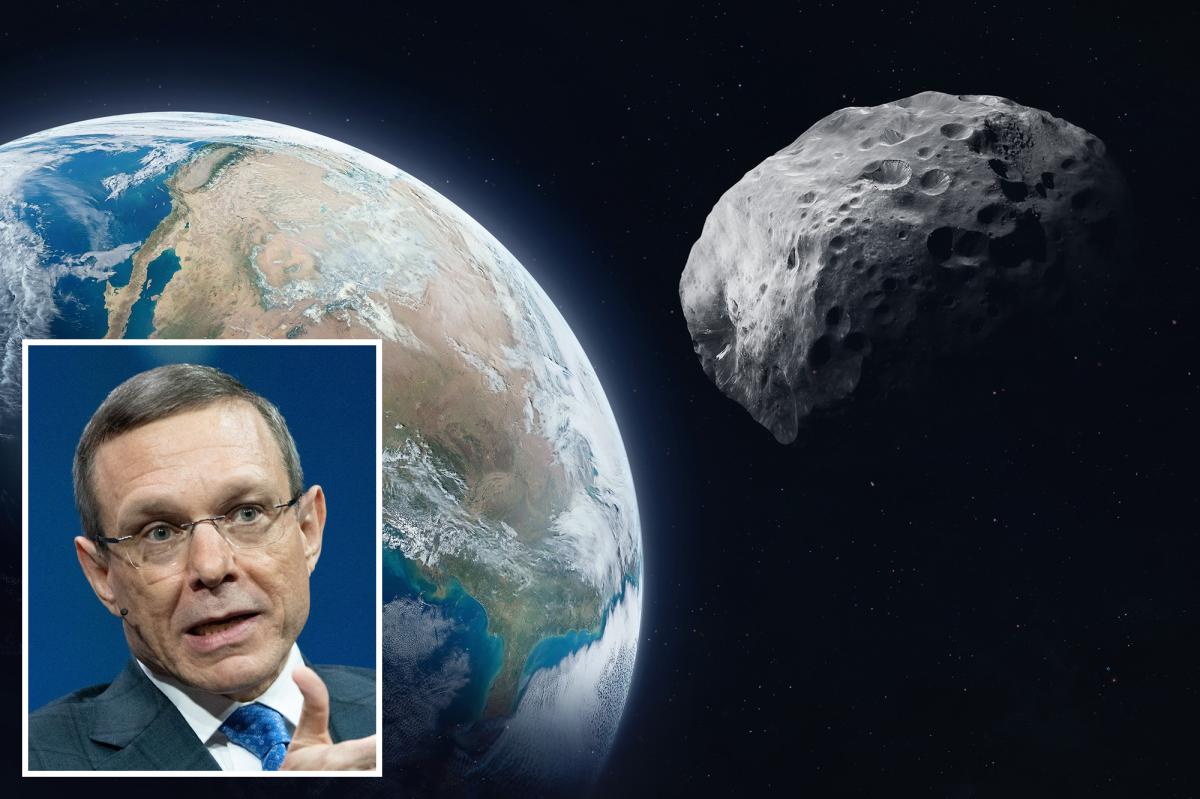
A Harvard astrophysicist who claims a mysterious object passing through our solar system is actually a lost Soviet spacecraft says scientists may never be able to see it clearly after Japan abruptly scrapped a planned mission to land on the target. Avi Loeb told Fox News Digital that the Japan Aerospace Exploration Agency’s decision to cancel its 2031 Hayabusa2 encounter with the object known as 1998 KY26 eliminates the only opportunity to capture high-resolution images of its surface and determine whether it is a natural space rock or the defunct 1988 Soviet probe Phobos 1. “There is no way we can resolve the object, or get a high-resolution image of its surface, without getting close to it. Without a flyby, because even with the Webb telescope or the larger telescopes that we have on Earth, the object is not close enough to divide it into multiple pixels in one image,” Loeb said. The cancellation came just days after NASA Administrator Jared Isaacman dismissed speculation about the roughly 36-foot-wide object during an appearance on “Fox & Friends,” saying, “I haven’t seen any evidence to suggest that this is… anything other than an asteroid.” Loeb rejected that assessment, arguing that KY26 “is not an asteroid” because it accelerates in a way that gravity alone cannot explain and predicted that when the Japanese spacecraft lands on it in July 2031, scientists would find a label saying “Made in the USSR” instead of ice or rock. Harvard astrophysicist Avi Loeb claims a mysterious object passing through our solar system is a lost Soviet spacecraft. Mopic – stock.adobe.com The Japanese space agency informed the Cabinet Office Space Policy Committee on November 16 that it was abandoning the 2031 appointment after the last normally functioning main ion engine on Hayabusa2 failed in mid-August, according to Japanese newspaper Yomiuri Shimbun. “I was surprised that the cancellation by JAXA came just a day or two after I spoke about it publicly, because the engine malfunction had been known for several months,” Loeb said. “The probability that we are looking at a coincidence where, one day after my public speech, JAXA decides to cancel this mission is one day divided by the time during which the fourth engine was known to be malfunctioning, and that was roughly 100 days. Avi Loeb speaks at the SALT conference in Manhattan, New York. REUTERS “So, I would say the probability of a coincidence is less than 1%, but it could still be a coincidence,” he added. Loeb noted that Hayabusa2 was several years in the making and questioned why Japanese engineers did not attempt an Earth gravity assist maneuver to compensate for the loss of engine thrust instead of turning to another target. JAXA officials said in their report that reaching KY26 in 2031 already required Earth gravity assistance, and that the combination of functional parts from two damaged engines left the 12-year-old spacecraft without enough thrust to make the necessary orbital changes, prompting a redirection to Earth. a flyby of the asteroid in 2028. 2015 BM510, the newspaper added, Even without a close flyby, Loeb said astronomers still have an important tool left to test their theory from afar by using NASA’s James Webb Space Telescope to measure the heat radiated by KY26 and analyze its chemical spectrum. Harvard astrophysicist Abraham ‘Avi’ Loeb speaks during an interview at his home in Lexington, Massachusetts. on August 8, 2023. Anadolu Agency via Getty Images “So far, we have detected a reflection of sunlight from this object, but the Webb telescope can potentially detect the heat emitted by the object, and that will offer us the opportunity to learn both the size and surface temperature of the object, as well as the composition of the object,” Loeb said. five minutes and is much brighter than expected. “This object reflects approximately half of the sunlight that falls on it. while a typical rock or iceberg reflects about 5% of the sunlight that hits it,” Loeb said, adding that the object’s brightness is “striking.” NASA previously told Fox News Digital that a 2025 orbital study led by the agency’s Center for Near-Earth Object Studies concluded that KY26’s complex trajectory is driven by solar radiation forces – “the natural push of sunlight and thermal emission in its non-formal form.” spherical” – rather than hidden comet-like activity. The Japan Aerospace Exploration Agency canceled its 2031 Hayabusa2 mission to the object, eliminating our best chance for high-resolution images. Loeb and his NASA colleagues, however, found that KY26’s trajectory closely resembles that of Phobos 1 (a Soviet spacecraft launched toward Mars in July 1988 that shut down after a faulty command) and They calculated that sunlight reflected from its solar panels could produce the observed thrust without any sign of a “dark comet” tail. “It could be a comet throwing some gas back and pushing it forward, but in that case we should have seen the gas,” Loeb said. “We should have seen the dust because in comets we see a tail and the dust particles are blown away from the sun by solar radiation.” He noted that in January 2025, astronomers briefly classified an object near Earth as an asteroid before realizing it was actually the Tesla Roadster launched into space by SpaceX in 2018, an error that was only detected because humans knew its flight path. by the Department of Energy and the National Science Foundation, will find dozens of interstellar objects in the next decade, and we should be curious enough to check if all of them are rocks or icebergs, because if one of them is of technological origin, that will change our view of our place in the universe,” Loeb said.