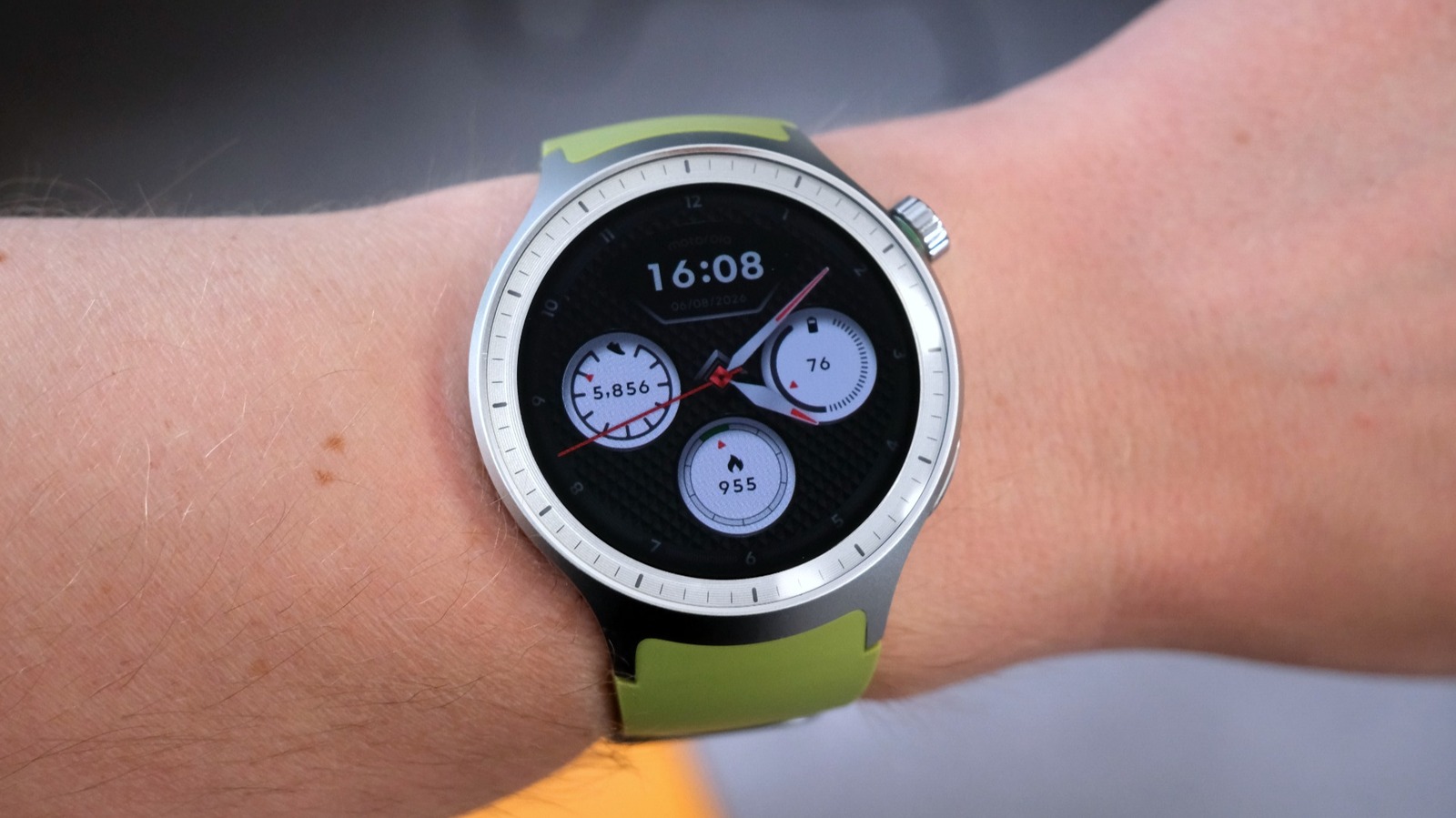
As of right now, all the complaints I have with this device stem from the fact that the Moto Watch doesn’t run Google’s Wear OS. It sure looks like it, and the user interface is close enough that you might be fooled into thinking “Motorola” just skinned it. But it’s not, and Real Time OS has enough limitations that you’ll soon run into walls. I wondered if this is part of why I’ve been so disappointed with this: the similar iconography raised my expectations beyond the point where they could ever have been met. Even setting up the watch was not without its inconveniences, for which you will need to download the Moto Watch app. Two reboots later, I was able to access the settings screen, which makes it seem like you can activate the watch without setting up a Motorola account. But, if you don’t set up an account, the app will simply freeze until you reboot (again) and deliver your email. Then you come across the tutorial, which walks you through the basics of the UI, where all the animations and transitions were stuttering and freezing while I was working on them. There are several things the watch does that are disconcerting because they require you to put in more effort than expected. Receive notifications: Most watches will by default broadcast the notifications you receive on your phone and allow you to choose the differences manually. That’s not an option here, so you’ll have to go through the list selecting only what you think deserves to make it to your wrist. I understand the logic, but the fact that it is this way by default means that it is too easy to not activate, for example, Google Calendar reminders. The watch will do many of the basic functions, including time, while also tracking your heart rate, steps, and calories burned. It offers stopwatches, timers, sleep tracking panels, a compass, and a remote camera shutter. You’ll be able to make calls from your wrist, when connected to your phone, and there’s even a dialer app inside the watch. But since this is not a Wear OS device, you don’t get third-party apps. When it comes to adding music to the watch, you’ll only be able to do so through what you have stored on your device. Not to mention, there is no access to Google apps, no mobile payments and the manufacturer has made no attempt to remedy that omission. The more you look for reasons to use this, the more reasons you find not to even try it. To burnish its fitness tracking bona fides, “Motorola” partnered with Polar on health and fitness features. There is Polar branding on the packaging and on the app’s health panel, but not on the watch itself. Open the health tab and you will instantly see some beautifully presented data that will help you understand your vital statistics. At the top, you’ll get the now industry-standard three rings that indicate your steps, calories burned, and active minutes. From there, you’ll get dedicated sections covering activity, sleep, recovery, a log of your recent workouts, heart rate, and physical stress levels. Given the tie-up with Polar, I expected the Moto Watch to redeem itself with its health and fitness tracking capabilities. Unfortunately, it fails to do the things that even basic wearables from a decade or more managed, like automatic activity detection. If you go for a walk or run, this thing won’t automatically start recording what you’re doing. Maybe the watch is aimed at people who are so obsessed with tracking their stats that they always start the watch before exercising. But if that were the case, why are so many promotional images showing people wearing the Moto Watch in plain clothes, instead of head-to-toe Gymshark? At the very least, the list of exercises you can add to the quick shortcut menu is so extensive that you’ll probably find the sport you prefer. It’s not just standard activities like outdoor running and cycling, but also things as diverse as boxing, jazz dancing, Zumba, judo, kabaddi and hula-hooping. Options expand to include kite flying, tug of war and even darts. Don’t forget to set your watch to record because even if you’ve been sweating inside out for 90 minutes, it won’t notice unless you do. And despite the promise of dual-frequency GPS, I actually found its performance here to be a little less than perfect. Sometimes I was outdoors and the watch couldn’t find a signal, even without tall buildings around, in areas where it had never had a problem before. This became more annoying when the interruption was temporary, meaning you had to regularly deal with the watch’s pre-recorded voice warnings. If there’s one area where I can’t fault the company, it’s the battery life, which lasted longer than promised. Even with the always-on display active, I was able to extend this to eight days before having to drop it on its charging disk. Although the less charitable explanation is that it was such a bad experience that I had to force myself to make an effort to use the damn thing.