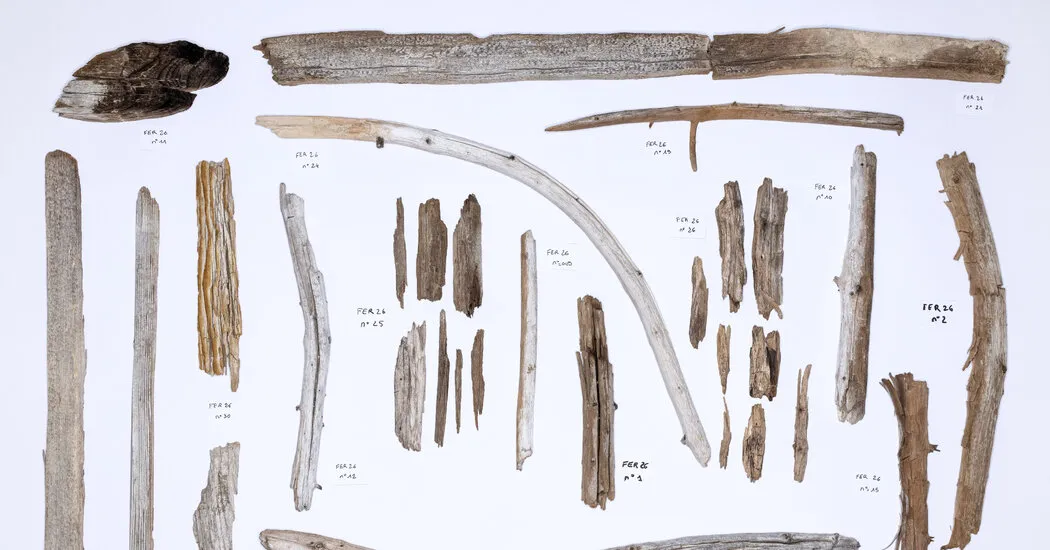
In much of the world, what survives from ancient times is mainly stone, metal and ceramics. Not in the Alps, where the ice has preserved organic materials (leather, wood, textiles, body parts) that can tell a richer, more human story about the past. “The Stone Age was not really a stone age,” said Regula Gubler, an archaeologist from the Swiss canton of Bern. “Most of what people wore and wore was made from organic materials,” he said. Finding the leather shoes that protected their feet, the woven limebark baskets they carried to the mountains, “is really special,” Ms. Gubler said. The objects that have emerged from the Swiss ice range from the ordinary to the alluring. A fragment of an elm wood bowl from the 5th millennium BC. C., long before the pyramids of Egypt and Stonehenge. A birch bark quiver with two flint arrowheads hidden inside, from around 2800 BC. C. A two-foot-long statuette sculpted from larch, with a human figure at one end and a sharp point at the other, from the last two centuries BC. C., whose purpose is unknown. Such discoveries challenge old ideas about how early societies interacted with the alpine environment. Far from being no-go zones, the frozen mountain passes were apparently bustling with traffic: hunters, shepherds, merchants carrying barrels of wine on mules. “The Alps were always used; it was not an empty space,” Gubler said. Nor, obviously, were the first populations limited to the smoothest routes. Their preferred paths between valleys appear to have been the shortest, regardless of slope or elevation.