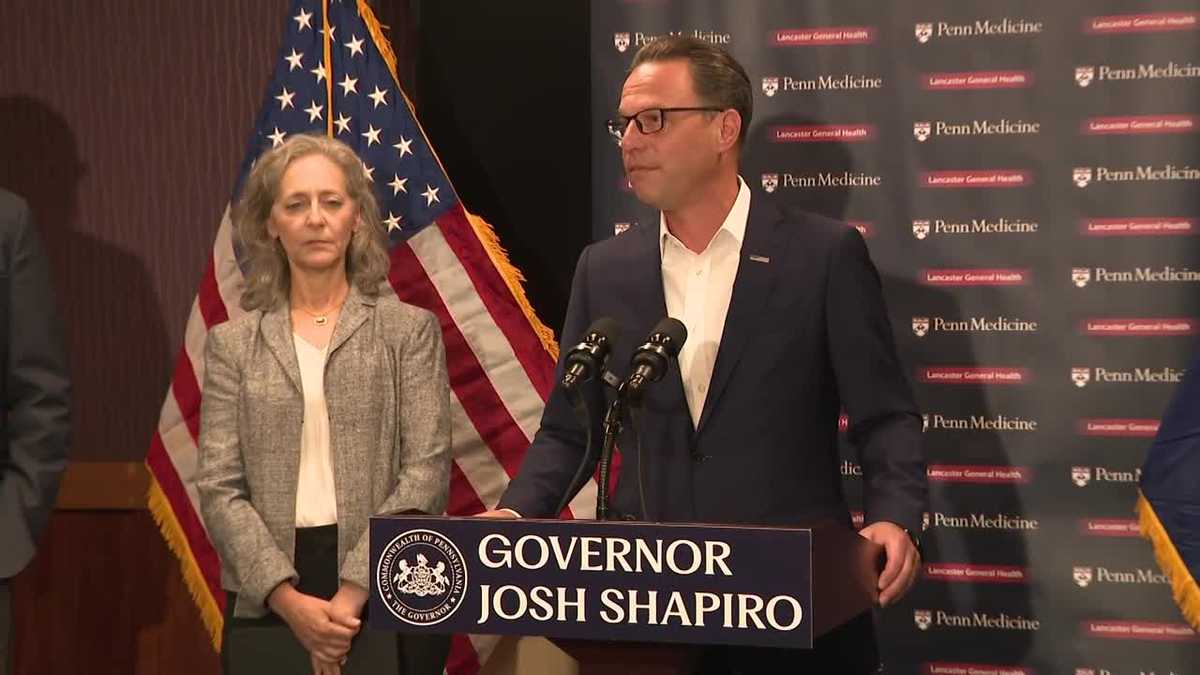
Lancaster County ‘measles-associated’ deaths mark Pennsylvania’s first in 35 years, health officials sayLANCASTER, Pa. —Two Lancaster County residents who had the measles have died, marking the first “measles-associated” deaths in Pennsylvania in 35 years, the Pennsylvania Department of Health announced Tuesday morning. Pennsylvania Gov. Josh Shapiro held a news conference Tuesday afternoon at Lancaster General Health’s Women and Babies Hospital, urging people to get vaccinated. You can view that in the video player below:”This is a serious and a growing problem across the country and right here in our Commonwealth. So far this year, there have been 393 confirmed cases of measles in Pennsylvania. That is the highest number of measles cases since 1992,” Shapiro said.Shapiro added that every single measles case this year was someone who was not fully vaccinated.”I want to be clear this illness and death from measles is completely preventable. We already have the tools to protect ourselves and our families from this disease, which is one of the most contagious diseases on the face of the Earth,” the governor said. Increasing the community immunity rateWhen vaccination rates dip that can lower the overall community immunity.”Some people refer to this as herd immunity in different areas of our commonwealth. Today. We see the consequences of a lack of immunization in the first measles associated deaths that our Commonwealth has seen in 35 years,” Shapiro said. “To put a finer point on this. If 95% is that community immunity rate that we want to hit, and exceed, here in Lancaster County, just 87% of all incoming kindergartners are fully vaccinated. Down the road in Montgomery County, 95% of kindergartners are fully vaccinated.”Tuesday’s news conference at Lancaster General Health’s Women and Babies Hospital.Shapiro urged parents to educate themselves and talk to a trusted health care professional about the vaccine before making a decision.”But right now, while measles is spreading rapidly here in the Commonwealth of Pennsylvania, for the first time in over a quarter century, this is one thing I’m counting on as a dad. If you’re fully vaccinated, you’re not getting the measles. The vaccine is highly effective. It is the best way to protect yourselves, to protect your kids, and to protect our communities here in Pennsylvania,” he said.Lancaster County deaths”My deepest sympathies are with the loved ones who are facing this unimaginable loss,” said Secretary of Health Dr. Debra Bogen. “Because measles was largely eliminated in the Commonwealth for more than three decades, people are not familiar with this disease and don’t fully understand the potential severity of the illness. We want to ensure every Pennsylvanian has the information they need to protect themselves, their loved ones and their communities. As a physician, I want to make sure that people understand that the MMR vaccine is safe and provides the best protection we have against measles.”Both of the people who died were not vaccinated, according to DOH.”The best protection against measles is getting fully vaccinated. The MMR vaccine, administered over two doses, boosts a person’s immune system and provides 97% lifetime protection,” DOH said in a statement.DOH is not releasing any more information about the two people who died. This content is imported from infogram. You may be able to find the same content in another format, or you may be able to find more information, at their web site.About measlesMeasles is highly contagious and can cause pneumonia, brain swelling, long-term complications, and, in rare cases, death.Nearly 20% of people with measles are hospitalized; about 1 to 3 per 1,000 cases result in death.The virus spreads through breathing, coughing, or sneezing and can remain infectious in the air or on surfaces for up to two hours.Early symptoms include fever, cough, runny nose, and red, watery eyes.A rash typically appears a few days later, beginning on the head and spreading downward.Symptoms may develop 7–21 days after exposure.If you may have been exposed or develop symptoms, contact your health care provider promptly or call 877-PA-HEALTH (877-724-3258).