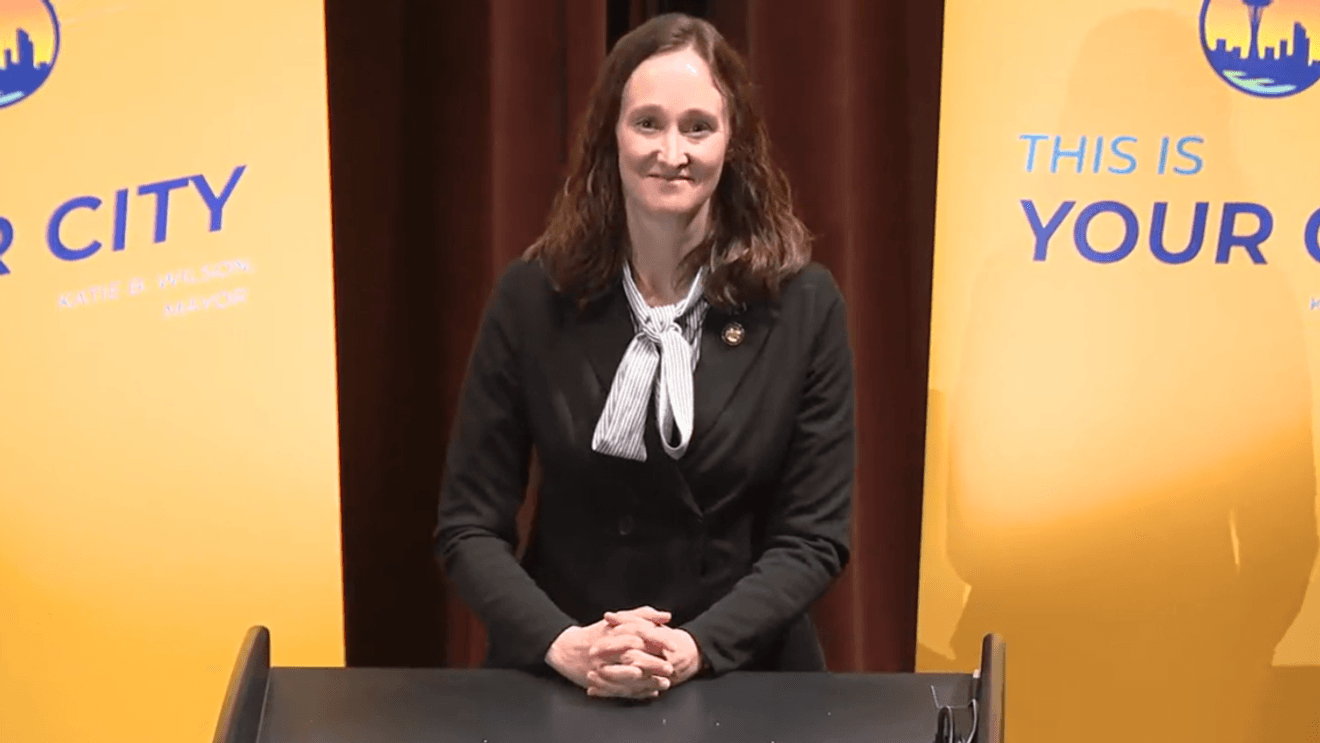
SEATTLE — Mayor Katie Wilson is proposing a two-year city budget that would put public safety at the center of Seattle’s spending plan, increase the Seattle Police Department’s budget by $68 million and fund 1,250 police officer positions, all without requesting new taxes. Wilson’s first proposed budget, presented as the city prepares to enter the 2027-28 biennium, calls for a spending plan of $9.1 billion across all city funds in 2027, a 2.2% increase over 2026. The mayor’s office says the plan is designed to close a projected general fund gap, while protecting core services and avoiding the cycle of annual budget shortfalls that followed the pandemic. “I have made the difficult decision to pass on a budget without significant new revenue,” Wilson said in an afternoon speech. “Right now, we don’t have good options to raise more progressive revenue that doesn’t involve high risks. Our economy and especially our downtown are fragile. In that context, raising additional revenue through JumpStart is not the right move.” Mayor Wilson wants CARE to lead the response to gun violence in Seattle with community partners. Public safety would receive the largest percentage increase among city service areas under the proposal, increasing 13% to approximately $1.135 million. The general fund would direct 53% of its roughly $2 billion in spending toward public safety. The proposed budget for the Seattle Police Department is $556 million, a net increase of $68 million. It would provide funding for 1,250 officer positions, which budget officials described as 66 positions more than the current funding level. Wilson’s office says SPD has approximately 3,000 applicants in its hiring pipeline. The proposal also includes $346 million for the Seattle Fire Department, $72.6 million for the city’s CARE Department and $14.8 million to continue funding police accountability offices. The administration is proposing spending increases in the face of a challenging financial outlook. Seattle had been projecting a general fund shortfall of $175 million in 2027 and a gap of $150 million in 2028, according to the budget report. The city’s budget office said the proposal balances the 2027 budget and projects a $15.1 million surplus in 2028, followed by smaller surpluses in 2029 and 2030. The plan is based on a combination of spending reductions, transfers and higher-than-expected revenues, rather than new taxes. Among the strategies outlined in the report: $90 million in spending and transfer reductions, eliminating long-term vacant positions and reducing planned program expansions that have not been implemented; a one-time transfer of $65 million from the 2026 Office of Housing budget to support 2027-28 investments; higher revenue forecasts, including a $58 million increase in JumpStart’s expected payroll tax revenue; continued use of JumpStart proceeds to support homeless services and housing investments. The mayor’s office said the proposal would reduce 128 full-time equivalent positions citywide, but 113 of those positions are vacant. Fifteen filled positions would be eliminated. The budget also adds positions in other areas, for a net increase in city staffing. Several departments would see reductions, including the Office of Economic and Revenue Forecasting, the Office of Sustainability and Environment, Seattle’s community planning and development functions, Human Services, Emergency Management, the Office of Inspector General and the Fire Department’s overtime budget. Wilson’s proposal sets aside $500 million for affordable housing, renters and homeless services. That includes preserving $140 million in JumpStart funding for the Office of Housing and spending $183.5 million on homelessness response. The administration said it aims to add 1,000 shelter units by the end of 2027 and maintain 1,750 units annually. The proposed budget also includes $57 million for food safety and access, $185 million for youth programs and money for two new public restrooms, one at Cheryl Chow Park in Rainier Valley and another in northwest Seattle. Wilson also said his budget will not draw on city reserves. “(I’m not going to) touch this city’s reserves. We live in Seattle. Rain is always forecast,” he said in a speech. The proposal gives the City Council a different option than a budget debate focused on new revenue and whether it believes the mayor’s mix of cuts, transfers and existing tax revenue is enough to meet Seattle’s public safety and human services needs while keeping the city on stable financial footing. Initial reactions to the proposal were mixed. Elle Cree, who works with the homeless outreach group called the “Stone Soup Crew” on Capitol Hill, criticized the mayor’s priorities. “We don’t need more control measures. We need more services,” Cree said. “60 additional officers represent more than a million dollars a year in salary.” Wilson’s proposal comes on the heels of concerns raised by former Washington Gov. Christine Gregoire and the business community about how new taxes, or an extension of the Jumpstart payroll tax, could curb the region’s growth potential. An Amazon spokesperson told KOMO News, “We appreciate that Mayor Wilson has presented a budget that focuses on the use of existing resources. Like Mayor Wilson, we believe the city’s priority should be making sure those resources are used effectively and deliver results for residents.” Former Seattle City Council President Sara Nelson, who recently launched a new website to monitor Seattle City Hall called CivicTide, also credited the mayor for listening to constituents. “At first glance, I’m pleased not to see any reliance on additional taxes or apparent cuts to SPD. However, the Mayor’s proposed budget is just the starting point. Now that it’s in Council’s hands, things will move quickly and, as always, the devil is in the details. CivicTide gives people a way to see what’s changing, understand what’s at stake, and have their voices heard before decisions are made. More transparency and engagement means more accountability and a greater focus on funding what works.” However, Council Budget Chairman Dan Strauss expressed concern about the job cuts. “I’ve raised progressive taxes several years in a row. I heard Katie Wilson in the Council Chamber say that either we’re not doing enough, or that when small cuts are made, we should increase progressive revenue. I only see cuts in this budget. I don’t see any additional revenue, and that’s not in line with who I’ve seen in council chambers for the last decade and a half,” Strauss said in an interview. “My top three priorities this budget season are protecting city workers, addressing homelessness and addressing public safety,” he said. “It is critical to me that we cannot thank our union employees and fire them at the same time.” Council members will now review, revise and ultimately adopt the first-year 2027-28 budget. The council will hold multiple public hearings in the coming days. They will support a spending plan for the second year that can be reviewed next year.