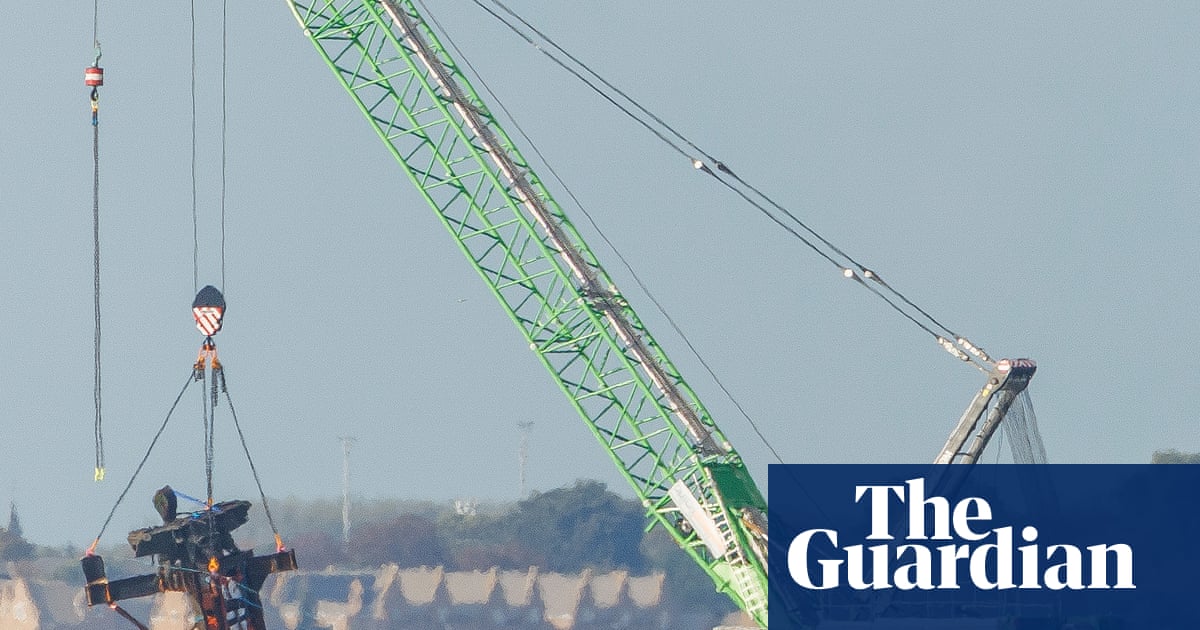
A US wartime ship sunk in the Thames Estuary containing enough unexploded bombs to devastate a Kent coastal town and send a tidal wave through London has been made a little safer, ministers announced. Engineers have removed the masts from the SS Richard Montgomery, a World War II freighter that sank in 1944 with approximately 1,400 tons of ammunition on board, without triggering the type of feared explosion that has kept the wreck under constant surveillance for decades. The work was carried out due to fears that the masts, which had remained visible above the water near Sheerness, might collapse on the deadly cargo and blow up the ship. The possible effects of an explosion after 82 years underwater have divided expert opinion. Some believe it could trigger a small tsunami, sending debris 3 kilometers high and “levelling Sheerness”, according to a New Scientist report in 2004. A government report in 2000 said it was widely accepted that it would “put property and local people at risk”. Map of Kent and the Thames Estuary The exact contents of the ship’s three holds are unknown, but a defense agency report estimated that there were almost 300 debris from 2,000-pound (900 kg) bombs and more than 2,000 cluster bombs. Keir Mather, the maritime minister, told the Commons on Monday that the work had now been completed, with all three masts successfully removed in a “complex project requiring specialist programme, engineering and risk management expertise”. Mather said the masts had placed “a significant load on the structure and their removal has reduced that risk and supports the safe long-term management of the site”. The masts have been taken to a maritime museum in Kent. Photograph: Fraser Gray/Shutterstock He said the work was completed ahead of schedule and below projected costs, around £9.5 million. The masts have now been given to a maritime museum, the Historic Dockyard Chatham, “in recognition of the historical importance of the SS Richard Montgomery and her role in supporting the efforts of the Allied forces during World War II.” The wreck “would continue to be subject to ongoing monitoring and control across the established exclusion zone,” he said. A no-shipping zone has long existed around the SS Montgomery, and a no-fly zone has been in place since 2025, a development that could have been awkward if Boris Johnson’s proposed Thames Estuary Airport goes ahead. Although the risk of a large accidental explosion is now considered remote, local people have been alarmed by incidents in recent years, including the occasional proximity of cargo transports and a surfer who posted photos on social media of himself leaning on the protruding masts.