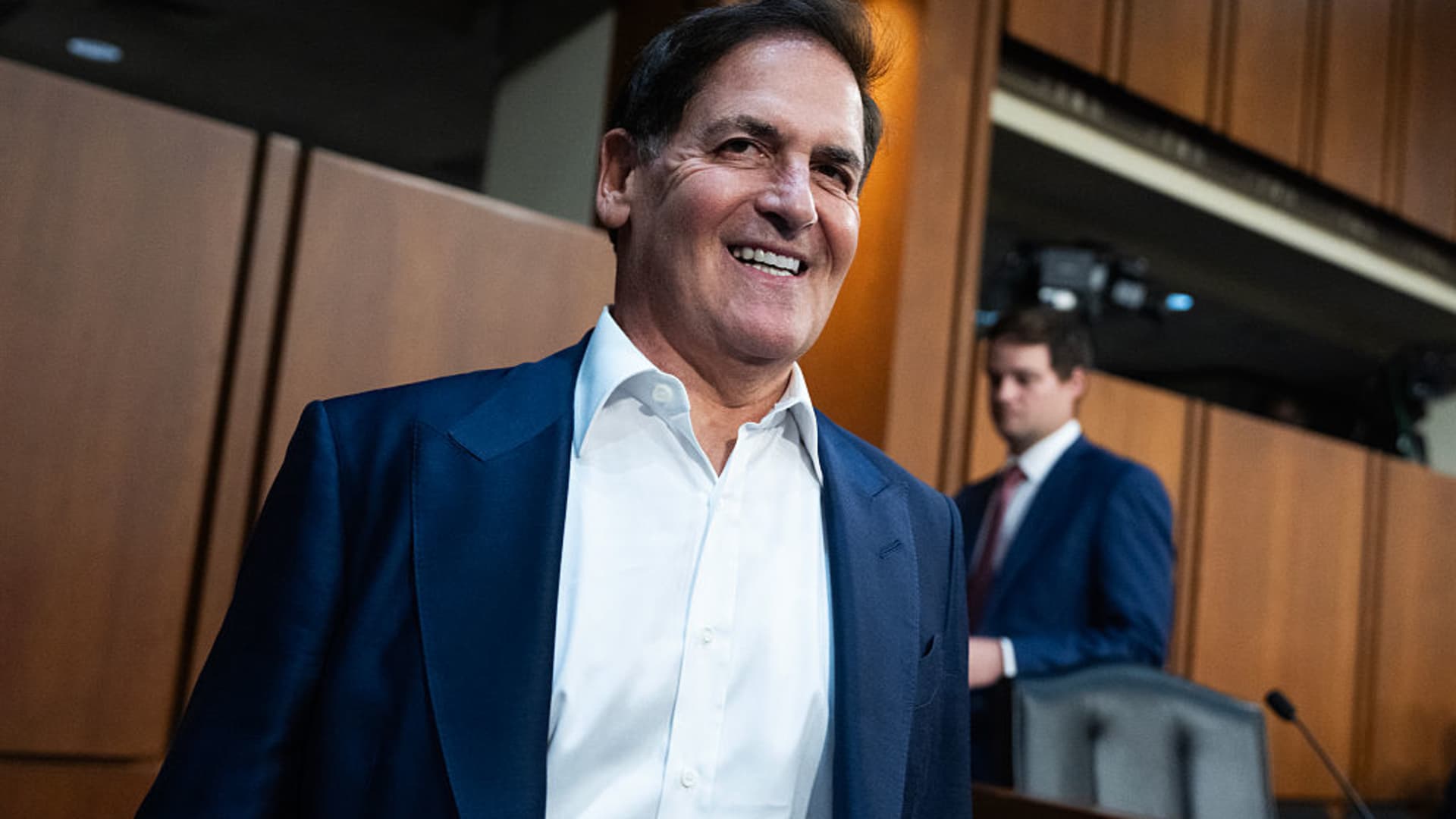
Mark Cuban doesn’t have any Fs to give, at least when it comes to his net worth. Financial therapists say it’s a healthy mindset, even if you’re not a billionaire like Cuban. “I don’t give a damn about my net worth. I have enough. My family has enough,” Cuban posted Monday on the social media platform a net worth of $6.8 billion, according to Forbes, which ranks the former star of ABC’s “Shark Tank” as the 597th richest person in the world. Cuban sold his first business, a software company called MicroSolutions, for $6 million in 1990. He became a billionaire when he and his co-founders sold Broadcast.com to Yahoo for $5.7 billion in 1999. He developed his attitude after buying a majority stake in the NBA’s Dallas Mavericks in January 2000, he tells CNBC Make It: “I was more interested in winning than making money.” The mindset may seem obvious to some: after all, why would a billionaire be so concerned about his bank account? But even people with a lot of money experience financial stress and anxiety, studies have shown. What seems to set Cuban apart from other wealthy people is the confidence he shows in how he uses his wealth, says Christine Hargrove, a financial therapist based in Athens, Georgia. In his post, Cuban wrote that he doesn’t obsess over increasing his personal net worth because, in part, he would prefer to see the impact his money can have on the world. “My next dollar can impact other people’s lives much more than my own,” Cuban wrote, citing his decision to launch cost-cutting pharmaceutical startup Cost Plus Drugs and his numerous small business investments over 15 seasons on “Shark Tank” as an investment judge. “That’s what drives my investments. I look for ways to have an impact.” Confidence in how you save or spend your money is often a sign of a healthy financial mindset, says Hargrove, president-elect of the Financial Therapy Association and deputy director of the Love and Money Center at the University of Georgia. “You actually have to be the person who decides what is enough for you,” she says, adding, “Having a sense of purpose with your money and your life can be an incredible source of protection against chronic financial anxiety.” The Dangers of Unnecessary Financial Stress Many Americans, especially as living costs remain high across the country, have no choice but to worry about their finances. When those with a lot of money in their bank accounts or stock portfolios obsess over their level of wealth, they probably don’t do it by choice either, Hargrove notes. Some people’s financial insecurities come from growing up in low-income households. Others may consider themselves relatively scrappy because they earn less than other wealthy people around them. “Having a healthy relationship with money isn’t just about how much you have. It’s about understanding what money means to you and what you want it to do for you,” says Cara Macksoud, an Orlando-based accredited financial counselor and behavioral financial specialist. No matter what your financial situation, money anxiety can actually harm your finances in addition to the toll it takes on your mental health. Financial stress and related mental health issues can harm workplace performance due to distraction and absenteeism, according to a 2024 report from the TIAA Institute, the research arm of retirement fund manager TIAA. Poor mental health can also affect cognition, making it more difficult to make wise monetary decisions, the report suggested. Obsessing over every dollar can also make it seem impossible to part with money for causes that would otherwise align with your personal values, such as charitable giving or supporting loved ones, Hargrove says. “And then our money gets between us and what we want to be,” he adds. How to Address Unnecessary Financial Anxiety Financial anxiety often results in repetitive behaviors, such as obsessively checking your bank account or stock portfolio, Hargrove notes. For those who aren’t in immediate financial danger, Hargrove suggests reminding yourself “enough is enough” and working to replace those behaviors with actions that encourage gratitude for the cherished aspects of your life that aren’t related to your finances. If you constantly check the banking apps on your phone, you can change your wallpaper to a photo of your family or group of friends to remind you of the safety of your family and social networks, for example. It’s a simple trick, but it can soon become part of a pattern of “focusing on thoughts of gratitude” that research shows can reduce levels of the stress hormone cortisol in the body, Hargrove says. And if you feel like you’re using your money to make a positive difference, whether for yourself or others (as Cuban suggested in his post that you do), you probably have a healthier mindset around money than many other Americans, Hargrove notes. “Live with gratitude and feel that you make a difference, whether for yourself or for other people, [there’s] “It doesn’t get much better than that in life, right?” says Hargrove. Take control of your money with CNBC Select CNBC Select is editorially independent and may earn a commission from affiliate partners for links.