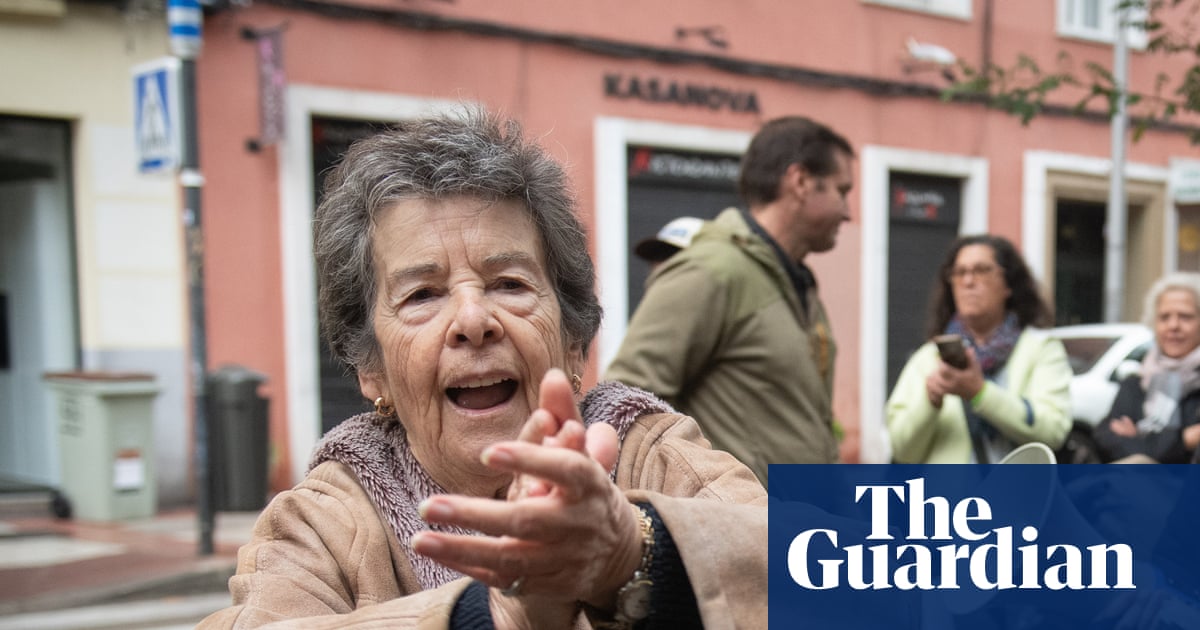
María del Carmen Abascal, the 87-year-old woman whose eviction sparked a national wave of protests against Spain’s housing crisis, has died. News of her death came two weeks after Maricarmen, as she was known throughout Spain, was evicted from the Madrid apartment where she had lived for more than seven decades. Spain’s booming real estate market. The scenes of the eviction, in which the police used rounds of tear gas while carrying out the order, made headlines throughout Spain. The shocking images, which showed Abascal being forcibly taken from her home on a stretcher, flanked by protesters and police, quickly crystallized into anger. Some 10,000 people took to the streets of Madrid hours later, holding signs such as “Shame” and “We are all Maricarmen.” From the north to the south of Spain, people took to the squares to protest the suffering caused by rents that had soared by 80% in the space of a decade, while house prices had risen by 63%. A flyer with an image of María del Carmen Abascal is seen at a vigil in Madrid on October 7. Photograph: Thomas Coex/AFP/Getty ImagesFrom the hospital where she was being treated for severe exhaustion, Abascal applauded the incipient movement. “I would like to be there with all of you,” he said in a video recorded from his hospital bed. “But I’m not so lucky. So from here I ask you all for courage and to fight and defend what is yours.” When camps began popping up across the country, the investment firm that bought Abascal’s house said he could return. The agreement did little to calm the anger that had boiled over following the eviction. This week, the wave of outrage led Prime Minister Pedro Sánchez to call early general elections after right-wing and far-right parties rejected two emergency decrees his government had proposed to address the housing crisis. The Madrid tenants union said the solution had come too late for the octogenarian. “This was a completely avoidable situation after an agonizing experience,” he said in a statement announcing that Abascal had died in the hospital, apparently hours before she signed a new lease with the investment firm that had evicted her. “The events triggered by the injustice of their eviction undoubtedly mark a turning point in the history of this country: massive demonstrations, camps in squares, early elections and the call for a general strike,” he added. “The housing debate is at the heart of everything, but the cost of getting to this point has been too high.” Sánchez offered his condolences to Abascal’s family and friends. “A hug also to all those who today feel this loss as their own,” he wrote on social networks. “Rest in peace.” Spain’s Health Minister Mónica García said Abascal’s plight had “served to raise awareness throughout Spain, lighting a fuse that cannot be extinguished”, adding that his “dignity and bravery” had shown the way. María del Carmen Abascal in Madrid on June 2. Photograph: Francesco Militello Mirto/NurPhoto/Getty Images Podemos MEP and former Minister of Equality, Irene Montero, was more forceful. “This is not a death; it is a murder,” he wrote on social media. “What damn anger. Thank you for fighting, Maricarmen.” Alberto Núñez Feijóo, leader of the conservative Popular Party (PP), which voted against the emergency housing measures last week, also offered his condolences. “No campaigns, no political parties, no partisan goals, no more bricks in the wall,” he wrote on social media. “When a person dies there should be nothing but respect.” His death came a day after Sánchez’s cabinet approved two new housing decrees aimed at “maintaining the spirit” of the two previous decrees that were rejected in parliament last week by the PP, the far-right party Vox and the right-wing Catalan independence party Junts. The 21 measures include making it easier to rent or buy a new home; expand eviction protections for vulnerable residents; regulate the rental of rooms; impose a new tax on seasonal rentals; ban speculative real estate purchases; and grant tax breaks to landlords and tenants who pay on time. With the lower and upper houses of parliament dissolved after early elections are called, the decrees will be voted on by the permanent council of congress, a special council that functions when parliament is not in session. The body’s 69 members are distributed proportionally among the various parliamentary groups to reflect the composition of the lower house, meaning Sánchez will likely have enough support to approve at least one of the decrees. In the heart of Madrid, where activists have set up a gigantic protest camp, the news of Abascal’s death was greeted with a moment of silence. Shortly after, hundreds of people marched from the camp to the country’s parliament chanting: “Maricarmen is still alive, the fight continues.”