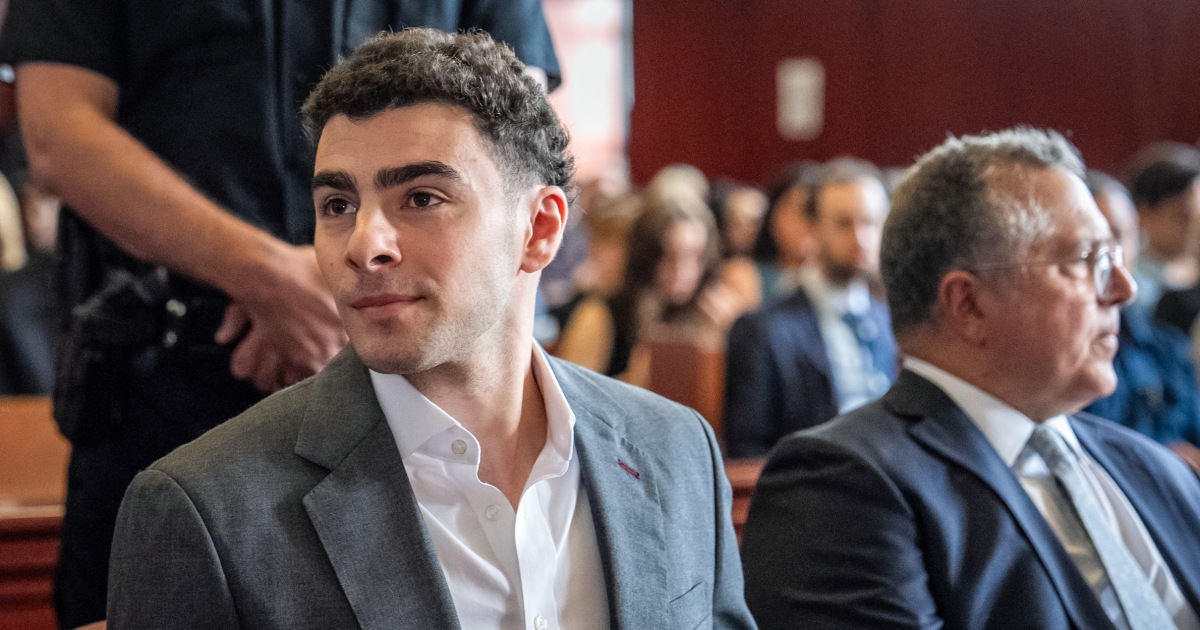
The man accused of fatally shooting United Healthcare CEO Brian Thompson on a New York City street two years ago is expected to plead guilty to stalking in Manhattan federal court on Friday, according to sources familiar with the matter. Luigi Mangione, 28, has a pretrial conference scheduled for 11 a.m. The terms of a possible plea deal are still unclear. Sources familiar with the matter said Thursday that negotiations were ongoing and nothing was final until Mangione agreed to a deal. That possible decision could be overturned during the hearing. Federal prosecutors and defense attorneys declined to comment Thursday. Mangione was charged with two federal counts: interstate harassment resulting in death and harassment by use of interstate facilities resulting in death, although it is unclear whether he will plead guilty to both. The charges carry a maximum penalty of life in prison and are separate from the state charges, which include second-degree murder and firearms offenses. 01:35 What Luigi Mangione Could Gain From Plea Negotiations 00:0000:00 Mangione’s trial in the state case is expected to begin early next month. He pleaded not guilty in both cases and previously faced two additional federal charges, including use of a firearm to commit murder, which carried a maximum penalty of death. A judge dismissed that charge earlier this year. The brazen murder of Thompson, a father of two and head of the nation’s largest health care insurer, put a spotlight on the nation’s health insurance industry and sparked widespread frustration over denied claims. Mangione was arrested at a Pennsylvania McDonald’s on December 9, 2024, five days after Thompson was shot to death outside a Manhattan hotel hosting an investor conference. Among the evidence authorities found in Mangione’s backpack was a notebook detailing his apparent complaints against the industry. At the scene, authorities found a bullet and two bullet casings with the words “delay,” “deny,” and “depose” written on them. Mangione’s lawyers had tried to prevent the notebook from being presented as evidence in his trials, arguing that authorities obtained it during an illegal search. The judges in both cases rejected that argument.