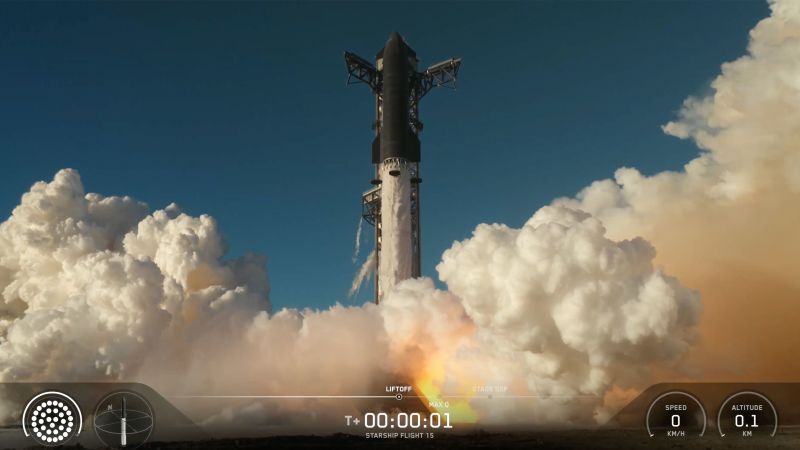
Typically, when a rocket flies into space with valuable payload, companies like SpaceX make it clear that recovering rocket parts is just the icing on the cake. Throughout the vast majority of rocket history, nothing has been reusable. SpaceX has been trying to change that for a long time. It first began leading reusability with its Falcon rockets. But the company has also said that Falcon reuse isn’t necessary, it’s just nice to have because it saves a lot of money. If SpaceX was unable to recover a Falcon booster, but the rocket safely delivered a payload to orbit, the mission was still considered completely successful. With Starship, however, that spirit almost seems inverted. This vehicle was designed to be completely reusable, top to bottom, and Starship’s economics depend on SpaceX figuring out how to make it a reality. So during these test flights, the name of the game has been to collect data that can help SpaceX learn how to consistently recapture and re-fly both the Super Heavy booster and the Starship spacecraft. Moving towards total reuse is the main objective. “Reaching this milestone with Starship will allow SpaceX to unlock the true capability of Starship,” the company said in a statement. Taking a batch of SpaceX’s Starlink satellites into orbit? Nowadays, that’s pretty much just the icing on the cake. But it’s a pretty big cherry: During Starship’s latest test flight in September, the vehicle “deployed 26 terabits per second of Starlink bandwidth,” SpaceX CEO Elon Musk said during an earnings call. “So a single Starship launch, which wasn’t even fully loaded, maybe half loaded, did the equivalent of 10 Falcon 9 launches.”