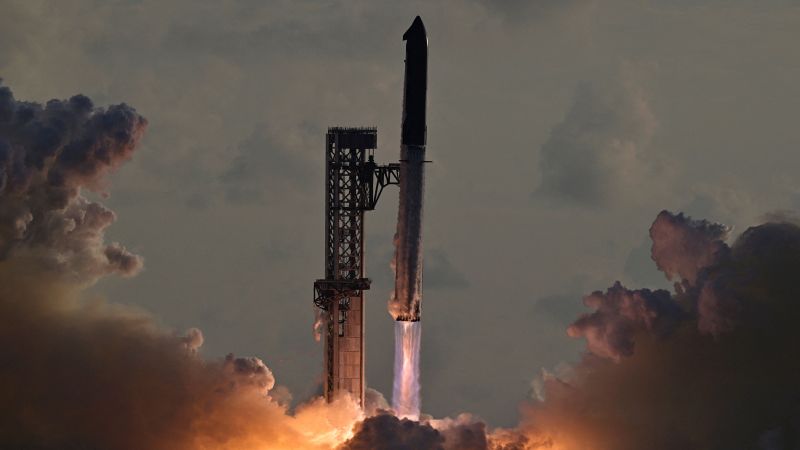
During each Starship test flight, beneath the roar of rocket engines is the anxious drumbeat of an urgent, impending deadline. NASA hopes to use Starship, or a lunar lander built by SpaceX’s archrival Blue Origin, to take its astronauts back to the moon amid a space race with China. Both countries intend to build permanent bases at the south pole of the Moon. Right now, NASA aims to land its astronauts on the moon, for the first time since the Apollo program ended in 1972, by 2028. That is expected to be delayed. But before the agency can carry out that mission, it intends to conduct a test in low Earth orbit. Called Artemis III, the test flight is scheduled for 2027. The goal is to launch four American astronauts, aboard the NASA-made Orion spacecraft, into orbit, where the vehicle will attempt to dock with both Starship and Blue Moon, the name of Blue Origin’s vehicle. NASA chief Jared Isaacman has said he is “confident” both Blue Origin and SpaceX vehicles will be ready, but much remains to be seen. And even if Starship has a flawless performance on that test flight next year, there’s still a long way to go before the giant rocket system is ready to start forging a lunar future. For example, Starship must be refueled while in near-Earth orbit before heading to the Moon. That requires transferring supercold propellants, which must be kept at temperatures below -260°F, between multiple Starship spacecraft in space. Such a feat had never been attempted in the history of space flight.