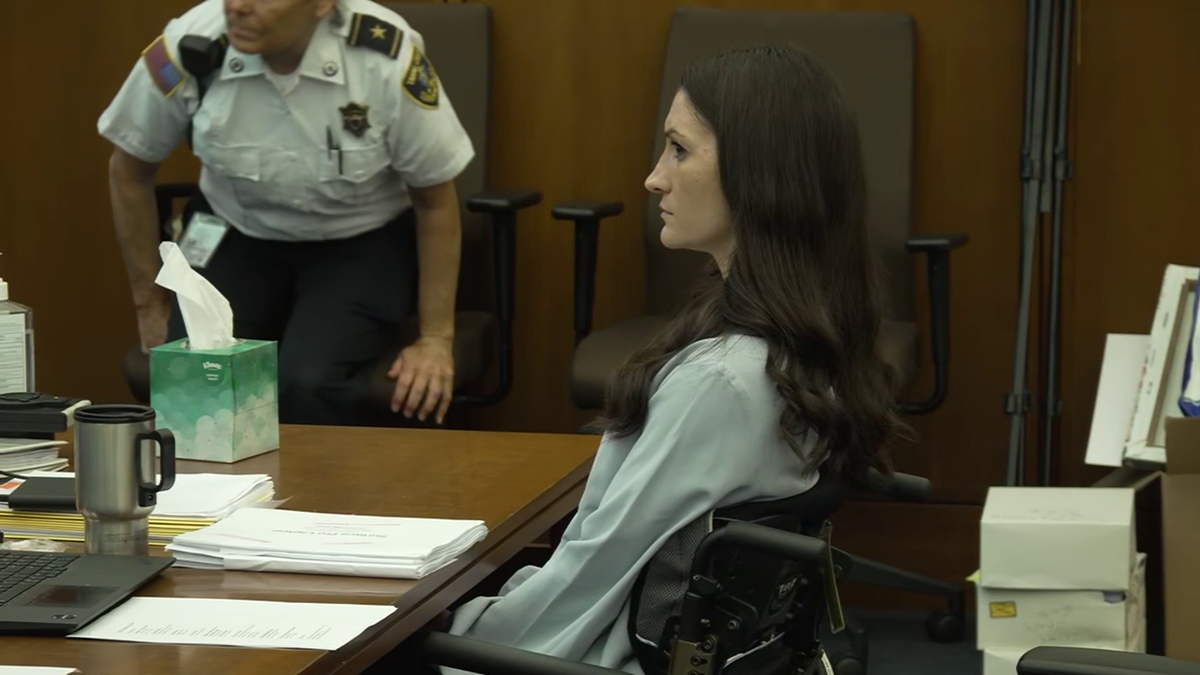
LIVE Updates: Medical providers reappear in Lindsay Clancy murder trialPLYMOUTH, Mass. — Testimony resumed Tuesday in the murder trial of Lindsay Clancy, the Massachusetts mother accused of strangling her three children in the family’s Duxbury home in 2023. Jurors heard from a psychiatric nurse who treated Lindsay Clancy in the months before the children’s deaths. Rebecca Jollotta works at South Shore Hospital and said she began meeting with Lindsay Clancy in November 2022. Jollotta said the defendant feared she might be addicted to Ativan, an anti-anxiety medication, and relied on it to sleep. Over the course of a few days, Jollotta said Lindsay Clancy sent several messages through a chat portal about her concerns and symptoms, saying she was having intrusive thoughts. Jollotta testified that she responded that this was normal. “I said, ‘It sounds more like depression than side effects. It’s not uncommon for me to hear, ‘I’ve never felt anything like this before,’ or ‘I just don’t feel like myself.’ This all sounds like postpartum depression,” she said. On Monday, Dr. Jennifer Tufts, who was first questioned by the prosecution on Friday, was questioned by the defense throughout Monday morning. Defense attorney Kevin Reddington pressed Tufts for months of telehealth treatment, medication decisions and responses to Clancy’s worsening mental health. Tufts is one of the defendants named in civil lawsuits filed in January by both Lindsay Clancy and her ex-husband, Patrick Clancy. Those cases accuse Tufts, other providers and hospitals of failing to properly diagnose and treat his mental illness. Reddington questioned Tufts’ experience when it began treating Clancy, its exclusive use of telehealth, its reliance on Clancy for its medical history and whether it should have sought records from other providers. Reddington also questioned Tufts about the medication prescribed during Clancy’s treatment and possible side effects. Tufts defended several decisions and rejected Reddington’s suggestion that a medication change “pushed her over the edge.” After the lunch break, Deputy District Attorney Jennifer Sprague reviewed Tufts’ training, telehealth practices, and decisions related to assessments and prescriptions during Clancy’s treatment. Video below: Intense scrutiny over a single word in Tufts notes. Background on the Clancy case: Lindsay Clancy, 36, faces three counts of murder in the 2023 deaths of her children, Cora, Dawson and Callan. He also jumped from a second-story window, leaving her partially paralyzed. In a civil case, Lindsay Clancy alleges a “catastrophic failure” by multiple medical providers in diagnosis and treatment. his psychiatric condition. His trial began on July 20. Although her legal team offered to stipulate the children’s deaths, she pleaded not guilty. She is being held at Tewksbury State Hospital. The jury is made up of 12 women and six men. They will not know until the presentation of the case concludes who will deliberate and who will be a substitute. This case involves mental health issues. If you or someone you know needs help, you can speak to the Suicide & Crisis Lifeline by calling or texting 988, or you can chat online here. Key Moments from Week 2 Christopher Clancy, Patrick Clancy’s father and the children’s grandfather, described the call he received from his son after the children were killed. “It was terrible,” he said. Clancy cried Thursday during testimony by Dr. Kimberley Springer, a medical examiner, who described images from Callan Clancy’s autopsy in January 2023. Former nanny Elaine Rossi, who cared for baby Callan Clancy beginning in September 2022, testified that she communicated with Clancy daily via text messages and a notebook that contained detailed instructions about Callan’s feeding, sleep schedule and daily routine. Rossi described Clancy as a “wonderful mom” and testified that she never believed the children were in danger. She also said Clancy talked about her postpartum problems, difficulty sleeping and seeing doctors for treatment. Prosecutors read notebook entries that described Clancy feeling overwhelmed by her son Callan’s sleep schedule. On cross-examination, the defense highlighted other entries in which Clancy wrote about a desire to get better, brain fog, guilt, anxiety and worries about returning to work. Clancy’s attorneys asked a Plymouth Superior Court judge to allow three defense witnesses to testify after prosecutors objected to their inclusion, arguing the testimony is critical to his defense. Their motion asks the court to allow testimony from Dr. Elizabeth Laposata, Dr. Michael Vulfovich and Dr. Donald Condie. Doctors and nurses testified about Clancy’s injuries when he arrived at Brigham and Women’s Hospital’s ICU early on the morning of January 25. One of the nurses described that Clancy, who was intubated, was able to use a whiteboard to communicate her confusion and inability to feel her legs. Judge William Sullivan paused before Friday’s lunch break during Lindsay Clancy’s emotional trial to warn everyone in the courtroom to be careful about making inappropriate comments. Jurors heard Clancy voluntarily admitted himself to McLean Hospital early on New Year’s Day with suicidal thoughts, anxiety and an inability to sleep. Dr. Alia Goodheart said she met with Clancy for an evaluation several days later and assessed that Clancy had no suicide plans. Goodheart said Clancy expressed that his children and family were reasons he would not commit suicide. Jurors also heard the beginning of testimony from Dr. Jennifer Tufts, one of the defendants named in civil lawsuits filed in January by both Lindsay Clancy and her ex-husband, Patrick Clancy. Tufts testified that his initial diagnosis was adjustment disorder with depressed mood and generalized anxiety disorder. He said he recommended medication to Clancy, but Clancy was reluctant. Here you will find more key takeaways from the trial. Key Moments from Week 1 The first week of testimony in the Lindsay Clancy murder trial ended after the judge, jury and attorneys visited locations related to the case, including the Clancy family’s former home in Duxbury. The jury also retraced the route prosecutors say Lindsay Clancy took to her husband, Patrick Clancy, on the day of the murders, including stops at a CVS and a restaurant in Plymouth. Jurors heard the heartbreaking 911 call Patrick Clancy made after finding his young sons and daughter with exercise bands around their necks. He testified about returning home from a trip to pick up dinner and medications and finding blood in the bedroom and his wife in the yard. While on the phone with a 911 operator, he asked her what happened and went inside, where he found the children in the basement. Plymouth County Deputy Prosecutor Shanan Buckingham used her opening statement to tell jurors that the children were strangled “meticulously.” He warned jurors they would hear graphic testimony and urged the group to use their common sense and life experiences when hearing the case. Defense attorney Kevin Reddington said his client knows she killed her children, but questioned what was going through Lindsay Clancy’s mind. He argues that she suffered from postpartum psychosis and was overmedicated at the time of the alleged crimes.