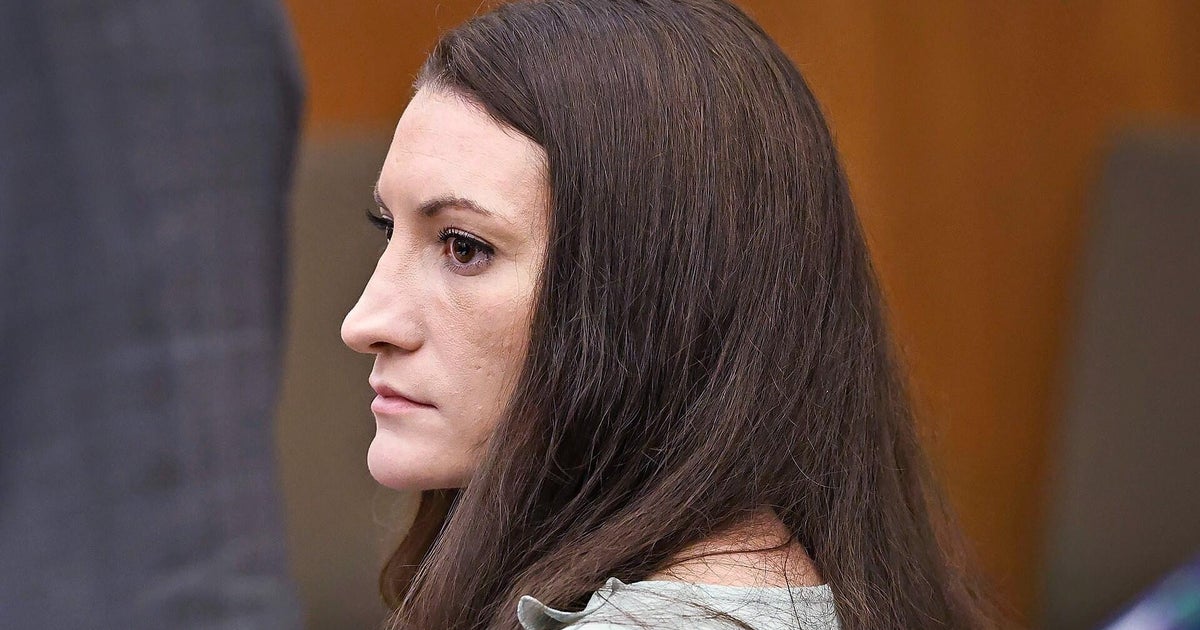
Lindsay Clancy’s Massachusetts murder trial resumed Monday in Plymouth Superior Court, with prosecutors dismissing the case. The defense began calling witnesses, including Clancy’s mother and sister, before the trial day ended. Paula Musgrove, Clancy’s mother, took the stand around 12:40 p.m. and completed her testimony shortly before 3 p.m. Michael Vulfovich, an emergency room doctor at Newton Wellesley Hospital, was on the stand for about 20 minutes after Musgrove. He finished his testimony about the injuries Clancy suffered and the hearing ended for the day. Clancy, 36, has pleaded not guilty to first-degree murder in the deaths of his three children, 5-year-old Cora, 3-year-old Dawson, and 8-month-old Callan, in their Duxbury home on Jan. 24, 2023. Prosecutors, led by Jennifer Sprague and Shanan Buckingham, allege that Clancy planned the murders before faking a suicide attempt. Clancy admits to killing his children. Clancy’s defense attorney, Kevin Reddington, argues that she should not be held criminally responsible because she was overmedicated and suffering from postpartum psychosis. Earlier in the day, Judge William Sullivan told jurors that the prosecution may rest its case on Monday and allow the defense to begin calling witnesses. That happened around 11:15 a.m. Paula Musgrove, the mother of Lindsay Clancy, testifies during her daughter’s murder trial in Plymouth Superior Court, Plymouth, Massachusetts, Monday, Aug. 17, 2026. Greg Derr/The Patriot Ledger via AP, Pool “She told us she had thoughts of harming the children.” Musgrove took the stand for the first time just before the lunch break. She described her daughter as a loving mother and devoted to her children. Musgrove said that around the second week of October 2022, he noticed a change in Clancy’s behavior. Reddington showed text messages to the jury. “Mom, please come and stay with me for a while. I’m very sick. Something is wrong. I had horrible insomnia all night and I don’t know how I’m going to get through the day. I started taking the medicine my doctor prescribed.” anxiety and I think it has made things worse. It’s really scary and I don’t want to be alone,” Clancy wrote. Reddington’s last question involved a conversation Musgrove had with Clancy and her husband at the time, Patrick. “I remember being very nervous. I remember him saying, ‘I just have to tell you guys something.’ And then she told us,” Musgrove said. “She told us that she had thought about harming the children.” On cross-examination, Sprague asked Musgrove about the conversation. He asked if Musgrove had any concerns about the children’s safety. “No, because I was there,” Musgrove said. Sprague asked if Musgrove had any thoughts about placing Clancy in a mental health facility. She said no. Cross-examination of Lindsay Clancy’s mother In the On cross-examination, the prosecutor read several text messages between Musgrove and Clancy from January 2023, in the weeks before the children’s deaths. In several of the messages, Musgrove asked how Clancy was feeling. In the messages read by Sprague, Clancy responded several times that he was “fine” and feeling “a little” better. On January 22, 2023, Lindsay and Patrick Clancy took their two older children to a friend’s party. Musgrove stayed at the Duxbury house with Callan, the youngest son. After the party, Musgrove wrote to his daughter: “I enjoyed seeing you all this weekend. It’s good to see you’re better.” Sprague asked her about the message. “My message was meant to cheer her up, because I didn’t think it did anything to discourage her. So the text didn’t necessarily mean what I observed that weekend, but rather it was meant to encourage her because it was encouraging her to do things with the kids to try to get back to normal. So it’s not necessarily a representation of what I observed that weekend,” Musgrove said. Sprague asked Musgrove if he remembered his interview with police the day after the children were taken. “I don’t remember. I remember talking to the police. I had just found out what happened. I was pretty shocked,” he said. “Honestly, I remember two things I told the police. Anything else I have there I must have said, but I don’t remember it. I’ve been thinking about it, I can only remember two things I said to the police during that interview. I was pretty shocked.” With his last question, Sprague asked Musgrove if he remembered telling police that Clancy “seemed smarter lately.” “I don’t remember,” Musgrove said before ending his testimony around 2:50 p.m. Lindsay Clancy’s sister testifies. Previously, Allison Ozga, Clancy’s sister, was called to testify for the defense. She said she and Clancy are very close, even though they haven’t lived in the same state for 10 years. Ozga said that in November 2022, he returned home for Thanksgiving and that’s when he first noticed a difference at Clancy’s “I think on Thanksgiving, his mood didn’t look good, his energy wasn’t high. She definitely seemed different than how I saw her in the past,” Ozga said. Ozga said that in December 2022, Clancy told him she was in “a really tough situation.” He said he remembered asking Clancy if she was safe and she said yes. On cross-examination, Sprague noted that the day after the children’s deaths, Ozga told police that he had seen Clancy two weeks earlier and that he seemed fine. Sprague asked if Ozga had any concerns about the safety of the children or her sister to file a police report, and she said no. Defense calls first witness The defense’s first witness was Margaret Hamp, who has worked as a labor and delivery nurse at Mass General Hospital since 2012. She was working in the delivery room when Clancy started working there as a nurse. They worked together until 2022, when Clancy had Callan, her third child. Hamp said there was a time when Clancy started working at the hospital when she arrived. a patient who had plans to harm herself during pregnancy. According to Hamp, Clancy was surprised that the woman was willing to harm her baby. Hamp said she asked Clancy if she was familiar with the case of Andrea Yates, a Houston mother who drowned her five children in a bathtub in 2001. Yates was found guilty, but was later found not guilty in a retrial because she suffered from postpartum psychosis. children?'” Hamp said. The judge denies the motion to declare him not guilty. After the prosecution rested, Judge Sullivan heard the attorneys’ arguments without the jury being present. Reddington asked the judge to find Clancy not guilty or reduce the charges from first-degree premeditated murder to second-degree murder. The defense attorney argued that Clancy was “clearly and unequivocally suffering from a mental defect.” Judge Sullivan denied the motion. The jury then returned to the courtroom and Reddington began calling witnesses. Cellebrite witness Ian Whiffin testifies on the stand during Lindsay Clancy’s murder trial at Plymouth Superior Court in Plymouth, Massachusetts, Monday, Aug. 17, 2026. Greg Der/The Patriot Ledger via AP, Pool Ian Whiffin cross-examined The final prosecution witness called was Ian Whiffin, who works for the digital forensics company Cellebrite. He was the only person the prosecution called on Monday before rest. Whiffin testified during Karen Read’s high-profile murder trial about data that included the timestamp on witness Jennifer McCabe’s Google search for how long it would take someone to die in the cold. At Clancy’s trial, he faced direct examination for about 45 minutes before Reddington took over cross-examination around 10:45 a.m. On cross-examination, Reddington questioned some of the data from January 25, 2023, the day after the children’s deaths. He asked Whiffin if the data came from Clancy’s phone or his Apple Watch. Whiffin said that based on his report, it was unclear where it came from. “On January 25, Lindsay Clancy was in a coma, lying in bed with tubes coming out of her body and certainly not wearing the Apple Watch,” Reddington said. “Based solely on the report there, I would suggest it came from the phone,” Whiffin responded. In redirected questioning, Sprague noted that if police were carrying the phone that day, it could have recorded data in Whiffin’s memory. report. Whiffin resigned and the prosecution rested its case. Cellebrite’s Ian Whiffin takes a stand Previously, Whiffin was asked in direct examination about Apple Health data and other information from the family home from the night the children were killed. His last measured heart rate was 57 beats per minute at 5:23 p.m. Additionally, Whiffin also evaluated search logs and messages from Clancy’s iPhone. January 12, 2023, at 7:48 At three in the afternoon, Whiffin said Clancy searched for “how does Wellbutrin work for depression?” He also searched at one point for “how to tell if you’re sleep deprived or depressed.” In another search, Clancy searched for “ketamine for suicidal ideation.” On January 19, 2023, Whiffin said Clancy looked for “symptoms of postpartum psychosis.” According to Whiffin, Clancy’s phone was also used to plan a route from his home in Duxbury to a restaurant in Plymouth called ThreeV. Prosecutors have said Clancy sent Patrick, her husband at the time, to CVS and ThreeV to have time to kill her children. Patrick and Lindsay Clancy were married at the time of their children’s deaths. They have since divorced and he is married to another woman. Lindsay Clancy watches the jury enter the courtroom during her murder trial at Plymouth Superior Court in Plymouth, Massachusetts, Monday, Aug. 17, 2026. Greg Der/The Patriot Ledger via AP, Pool Lindsay Clancy trial Last week, prosecutors attempted to use electronic materials to advance their theory that Clancy premeditated killing her three children. Also last week, court paused several times as Clancy sobbed while witnesses from the medical examiner’s office were on the stand. If convicted of first-degree murder, Clancy faces life in prison without the possibility of parole. If the jury finds that she was not criminally responsible for her children’s deaths, she will be sent to a state psychiatric hospital in Massachusetts. If you or someone you know is in emotional distress or in a suicidal crisis, you can contact 988 Suicide & Crisis Lifeline by calling or texting 988. You can also chat with 988 Suicide & Crisis Lifeline here. For more information about resources and support for mental health care, you can contact the National Alliance on Mental Illness Helpline Monday through Friday, 10 a.m. to 10 p.m. Eastern Time at 1-800-950-NAMI (6264) or email info@nami.org. More from CBS News at: