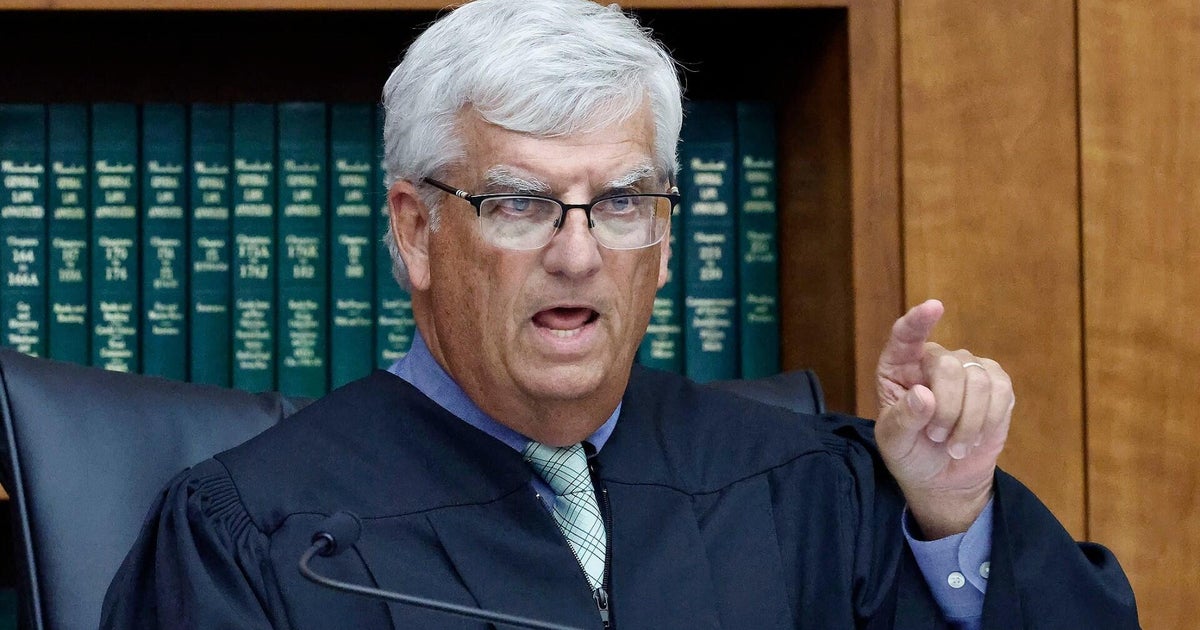
Testimony in Lindsay Clancy’s trial ended abruptly Monday in Plymouth Superior Court when a witness began talking about the Catholic religion and the defense asked for a mistrial. Judge William Sullivan denied the mistrial request, but reprimanded the prosecution and sent the jurors home for the rest of the day. Dr. Kirk Heilbrun was the second witness of the day, and in the afternoon he spoke about a conversation he had with Clancy in April. “That was part of her expectation was that she and her children would be together in heaven with God. She was raised Catholic. As I understand Catholic considerations, that’s not necessarily what happens. But when I asked her about it, when I said, ‘Isn’t suicide a mortal sin?'” Heilbrun said, before Sullivan called the attorneys to the sidebar after a defense. objection. Sullivan then sent the jurors out of the room and there was a brief recess. When Sullivan and the attorneys returned, the defense asked for a mistrial. “It’s a concern I have because this is over the top. It’s the same thing again, talking about religion, talking about heaven, talking about killing people and the impact that would have on Lindsay and her children,” said defense attorney Kevin Reddington. It is the second time that religion is mentioned during the trial. An earlier question for a witness was removed from the record. The prosecutor said she believed the comment was unintentional, not intended to irritate the jury, and added that she did not ask any questions about religion. Judge Sullivan said he would not declare a mistrial, but chastised the prosecution for the testimony. When the jury was called back, the judge told them that the comments were “immaterial, irrelevant and should be ignored.” He then excused them for the day, saying the plan is to return Tuesday to finish Heilbrun’s testimony, complete other testimony and then discuss next steps in the trial. Reddington was asked outside court how he felt about religion being mentioned a second time. “I objected, the judge denied the motion to mistrial. He gave a strong instruction and by law we assume the jurors heard the instructions. I have no doubt they will and we are ready to move forward,” he said. Legal expert Jennifer Roman discussed why the religion response prompted Reddington to ask for a mistrial. “The religion part and the questions around a person’s faith get right to the heart of the separation of church and state,” Roman said. “Unless religion has specific relevance to a case, you just don’t get to that point with someone. It has no bearing, no relevance to what someone’s beliefs may or may not be. So normally, ethically, we stay away from that.” Judge William Sullivan admonishes the prosecution after his witness, Dr. Kirk Heilbrun, mentioned the Catholic religion during his testimony about Lindsay Clancy’s mental state during Clancy’s murder trial in Plymouth Superior Court, Monday, Aug. 24, 2026, in Plymouth, Massachusetts. Greg Derr/The Patriot Ledger via AP, Pool Psychologist Dr. Kirk Heilbrun testifies The second rebuttal witness called by the prosecution was Heilbrun, a forensic psychologist. He said he has testified in approximately 330 cases regarding competency to stand trial. Heilbrun interviewed Clancy alongside Mack in April. “She had a fairly limited mental health history prior to September 2022. She experienced some achievement-related anxiety, was a very good student in school, and earned excellent grades,” Heilbrun testified. “And then she had some anxiety related to her three pregnancies.” He said Clancy became more anxious in mid-October when she started taking Zoloft. “He immediately started having some difficulties,” Heilbrun said. “There were some symptoms of depression, he immediately started having really difficult insomnia and felt a lot of stress.” She said she began having “terrible” and intrusive thoughts about harming herself in late November and early December, and later occasionally about harming her children. But Heilbrun said he didn’t say he was “hearing voices.” “The way he described them, they weren’t auditory hallucinations. Rather, they were his own thoughts,” he said. Heilbrun testified that the way Clancy described hearing a voice in his head during the night he killed his children, but never before or after, was “very unusual.” “To put it mildly, that would be a very, very unusual pattern or manifestation of how this kind of thing happens. Very unusual,” he said. Heilbrun is expected to return to the stand Tuesday to continue his testimony. Forensic psychologist Dr. Kirk Heilbrun speaks on the witness stand during the murder trial of Lindsay Clancy at Plymouth Superior Court, Monday, August 24, 2026 in Plymouth, Massachusetts. Greg Derr/The Patriot Ledger via AP, Pool Cross-examination of Dr. Avram Mack Previously, Dr. Avram Mack, a psychiatrist, returned to the stand Monday after testifying Friday that he met with Clancy at Tewksbury Hospital in April, and recalled telling his three children to “go to God” as he killed them in his Duxbury home. Mack was the first of three expected rebuttal witnesses called by the prosecution, as is protocol in insanity defense cases. Earlier Monday, Reddington concluded his contentious cross-examination of Mack, and the psychiatrist appeared in court via Zoom. Reddington said a judge in a previous case ruled that he was “not qualified” to testify, but Mack disagreed with that characterization. “Why are you smiling? This isn’t funny, sir,” Reddington asked Mack during cross-examination about the Clancy interview. There were several questions from Reddington about postpartum psychosis. Mack has testified that he believes Clancy was depressed but not experiencing psychosis at the time of the murders. “Do you agree that postpartum psychosis is a legitimate illness or defect?” Reddington asked, “When you have a symptom or sign of psychosis at any time, but particularly in the postpartum period, it is a legitimate finding and something to be concerned about and treated,” Mack responded. Defendant Lindsay Clancy speaks with her attorney Kevin Reddington. During his murder trial in Plymouth Superior Court on Monday, August 24, 2026 in Plymouth, Massachusetts. Greg Derr/The Patriot Ledger via AP, Pool Lindsay Clancy trial The defense rested Friday after calling its final witness, forensic psychiatrist Dr. Phillip Resnick, a key figure in the Andrea Yates trial. Resnick testified that Clancy reported feeling an “external force” taking over his body before the murders. Some people gathered outside the courthouse Monday morning dressed in white to remember Cora, 5, Dawson, 3, and Callan, 8 months. Clancy has pleaded not guilty to first-degree murder charges in the deaths of his three children. Prosecutors maintain that Clancy planned the murders and have suggested that his suicide attempt was not serious. The defense says she should not be held responsible because she was overmedicated and suffered from postpartum psychosis. Clancy faces life in prison without the possibility of parole if convicted of first-degree murder. If she is not found criminally responsible, she will be sent to a state psychiatric hospital in Massachusetts. If you or someone you know is in emotional distress or in a suicidal crisis, you can contact 988 Suicide & Crisis Lifeline by calling or texting 988. You can also chat with 988 Suicide & Crisis Lifeline here. For more information about mental health care resources and support, you can contact the National Alliance on Mental Illness Helpline Monday through Friday, 10 a.m. to 10 p.m. Eastern Time at 1-800-950-NAMI (6264) or email info@nami.org. More from CBS News at: