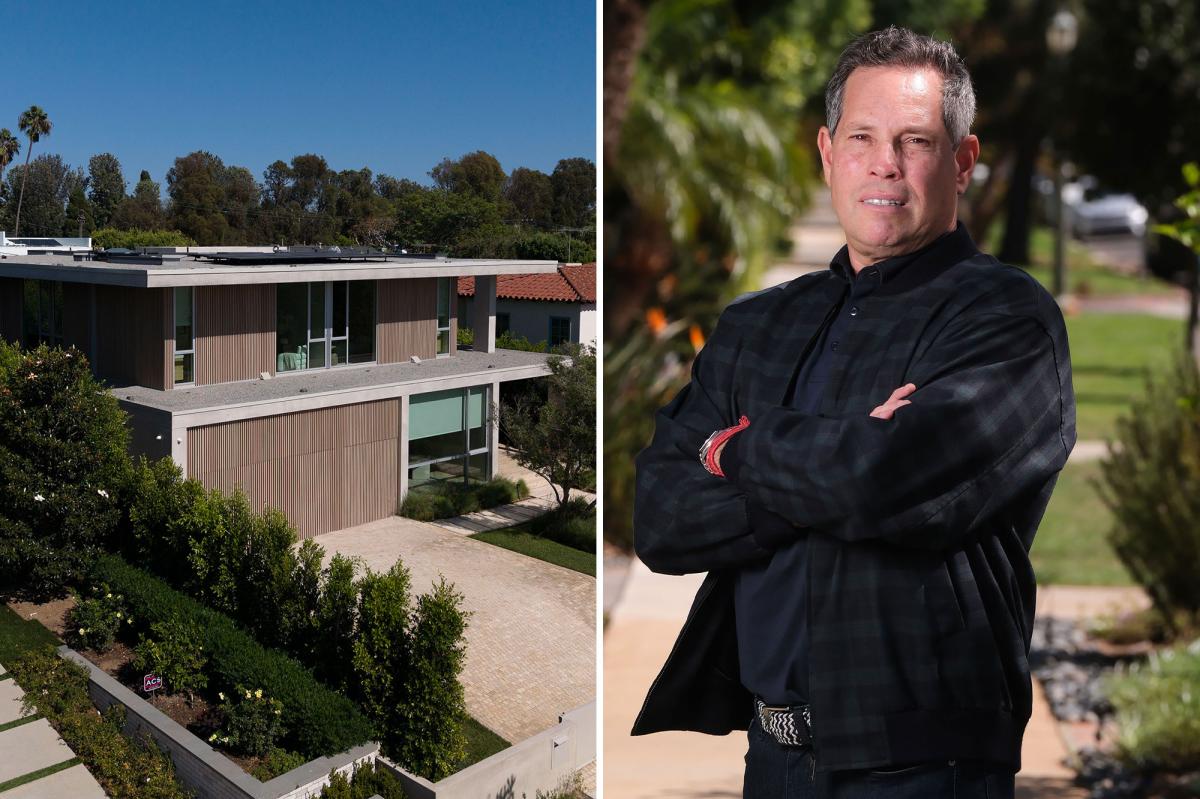
Los Angeles’ “mansion tax,” sold to Angelenos as a way to tax the rich and boost housing, has instead blocked the construction of 9,100 homes, eliminated 16,650 full-time construction jobs, and cost $452 million in revenue. A damning new report says the tax, officially known as United to House LA, or ULA, has negatively impacted the city’s multifamily and high-end real estate markets and has raised less than half of what it was expected to generate to address the city’s housing crisis. The ULA was expected to raise about $900 million a year, or $2.7 billion during its first three years. Instead, it generated around $1.2 billion. Sign up for the California Morning Report newsletter The biggest news, opinions and culture shaping California right now. Thanks for signing up! Beverly Hills real estate agent Danny Brown spoke about the dangers of the “mansion tax” imposed on properties in the $5 million-plus market. Andy Johnstone for CA Post The tax, which came into effect in April 2023 and was championed by socialist councilor Nithya Raman, a mayoral hopeful, means that if a property in Los Angeles sells for more than $5.4 million, the seller pays a tax of 4% of the closing price. If it sells for more than $10.9 million, it increases to 5.5%. Despite its nickname, Los Angeles’ “mansion tax” applies far beyond luxury homes. Apartment buildings, offices, warehouses and vacant land can apply the tax if they are sold above the thresholds. About 1,000 of the more than 9,100 new homes lost would have been affordable units (the same thing the tax was supposed to create) according to the RAND corporation, a nonprofit, nonpartisan research group. West Side real estate broker Danny Brown told the California Post that the tax was “another disaster started by the incompetent socialists who run our city.” “ULA has cut the legs off the residential and commercial real estate industry, which is one of the largest parts of our city’s economic engine,” Brown said. Prominent west side real estate broker Danny Brown said the ULA tax continues to hit the market. CA Post’s Andy Johnstone Mayor Karen Bass did not take a position on the mansion tax, but Raman has since said she was in favor of reforming the tax. RAND found that ULA reduced high-value property sales by about 31% through early 2026, and that apartment and commercial sales fell more than 46%. Simply put, the tax has discouraged some homeowners from selling and developers from pursuing projects that, because of the tax, no longer make financial sense. “The ULA measure has the noble aspiration of bringing a more affordable housing stock to Los Angeles, but its negative impacts may outweigh its benefits. Such a transfer tax adds friction to the housing market and slows the number of housing transactions,” Joel Berner, senior economist at Realtor.com, told The Post. Realtor.com is owned by News Corp, the same parent company that owns The Post. In total, $55.5 million in ULA cash went toward 3,713 existing affordable housing units in the funding round, rather than building new ones. Google Maps “Builders are already dealing with high labor and material costs, so this additional expense when they go to sell a completed or revitalized project further reduces their margins,” Berner added. “This will lead some to decide that the deals are simply not worth it.” New research has documented a significant impact on high-value property sales and housing development since the ULA went into effect in 2023. The tax also eliminated the equivalent of 16,650 full-time construction jobs and cost government agencies $452 million in lost revenue, according to RAND. And the City has barely touched the cash, spending just $114 million through May, less than 10% of the money raised. The City Council voted 13-0 last Tuesday, including Raman, to allocate a record $466.6 million to affordable housing, of which $324 million (nearly 70%) came from ULA. A Los Angeles resident voted in favor of Measure ULA, called the “mansion tax,” in 2022 as a way to get “millionaires and billionaires” to help build housing for low-income and homeless people. Google Maps But when the tax was passed, Raman couldn’t stop boasting. “This is truly the first housing initiative of its kind anywhere in the United States that will have such a widespread, immediate and long-term impact on the housing and homelessness crisis,” he said. A property in Brentwood, the Westside enclave long favored by Hollywood stars and professional athletes, shows how the tax can affect the real world. The property sold for about $5.3 million in February 2023, weeks before the ULA went into effect. The original house was torn down and replaced with a new 8,990-square-foot, seven-bedroom home with a pool, screening room and guest house. It hit the market last December at $19.995 million. After three price cuts, it is now listed at $15.995 million. If sold at that price, ULA’s bill would be about $880,000. Brown showed the Post around the block and said even the modest older homes next door could be affected because the land beneath them alone is worth more than $5 million. “It’s 2,000 feet. It’s not a mansion, even though it costs $5.5 million, because of the land it’s on,” Brown said. “It sounds good to tax millionaires and billionaires. Everyone says ‘great,’ but it’s far from the reality of what’s happening.” For builders, the reality of additional cost is even more serious. Developer Barry Cassily said ULA is part of a larger set of measures, rules and taxes that make it nearly impossible to build housing in Los Angeles. Andy Johnstone, of CA Post developer Barry Cassily, said developers already operate on threadbare profit margins and now have to factor in an additional 4 to 5.5 per cent of qualifying sales, which could make some projects financially unviable. “They are taxing housing to pay for it,” he said. Critics say the result is that builders have stopped building and homeowners have stopped selling. Fewer sales also mean less property tax revenue, because in California, a property is reassessed at its current market value when it changes ownership. A study by Michael Manville of UCLA and Mott Smith of USC, covering about 338,000 property sales in Los Angeles County, found a sharp decline in transactions above the ULA threshold. “If, in the meantime, you’ve deterred hundreds or thousands of market-rate units, you haven’t helped affordability,” Manville, who chairs UCLA’s urban planning department, told The Post. He called it “robbing Peter to pay Paul.” Carolwood Estates lists a luxury home in Brentwood. CA Post Manville’s Andy Johnstone says the report takes into account other economic factors such as high interest rates. Meanwhile, Occidental College researchers argue that broader economic conditions better explain the decline in multifamily development. Their analysis suggests that the slowdown in apartment construction was part of a broader trend affecting development, making it difficult to isolate the impact of the tax from other economic pressures. Jason Oppenheim, the luxury broker who stars in Netflix’s “Selling Sunset,” says RAND figures through September show that up to 10,600 apartments were deterred, compared to about 1,900 new units that ULA has helped finance. “The City Council is celebrating the housing it funds with Measure ULA while ignoring the much larger number of apartments its tax is preventing,” Oppenheim told The Post. Beverly Hills real estate agent Danny Brown said one result of the ULA is that fewer homes are built, more construction jobs are lost, less tax revenue is collected and more drug-addicted zombies roam our streets. Andy Johnstone for CA Post Even those 1,900 units come with an asterisk, and ULA typically only funds a portion of affordable housing projects. Manville compared the city’s claim to old television ads that called Froot Loops “part of this nutritious breakfast.” “It’s part of that breakfast,” he said. “But how big is the role really?” Raman has since attempted to change the tax, proposing earlier this year to exempt new construction apartment, commercial and mixed-use projects from the ULA for 15 years. “A policy that unintentionally stops housing production ultimately undermines the very goals voters asked us to achieve,” Raman said. However, his proposal failed to make it to the June vote amid fierce opposition from labor and pro-ULA groups. Critics say the result is that builders have stopped building and homeowners have stopped selling. Getty Images Bass has not been a ULA purist either. Last year, the mayor attempted to rewrite the tax in Sacramento, but then withdrew the bill at the last minute after ULA supporters revolted. Weeks later, after meeting with billionaire developer Rick Caruso, he asked the council to grant victims of the Palisades fire a three-year exemption from the tax. And some of the money is not used to build anything new. In April, the city allocated $55.5 million to preserve 3,713 existing affordable units. About $2 million went to 11 buildings managed by SRO Housing Corp. One of them, the 96-unit Renato Apartments, received $100,000. In a 2024 lawsuit, tenants alleged they were living with bed bugs, cockroaches, rats, sewage leaks and human waste, court documents show. A house for sale sign is seen in front of a house with palm trees. Sona – stock.adobe.com SRO Housing has lost $27.8 million since 2022 and has warned the city it will collapse without more public money, Politico reported this month. Manville said keeping existing units habitable is not automatically a bad use of money. “If for a small amount of money we can take some units that are at risk of being declared uninhabitable and keep them on the market, that could well be a political victory,” he said. Councilwoman Imelda Padilla, who took over the council’s new Housing Committee in August after the committee Raman chaired was disbanded, has pushed for quarterly reports on where the money goes. “We must follow these dollars and make sure they produce the affordable housing that Angelenos deserve,” Padilla told The Post. ULA’s citizen oversight committee did not respond to the Post’s request for comment. Applications for the $466.6 million funding round open Oct. 13, three weeks before voters decide whether Raman gets the keys to City Hall.