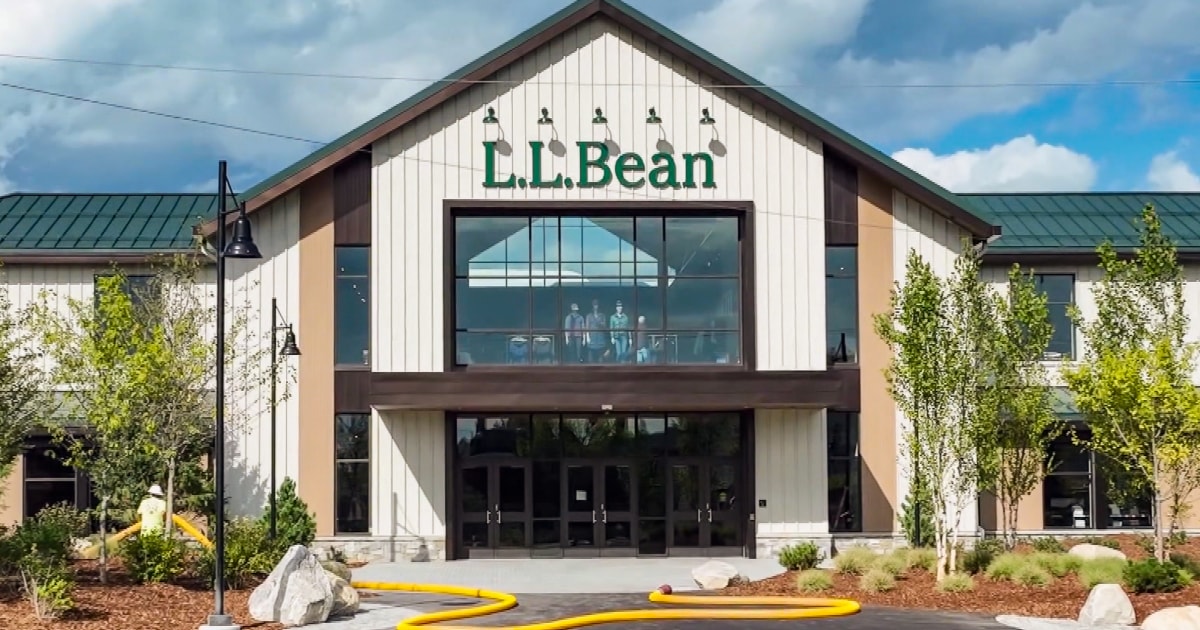
LLBean’s origin story grew from scratch, literally. The company, which sells everything from clothing and footwear to handbags and home goods, was first established in 1912 after its eponymous founder, Leon Leonwood Bean, returned home from a hunting trip with wet and sore feet. “He said, ‘I have an innovative solution,'” CEO Greg Elder said in an interview, part of NBC News’ “Business in America” initiative. “’What would happen if I developed waterproofing from a rubber bottom and sewed a leather upper?’”01:47L.L. Bean CEO on how he manages his day-to-day life00:0000:00And with that the famous LLBean boot and a $2 billion company were born. Since then, the brand has embraced its strong roots and remains headquartered in Freeport, Maine, a coastal town 20 minutes north of Portland. “It’s been working for us for over 100 years and will continue to work for over 100 years,” said Elder, who has been with the company for nearly two decades. He emphasized that LLBean has no plans to relocate its operations. “We are a private, family-owned company,” he said. “The family remains steadfast in its desire to maintain this headquarters in Freeport, Maine, where we have always been.” It’s a legacy that the brand’s flagship store in Freeport has duplicated. The famous retail location recently underwent a four-year, $50 million renovation. It is also the only independent LLBean store that is open 24 hours a day, 365 days a year. As more retailers adopt direct-to-consumer and online-only business models, LLBean maintains a significant brick-and-mortar presence nationwide — about 60 stores in 22 states. “The customer says they love being able to come in and touch and feel the product, they love being able to try it on and feel the fabrics,” Elder said. Then there’s the famous L.L.Bean catalog, a long-running mail-order lookbook that features the latest seasonal products and designs. First launched in 1912 when the business was just taking off, the physical publication has seen daily mailing volumes decline by 10% to 14% each year, according to Elder. LLBean CEO Greg Elder said the company is wary of AI’s environmental footprint. NBC News Still, he said it’s not going anywhere. “There is nothing in the foreseeable future to suggest that we will eliminate the catalog.” And it is a catalog made the old-fashioned way, without the use of AI. “We still believe in our hearts that old school photography with real products on a real human being is the way to go for our brand and our brand reputation,” Elder said. As for how LLBean is incorporating AI into its business, Elder said the company is “curious” about areas where it might “fit our brand,” but it doesn’t. actively looking for ways to implement technology. “That’s not who we are. That’s not in our DNA. We still revolve around the personal selling experience,” he said. “We are quite cautious about some of the risks.” This approach differs from many other high-profile retailers that have been quick to adopt AI in their efforts to streamline operations, improve efficiency and increase profits. Elder said AI’s environmental footprint, including its huge energy and water demands, has been a particular deterrent to more widespread adoption at LLBean, which prides itself on being a sustainable outdoor brand. renewal.NBC News“This computing power has an impact on the environment without a doubt,” he said. “I really hope that we can find the beautiful intersection of using this technology that provides productivity for employees and customers. [but] “Until then, Elder said, the company is comfortable staying out of the AI race. “It may be a bit of an outlier,” he said. “But you know, that’s who we are.”