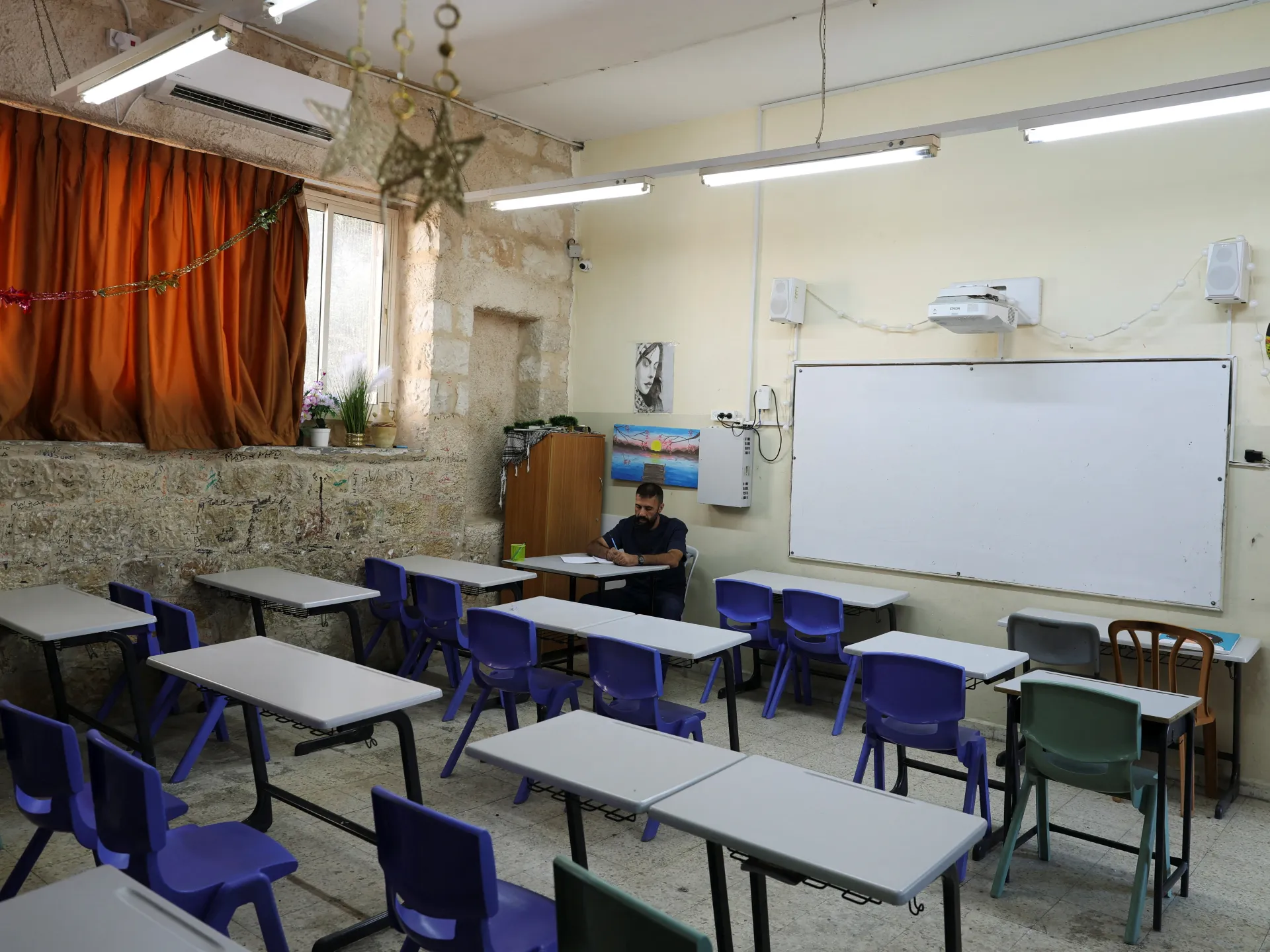
The academic year in occupied East Jerusalem began on Tuesday with an indefinite strike by private and Christian school teachers after Israeli meddling in students’ curricula. All new first and seventh grade classes in East Jerusalem’s Palestinian-majority municipal schools have been told to exclusively use the Israeli curriculum this year. Israel has also blocked entry permits for West Bank teachers to teach in East Jerusalem schools, according to Haaretz. This means that one in three Palestinian students in occupied East Jerusalem, more than 45,000 in total, will be enrolled in the Israeli educational program, almost four times more than six years ago. Jerusalem governorate spokesman Marouf al-Rifai described the forced integration of the Israeli curriculum in Palestinian schools as a cultural and educational crime. on Facebook. Israeli forces recently seized educational complexes formerly operated by the UN agency for Palestinian refugees, UNRWA, in the Shu’fat and Kafr Aqab refugee camps, to be replaced by Israeli-run facilities. Hamas official Haroun Nasser el-Din issued a statement saying that “the school, the book and conscience are basic pillars in the battle for Jerusalem.” East Jerusalem and the West Bank have been illegally occupied by Israel since 1967. “Palestinian identity in Jerusalem runs deeper than the imposed curricula or procedures of the occupation and its arrogant policies can erase,” he added. The permit crisis Palestinian schools in East Jerusalem have already suffered severe staff shortages as Israel effectively blocks West Bank teachers from accessing the city’s schools. The General Secretariat of Christian Educational Institutions in Jerusalem announced an indefinite strike in response to the crisis. “Unfortunately, once again we were surprised by the non-renewal of entry permits for more than 70 teachers and employees of our educational, administrative and support staff, suddenly and without prior notice, which made their access to their schools difficult and directly affected their preparation for the opening of the school year,” the agency said in a statement. “The absence of this large number of staff affects various aspects of school work, educational, administrative and health, in addition to cleaning services and safety procedures, making it impossible to guarantee a safe and stable start for our students.” Sylvia Amer, deputy director of academic and administrative affairs at College des Freres Jerusalem, said the abrupt revocation of dozens of permits just 10 days before schools opened forced classes to be suspended. “The sudden ban came after we had previously been confirmed in June that all furloughs would be available to all members of our teaching and administrative staff and employees.” Amer said. “If this reality continues, it will gradually affect the independence of schools and their educational and cultural identity.” Systematic extortion tactics. The staffing crisis in East Jerusalem schools has been exacerbated by recent Israeli legislation targeting Palestinian schools. A Knesset law passed earlier this year prohibits the employment of teachers with academic degrees from Palestinian Authority institutions within the Israeli education system. the Haaretz report. Mike Bassam Farraj, director general of Greek Orthodox Patriarchate Schools, told Al Jazeera that permit denials and legislative obstacles act as a systematic pressure campaign. “It serves as a method of systematic pressure practiced in Christian schools in Jerusalem and in private schools in general, with the aim of reducing the number of employees and teachers coming from the West Bank,” Farraj noted. Israeli authorities have also used budget allocations as weapons to coerce institutions, he added. “In reality, there are continuous financial temptations – not to use the word ‘blackmail’ – based on the equation: ‘Adopt the Israeli Bagrut curriculum and take the budgets you want,’ where then you are given much broader spaces and capabilities,” Farraj explained. To counter this academic siege, Farraj detailed his dependence on the judiciary. “As for some other professions, we are forced to engage in legal confrontations and incessant follow-ups before the responsible authorities and – as in the specialty of human medicine, for example – obtain decisions from the Supreme Court to extract and accredit the right of our graduates to obtain certificates of professional practice in accordance with their specialties, whether in medicine, law or others.