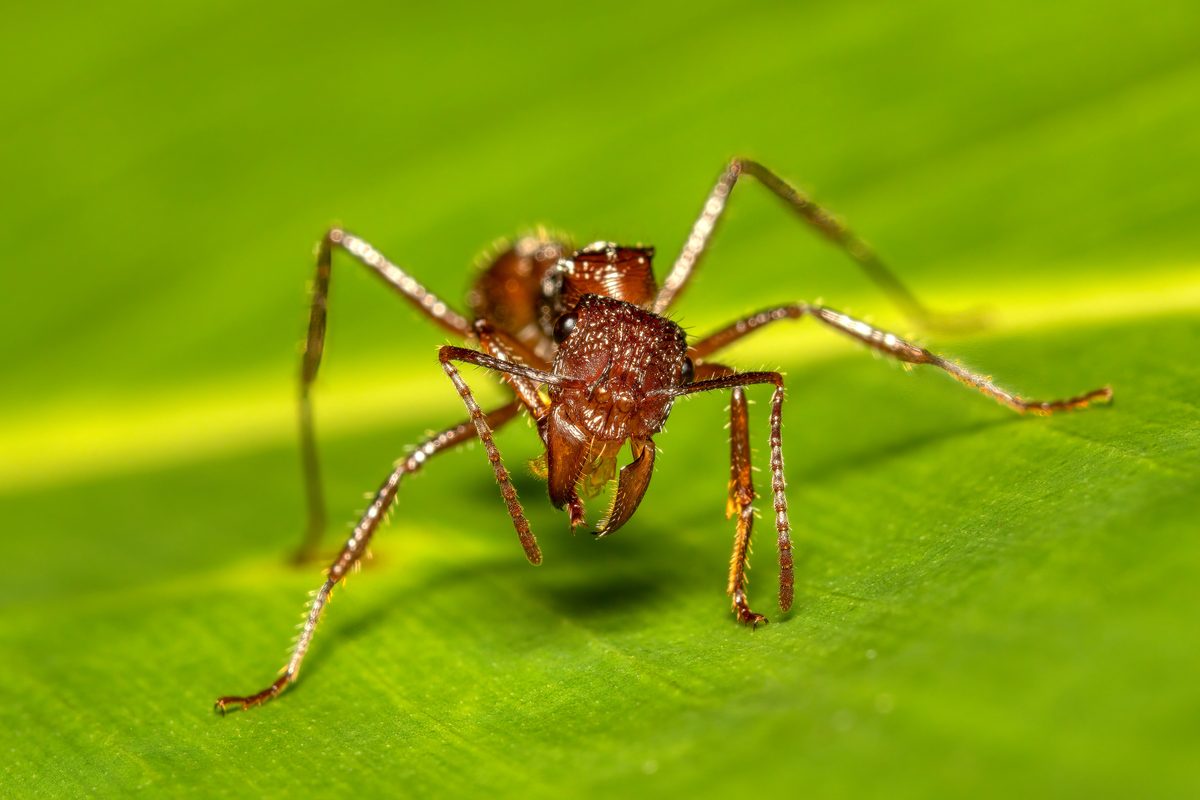
Pain is subjective, and while most bites are a real nuisance, there are very few that can stop you in your tracks, cursing loudly and clenching your teeth, says Richard Jones. What is a sting? A sting is not just a passive blow with a sharp point; the rigid, hollow stinger (or fang) is the carrier to draw liquid venom from a storage reservoir as deep beneath the skin and into the flesh as the moment permits. There is usually an active pump, either squeezing the bag or at the base of the hollow tube. Venoms typically contain a cocktail of active ingredients: protein-destroying polypeptide enzymes break down and destroy flesh cells; histamines increase blood flow, expelling poison into the body, causing swelling and redness; and the neurotransmitters confuse and overstimulate the nerves, creating that stinging or burning sensation, but also throbbing and numbness. And the poison is notoriously toxic. Precise measurements are few, but a single wasp sting injects about 15 µg of toxin (that’s about 1/65,000 of a gram). And it hurts a lot. Multiple stings add pain cumulatively. What’s the point of poison? In nature, venom serves two purposes: to subdue prey and to defend against attack. Fortunately, no stinging animals have yet evolved to target humans as potential food, but there are many that need their powerful bites to protect us, because we are a very dangerous species to them. Others, by a certain evolutionary luck, have poisons directed against other organisms, but which, however, are very powerful on our rather sensitive skin. Most stings may go away after a few moments of mild pain, but anaphylactic shock can be fatal. This is an EXTREMELY RARE condition in which an individual’s immune response catastrophically overreacts to the venom injection, leading to a cascading release of the body’s own histamines and other inflammatory chemicals. If left untreated, it can cause difficulty breathing, low blood pressure, interference with the heart muscles, and internal bleeding. Peanut and penicillin allergies can induce similar responses, and susceptible people often carry an epipen to self-inject adrenaline to counteract the effects. Getty bullet ant – Getty Native to the rainforests of Central and South America, the sting of this large (20 mm) ant has been compared to being shot (hence the name bullet ants) or to walking across hot coals with a rusty nail stuck in your foot. Small colonies of a few hundred individuals use their stings to defend their nests against predators and also to kill small insect prey. Tarantula hawk wasp A tarantula hawk wasp is a spider wasp that hunts tarantulas. Tarantula hawks belong to any of the many species of the genera Pepsis and Hemipepsis, of the family Pompilidae (spider wasps). The most familiar species are up to 5 cm (2.0 in) long, making them one of the largest wasps, and have blue-black bodies and shiny, rust-colored wings (other species have black wings with blue highlights). The vivid coloration found on the bodies, and especially the wings, of these wasps is an aposematism, advertising to potential predators the wasps’ ability to deliver a powerful sting. Their long legs have hooked claws to grab their victims. The stinger of a female Pepsis grossa can measure up to 7 mm (¼ inch) long and is considered one of the most painful insect stings in the world. The numerous species of this wasp family specialize in trapping and paralyzing spiders to supply the small nest where a single egg is laid. The wasp larva then feeds on the fresh spiders that are still living but immobile. They often trap and subdue prey much larger than themselves, dragging it back to the nest burrow rather than managing to fly with it, and have evolved powerful toxins to immobilize the spider, which might otherwise dangerously defend itself as if its life depended on it. The larger tropical and subtropical species have stings long and hard enough to penetrate human skin and can deliver a painful blow. This usually happens by accident because they are large, black or intensely colored insects, with deeply clouded wings, which makes them look very sinister; It’s not the kind of cute insect you’d willingly take between your finger and thumb. Honey bee Getty Despite being everyone’s favorite insects, bees can cause a very painful sting and, due to the social structure of their colonies, stings can be multiple and very dangerous. Although they evolved from wasps, bees now only need their stings to defend themselves, against all kinds of animals that try to raid their honey reserves and their succulent brood of larvae. They also defend their hives against unsuspecting humans who venture too close. The first to sting often dies – removed with a quick wipe in the hand – but a barbed stinger means that the needle tip, venom sac and venom delivery apparatus remain attached to the skin, still pumping out the venom. That bee dies, but the lodged sting emits an alarm pheromone odor that effectively labels you as the enemy. This recruits more bees to the attack, but as they are killed and gutted by stings, more alarm is generated and only a quick exit away from the hive will stop the attack. Ten bites and you might feel breathless and a little nauseous, you’ll probably want to sit down and have a cup of tea. One hundred bites and you should seek immediate medical attention. There is no antidote, but dialysis can remove toxins before they begin to cause damage to the heart, liver, and kidney organs. A thousand stings are where deaths start to occur, but these types of events are extremely rare. Social Wasps Getty wasps use their stings to kill prey insects and feed their larvae in the nest, but they also need them to defend their protein-rich colonies against major dangers such as badgers and the erroneously named honey buzzard and badger, which are more likely to seek out tasty wasp larvae than honeycombs. Like bees, killing a wasp emits a danger signal into the air that sends the nest’s occupants into a frenzy. With perhaps 10,000 workers in a nest at the height of summer, they are a well-organized army willing to carry out suicide attacks for the benefit of their colony. Ironically, the much-maligned hornets, with only a hundred or two individuals in a nest, are much more docile and much less likely to sacrifice themselves by attacking a clumsy human. Saddleback Caterpillar, Acharia stimulea Getty Looking like a Lego model of a brightly colored caterpillar, this is not a toy you can casually pick up for close inspection. It is completely covered with large tufts of long thorns. These spines are hollow and easily detach from the skin, releasing the stinging venom they contain. They cause a painful rash and can cause swelling around the affected area, nausea, difficulty breathing, and migraine. This species is widespread in eastern North America and Mexico. The cocoon, in which the chrysalis forms, incorporates these same stinging hairs into the silk and causes similar problems, but the rather drab adult moth is entirely mundane and harmless. Arizona bark scorpion, Centruroides sculpturatus Andrew Meeds, CC BY 4.0 https://creativecommons.org/licenses/by/4.0, via Wikimedia Commons All scorpions have a stinger in their tail, which is how they kill prey they grab with their claws. There is a bit of folklore surrounding the size of the claws: large pincers that involve a powerful, crushing grip, so they need less of a powerful bite, but smaller pincers that need more chemical drive for a stronger toxin. The truth is that all this is a bit fanciful. However, this species has acquired a reputation as the most venomous scorpion in North America, and although deaths are extremely few (perhaps two in the last half century), the pain is considered extreme and an antidote has been developed. Velvety Ants, family Mutilidae Hectonichus, CC BY-SA 3.0 https://creativecommons.org/licenses/by-sa/3.0, via Wikimedia Commons Not ants, but certainly covered in a layer of velvety hairs, these curious insects are wasps that lay their eggs in bumblebee nests, where the larvae feed on the host brood. The females are wingless and hairy, but the males simply look like thin, black wasps. Females are unlikely to need to sting bumblebees when they invade nests, but they still inherited their venom from their wasp-like ancestors. Perhaps because of their cute appearance, the unwary could spot them and receive a powerful sting for their mistake. In North America they are sometimes called cow killers, although the exact number of cow deaths resulting from their bites appears to hover around the zero mark each year. Black widow spider, species Latrodectus Getty Most spiders have venom in their fangs, which is, after all, how they kill their insect prey. But very few have fangs long, strong or sharp enough to pierce leathery human skin. It is true that the numerous species of black widow found in warmer parts of the world can cause a painful sting if given the chance, but this is usually described as a wasp sting. It may be because black widows are relatively small spiders that it seems surprising that they can pack a good bite if handled carelessly, but this has led to an unrivaled reputation. It doesn’t help at all in a misogynistic world, where females (usually much larger than males) have longer jaws, larger venom sacs, and more painful bites.