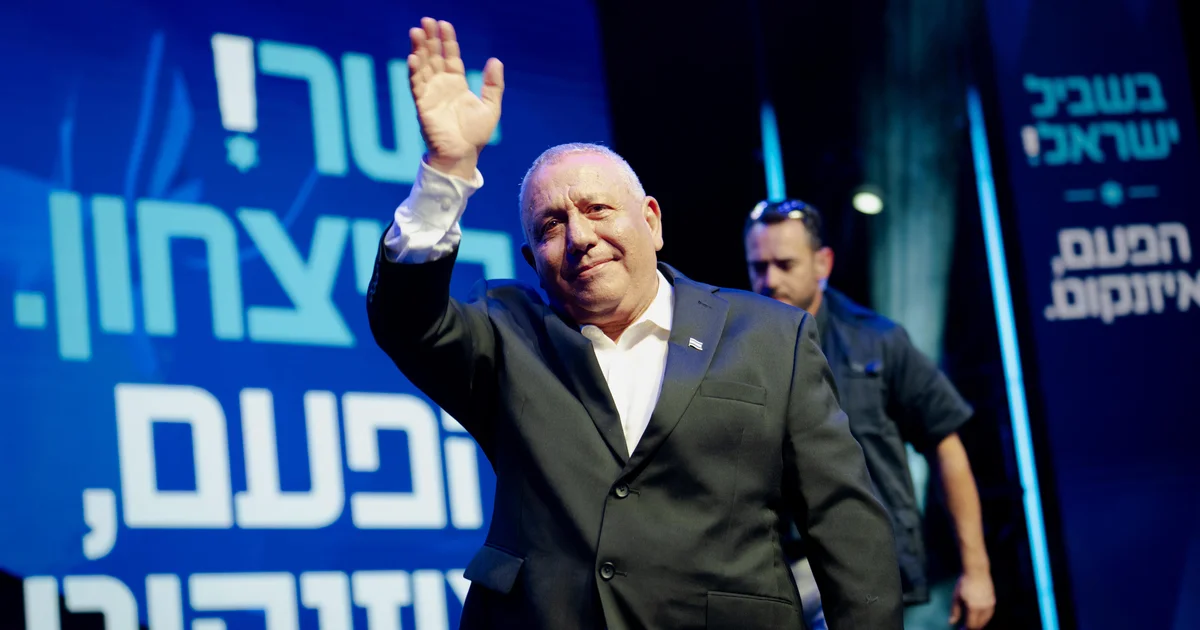
Israeli President Isaac Herzog said Saturday night that he was giving opposition candidate Gadi Eisenkot the first opportunity to form a governing coalition after the Oct. 27 election. Eisenkot, a former military chief, ran as Prime Minister Benjamin Netanyahu’s main rival, leading a bloc of parties seeking to unseat Israel’s longest-serving prime minister. “Now is the time to form a national emergency government. I will do everything possible to ensure that we are worthy,” Eisenkot wrote on X in his first reaction. until the announcement of his appointment. Neither Eisenkot nor Netanyahu’s party won a clear majority in the vote. But in marathon discussions with the president this week, representatives of most of Israel’s major parties recommended that Eisenkot be given the task of forming a new government. Herzog’s decision is a setback for Netanyahu, who has made accusations, so far without evidence, that some Arab countries interfered in the elections. The acting director general of the Central Election Committee, Din Livne, said in a letter to a committee member on Thursday that “there is no basis for claims about a systematic compromise of the integrity of the elections.” Herzog’s announcement, expected Sunday, came shortly after Netanyahu called for a “government of national unity” in a video statement and warned against “hastily swearing in a government with terrorist supporters,” an apparent reference to the Arab-led parties that have backed Eisenkot. Netanyahu and his allies have repeatedly portrayed Arab-led parties as a threat to national security. Eisenkot, however, has indicated a willingness to partner with them as long as they meet certain conditions, including agreeing to refer to Hamas as a terrorist group that needs to be destroyed. Eisenkot’s party, Yashar, criticized the prime minister’s video with a statement posted on The four parties that make up the main bloc opposing Netanyahu won 48 of the 120 Knesset seats. Netanyahu’s bloc won 53, while Israel’s Arab-majority parties had their biggest turnout in Tuesday’s election, winning a record 19 seats. Since neither Eisenkot’s nor Netanyahu’s blocs won a clear majority of the votes, they would need some support from Arab parties to form a coalition government. The heads of the two largest Arab parties said they would be willing to help Eisenkot’s opposition bloc unseat Netanyahu, although most Jewish-led parties opposed to Netanyahu pledged before the election not to rely on support from Arab parties to form a government. Once the new Knesset is sworn in (even without a new government having been decided), Eisenkot’s bloc, along with Arab parties, could begin passing laws since they will control a majority in parliament. Netanyahu, whom President Trump enthusiastically endorsed, will remain in his role as interim prime minister until a new government is formed. If the parties cannot negotiate to form a new coalition government, then the country would have to hold elections again and Netanyahu would remain prime minister in the meantime. Crisis in the Middle East Go Deeper with The Free Press In: