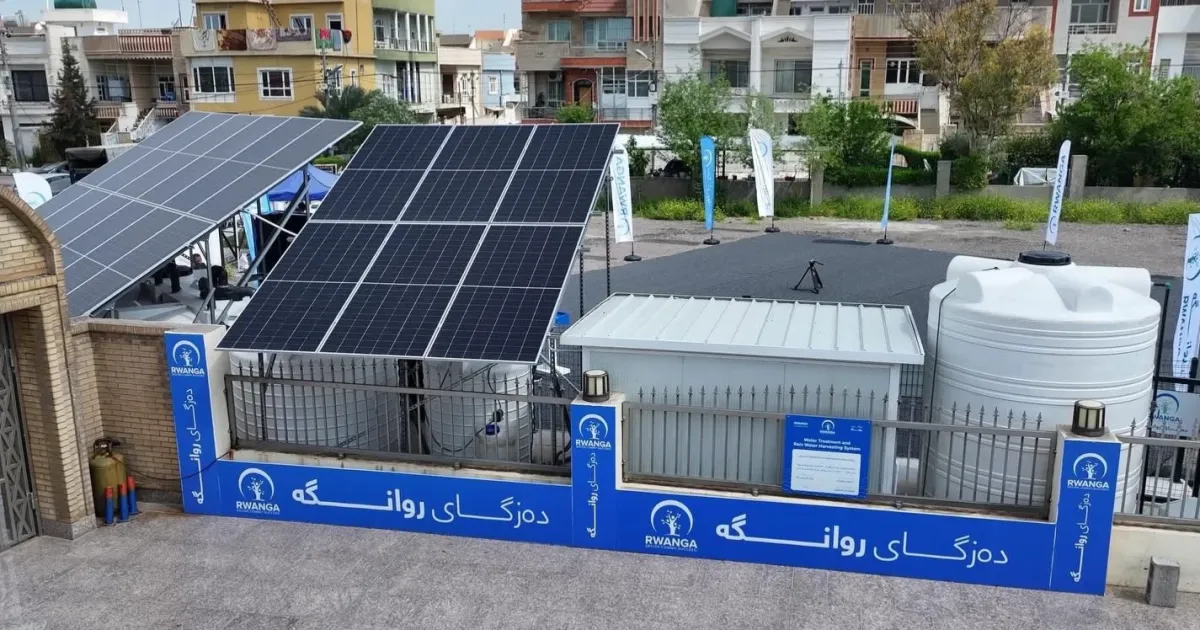
For years, the day at Kulak ended when the generator shut down. Like thousands of villages across Iraq, this small farming community in the semi-autonomous region of Kurdistan lived to the faltering rhythm of an erratic power supply: a few hours of electricity, then the water pumps stopped, the refrigerators warmed up, and the children put down their books. Today, Kulak runs on the sun. Solar panels harness their energy, batteries store the excess, and residents have power 24/7. The change is visible beyond homes: water pumps continue to run and cold storage gives farmers more control over when they sell their harvest. This is the part of the energy transition that the global climate conversation too often overlooks. Solar hardware is cheap; the world has learned to install it. What matters is what comes after the panels are installed: building local capacity to keep systems running and use reliable energy to support farms, livelihoods and communities. The energy transition will not be won in conference rooms. It will be won or lost in places like Kulak. Iraq’s rural energy crisis Iraq’s energy story is often told as a paradox. It is one of the world’s largest oil producers, but rural communities still suffer daily power outages. Today, summers regularly exceed 50 degrees and the United Nations ranks Iraq among the nations most vulnerable to climate change. The drought has emptied farmland. The heat has made entire regions more difficult to live in. Rural families face a quiet and grueling choice between staying on land that can no longer support them or joining the trend toward overcrowded cities. These pressures do not respect provincial borders. They are shared throughout Iraq, from the southern marshes to the northern mountains. They demand answers that work for the entire country. For remote communities, decentralized energy should not be treated simply as a stopgap while they wait for the grid. It may be part of the long-term answer. Beyond electrification Kulak is one of five villages in the Kurdistan Region electrified through a solar initiative that combines new infrastructure with local training and agricultural development. Residents are trained to operate and maintain their own systems, while investigating how reliable energy can support local production. Energy is not treated as a gift to be received, but as an asset to be managed. That means looking beyond electricity itself and seeing what it can enable: cold storage that allows farmers to preserve their harvest at better prices, irrigation that no longer relies on diesel, and processing that adds value before the crops leave the village. That distinction is important, because the graveyard of development is full of well-intentioned infrastructure. Anyone who has worked in this field has seen the solar panels collecting dust because no one was trained to repair an inverter, or the water project abandoned when the foreign NGO moved ahead. Sustainability is not a slogan; It’s a design choice. Building local capacity on a project from day one is the difference between a photo opportunity and a future. Building the transition from the ground up There is a broader argument here for the climate movement. The energy transition is overwhelmingly told from the top down: through COP plenaries, G7 communiqués and funding promises from rich nations, many of them unfulfilled. However, for hundreds of millions of people in the Global South, the transition will come, if it comes at all, through decentralized solutions built close to the ground. Rural Iraq will not wait decades for network expansion to reach all valleys. There’s no need. Distributed solar is better suited to these communities than centralized generation, while local institutions can move at a speed that multilateral programs rarely match. There is also a quieter point about who can act on the climate. The predominant image of climate action in the Middle East is that of the megaproject: vast solar farms in the desert, futuristic cities and sovereign wealth funds. Those have their place. But electrifying farming villages one by one represents a different kind of ambition, rooted in the belief that Iraqis themselves, in all their diversity, can build the country’s energy future rather than wait for it to be delivered. Local participation is important particularly in places where reliable electricity is tied not only to home comfort but also to whether farms can irrigate crops, preserve produce and remain economically viable. Iraq has thousands of rural communities, and scaling this model will require partners, patient funding, and supportive policies at all levels of government. Agricultural research is promising but young. On my last visit to Kulak, I was less impressed by the panels than by what surrounded them: the walk-in cooler, the pumps running, the sense of community planning for next season rather than next month. That the lights stay on is the least of it. What has really been activated is the future tense. If Iraq’s energy transformation is built like this across the country, village by village and from the ground up, it will be more durable than anything imposed from above. That means investing not only in the systems themselves, but also in the people who will maintain them and in the farms, businesses and livelihoods that reliable energy can support. The world’s climate diplomats could do worse than pay attention. The views expressed in this article are those of the author and do not necessarily reflect the editorial position of Al Jazeera.