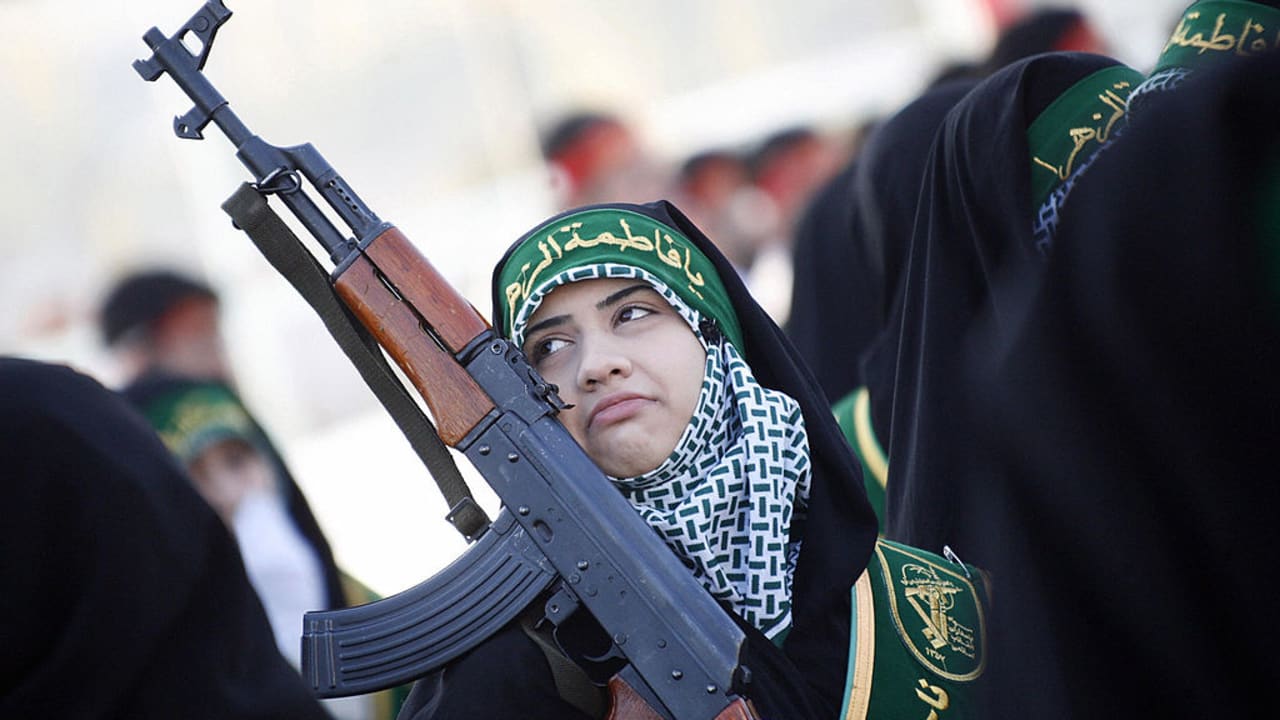
A commander of one of Basij’s female units was killed in an attack on Wednesday in Mehrestan, a border county in Iran’s Sistan and Balochistan province, Iranian state media reported. The woman was identified as Afsaneh Aghila. Aghila, commander of the Basij unit of the Afzal Sisters in Mehrestan, was reportedly murdered in front of her house in front of her children. The IRGC-affiliated Tasnim news agency alleged that the gunmen had ties to Israel and the United States, but did not identify the group responsible or provide evidence to support its claim. In a separate incident in the same province, the Islamic Republic News Agency reported that security officer Mohsen Shahriyari was killed while confronting a “terrorist group.” Sardar Mohammadreza Eshaghi, commander of the province’s police, issued a statement after the killings, describing Aqila as “a woman of faith, courage and sacrifice.” “I condemn this terrorist act and offer my condolences and congratulations on the martyrdom of these people to their comrades, the honorable people of Mehrestan and the Basij community of Sistan and Balochistan province,” Eshaghi said. Members of the Islamic Revolutionary Guard Corps (IRGC) attend a military drill of IRGC ground forces in the Aras area, East Azerbaijan province, Iran, on October 17, 2022. (credit: IRGC/WANA/HANDOUT VIA REUTERS) The Iranian People’s Fighters Front claims responsibility for six attacks. Attacks targeting members of the IRGC and other security forces in the province appear to have increased in recent weeks. The US-based Human Rights Activists News Agency (HRANA) reported earlier this week that at least 94 people were killed and 33 wounded in 63 armed incidents across southeastern Iran between March 31 and October 10. The People’s Fighters Front has claimed responsibility for only six of the incidents documented by HRANA. The groups responsible for the remaining incidents are unknown. Security expert Roger Macmillan told The Jerusalem Post that attacks against the regime have increased since the Sunni group Jaish al-Adl merged with the PFF. He said there had been significant anger towards the IRGC for its “systematic arrest and torture of its people, many of whom do not even speak Farsi, and were forced to sign false documents, which led to them being found guilty of alleged terrorist attacks and then executed.” He argued that with the brutal crackdown on Iranians across the country, the killings will continue to get worse. affairs of the Law Enforcement Command in the province, died in what the agency described as a “terrorist attack.” Earlier this week, Haalvsh, an independent human rights organization and media outlet that documents human rights violations and security incidents in Sistan and Balochistan, also reported that more than 20 members of the Fatemiyoun terrorist group were killed or injured in a clash that lasted several hours on Tuesday. The Iran-backed Shiite group is made up primarily of Afghan Hazara refugees and migrants, and is funded and trained by the IRGC. The Iranian regime seeks to project strength and public support to the Basij. The attacks come as the regime seeks to project an image of strength, cohesion and public support for the Basij. The Islamic Republic has published numerous images of its Janfada (self-sacrifice) training exercises, featuring women training with weapons and drones. Janfada spokesman Sasan Zare claimed that more than 500,000 women registered within 100 minutes of registration opening for the “National Resistance” battalions, filling the first 1,000 units. Despite the supposed masses who have registered for self-sacrifice training, Iran’s Human Rights Monitor has reported that the regime is using violent criminals to fill its ranks, offering parole to those willing to suppress protests and signs of dissent. According to testimonies received from inmates, their families, informed sources within prisons, and field reports from human rights groups, offenders convicted of general, violent, or drug-related crimes were offered repentance forms in August and September and were granted bail after registering with the Basij. Although reports of staff shortages in the Basij and IRGC predate the recent attacks, Macmillan suggested that financial desperation could lead people to enlist despite the risk of assassination.