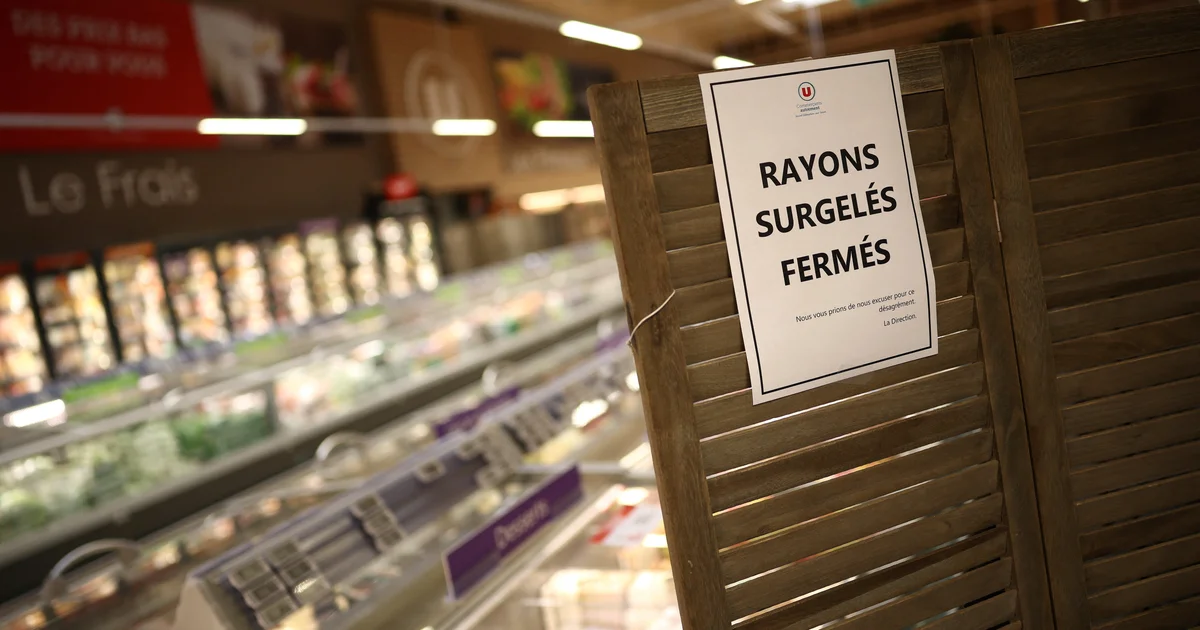
French officials believe Iran was behind nationwide cyber attacks on commercial refrigeration units at hundreds of grocery stores in October, Paris prosecutors said on Monday, accusing a cyber unit of Iran’s powerful Islamic Revolutionary Guard Corps of carrying out the costly attacks. On Tuesday, France’s Foreign Minister said the country “does not rule out anything” in its response to what he called “a terrorist organization that has committed an attack of unprecedented scale and aggression against our country.” The October 11 cyberattack hit major supermarket chains, affecting “700 retail establishments across France,” according to prosecutors, who said the attack caused “significant food spoilage and sparked approximately twenty fires” as temperatures in refrigeration units soared. The attacks on French grocery chains were followed weeks later by similar attacks affecting refrigerators and freezers in supermarkets in Belgium, Luxembourg and Sweden. Another cyberattack targeted several blood banks in France, but products and samples were not damaged. In August, cooling outages at six U.S. military bases triggered an ongoing investigation by the Department of the Army’s Criminal Investigation Division, Thomas Hamilton, the department’s public affairs officer, told CBS News. Hamilton told CBS News this week that the division’s Cyber Field Office was working with French authorities to understand the refrigeration outages in Europe. Officials in France, the United States or other European nations affected by the attacks have not yet claimed that all the incidents were related. In its statement on Monday, the Paris prosecutor’s office said its cybercrime division had opened a judicial investigation into charges including “fraudulent interference with an automated data processing system and causing harm by means dangerous to people, both committed as part of an organized group.” View of the closed frozen food aisle in a supermarket near Nantes after a cyber attack targeted the refrigeration systems of French supermarket chains, causing food losses and fires in several stores, France, October 12, 2026. Stéphane Mahe/REUTERS He said the alleged crimes were “further aggravated by the fact that they were carried out to serve a foreign power, in this case Iran, in addition to participation in a criminal conspiracy to prepare the commission of a serious crime.” (serious crime).” According to the allegations, the investigation targets the leader of an Iranian group known as “Shahid Kaveh,” which prosecutors described as “a cyber offensive unit affiliated with the Islamic Revolutionary Guard Corps Electronic and Cyber Center (IRGC-ECC), as well as his two aides and any other individuals who can be identified.” alerts: Alerts designed to activate when temperatures exceed specific thresholds,” the prosecutor’s office said, adding that the investigation had “discovered an attack methodology characteristic of this [Iranian] “We are going to call the [Iranian] “We won’t just stop at” those measures in response. Barrot called the cyberattack “a major threat to the security of the French people” and said the government was “taking all measures to deter any future attacks.” for the purposes of sabotage on French soil.” In a statement shared on social media last week, the FBI’s cybercrime section said that, along with its partners, it was “observing malicious cyber activity targeting industrial refrigeration and cold chain monitoring systems around the world,” noting that “security weaknesses in unpatched or Internet-accessible controllers may allow attackers to change system settings, potentially causing inventory loss and equipment damage.” and maintain access to systems behind a firewall, in addition to other security measures. There was no immediate response from Iranian authorities to the French prosecutor’s accusations on Monday, but the regime has threatened for months to expand its retaliation for the US-launched war and the ongoing US naval blockade of its ports, using unspecified asymmetric means CBS News’ Karine Barzegar contributed to this report.