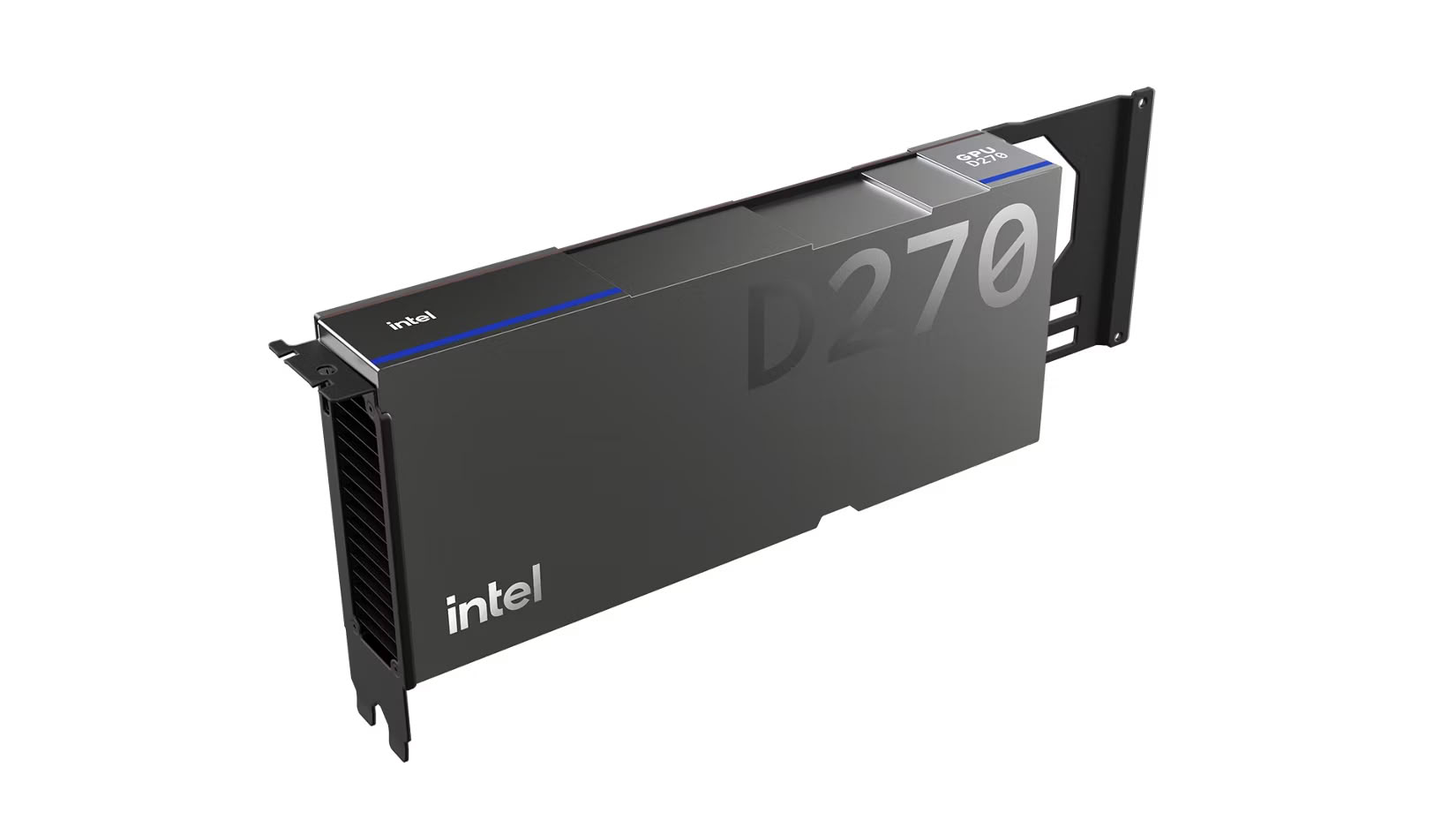
Intel has finally revealed what its “Crescent Island” D-series GPUs will look like, introducing a dedicated AI accelerator in a server form factor after previous projects stalled. The new D-Series GPU features a total of 32 Xe3P cores, 256 XMX engines, 32 MB of unified L2 cache, and up to 480 GB of LPDDR5X memory. Intel rates it for up to 1.3 PetaFLOPS of FP8 performance, with support for formats ranging from FP4 to FP64. Also included is a media engine with four encoders and four decoders, which could help with multimodal workloads where video generation and understanding is a must. The card comes with a 160GB memory configuration out of the box, which is exclusive to Intel-branded “Crescent Island” graphics cards, while the company allows its ODMs to equip the card with up to 480GB of LPDDR5X memory for maximum VRAM capacity. What’s particularly interesting about the Xe3P is its pipeline. The XMX motors have been redesigned from the four-depth systolic design in the regular Xe3 to 16-depth processing in the Xe3P. Additional details include support for the FP4 data format along with FP8, as well as large 1 MB per core register files and 512 KB per core L1 cache. In total, there are 256 Vector engines and 256 of the new XMX engines, each divided into groups of eight per Xe3P core. Additionally, in the Xe3P, there are no graphics processing elements to generate images, as the silicon is designed exclusively for AI inference workloads that require long context and agency tasks. The accelerator is designed as a 350W air-cooled PCIe 5.0 x16 card, allowing it to fit into conventional server infrastructure without the need for dedicated liquid cooling. Intel is also leveraging its common Xe software foundation and support for established AI frameworks to make deployment easier. Customer sampling is underway, but pricing, general availability, and independent performance results have yet to be revealed. Ultimately, the cost per token generated and the maturity of the software will determine whether Series D can compete with established AI accelerator platforms. Intel envisions a single card powering models up to 300 billion parameters in size, with an 8x GPU cluster running billion-parameter models seamlessly.