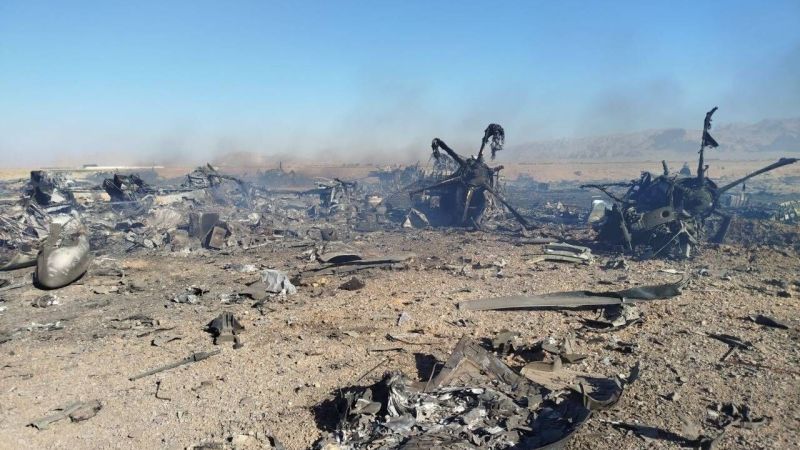
Defense Secretary Pete Hegseth and political appointees in his department pushed to have the two crew members of an F-15 that was shot down over Iran in April participate in Sunday’s highly publicized “60 Minutes” report on the subsequent rescue operation, according to multiple sources familiar with the matter. Both airmen initially expressed reservations about doing the interview, with one even expressing concern about being ordered to participate in the segment, while military officials were also cautious about revealing classified details of the rescue effort, according to three of the sources. Political appointees in Hegseth’s office insisted that both crew members appear for interviews, two of the sources said. But after the two survivors expressed concerns, Hegseth met privately with them and asked if they wanted to participate rather than force their cooperation, sources said. As a result, one of the pilots, nicknamed “Bravo,” agreed to sit in an interview in front of the camera and talk about his experience, while the other, “Alpha,” refused to participate in the “60 Minutes” report. The two crew members have not been publicly identified by the Pentagon and CNN was unable to independently identify them for comment. The episode underscores how Hegseth’s office is working to craft the narrative around the Iran war, which has become increasingly unpopular and puts pressure on the secretary to claim victory. It also shows how Hegseth has played an unusually hands-on role in that effort: He participated in the “60 Minutes” interview planning process much more than is typical for a Secretary of Defense. “This whole story is a complete lie,” chief Pentagon spokesman Sean Parnell said when asked about CNN’s reporting on plans for the segment. “The decision to participate in the interview was up to each pilot, because it is their story,” he added. “As CNN notes, one pilot chose to participate and the other did not. Additionally, the Department took great care to ensure that operational security, sources and methods were protected. To suggest otherwise is to denigrate all members of our military who participated and supported the interview.” Many major media outlets, including CNN, were eager to interview the pilots earlier this year, and media competition was intense. At CBS, producer Keith Sharman, a 25-year veteran of “60 Minutes,” reached out to former U.S. military contacts on the day of the rescue to begin conducting an interview. The lobbying effort reached the top. Shortly after the rescue, CBS News editor-in-chief Bari Weiss told reporters in her newsroom that the crew members’ bookings were “top priorities” and she personally pressured Hegseth to give CBS exclusive access, three network sources said. Weiss also reached out to other Trump administration officials. Hegseth and his staff members were excited to broadcast a dramatic retelling of the incident with both crew members, three of the sources familiar with the episode’s production said. But the process still lasted several months. Sharman and correspondent Norah O’Donnell, who ultimately got the interview, originally pitched a story for the previous season of “60 Minutes,” which ended in May. CBS was then consumed by internal conflicts. Weiss ousted several “60 Minutes” correspondents and producers and named a new executive producer, Nick Bilton, sparking weeks of critical news coverage. With Weiss and Bilton under pressure to prove that the new version of “60 Minutes” would continue to offer exclusive and hard-hitting reporting, the meeting with team members was even more valuable for CBS. A CBS spokesperson declined to comment for this story. The Pentagon, regardless of the political party in power, has historically worked to frame the narrative of incidents of military heroism; There is even an office created specifically to work with Hollywood productions. But pressure for more details during an ongoing campaign worried military officials, according to three sources. Sunday’s program was billed as the inside story of the American rescue operation that extracted the two F-15 crew members from Iran. The plane’s pilot was found hours after the plane was shot down by Iranian forces. But the second crew member, a weapons systems officer, spent more than a day evading capture by invading Iranian forces. At one point, he climbed the rugged terrain to a ridge 7,000 feet above sea level, equipped with little more than a pistol, a communications device, and a tracking beacon. The airman was rescued by a team of American commandos, accompanied by American planes dropping bombs to clear the area. That crew member decided to show up for an interview after Hegseth gave the two the option of participating or not. The pilot refused. Uniformed service members have expressed concern that the presentation of “60 Minutes” is an effort by Hegseth’s office to use the heroism demonstrated by U.S. troops as part of a successful rescue operation for political purposes, two of the sources said. In addition to concerns that the aircrew was hesitant to participate in the CBS report, military members were also wary of revealing classified details of the rescue mission itself, particularly while U.S. forces are still engaged in active combat operations against Iran, multiple sources added. But political appointees within Hegseth’s office insisted that the interview take place despite reservations expressed by the military about the chain of command, sources told CNN. Gen. Dan Caine, chairman of the Joint Chiefs of Staff, shared some concerns about the possibility that the “60 Minutes” interview could, even inadvertently, reveal military tactics to the enemy, but decided to participate in the segment anyway, according to one of the sources familiar with the production process. A spokesman for Caine, Joseph Holstead, said he would not “comment on agenda-driven sources, nor on characterizations from anonymous sources, other than to reiterate that the story here remains that the Joint Force will do everything possible to ensure that no one is left behind.” A key part of Weiss and the CBS team’s speech to the Pentagon involved the enormous platform of “60 Minutes,” the most-watched news program on American television. After the impact of the summer layoffs passed, Bilton and the remaining staff faced the deadline of Sept. 13, the date of the first scheduled episode of the new season of “60 Minutes.” Weiss and Bilton hoped to have the Iran rescue story for the season premiere. But within CBS, the pilot interview wasn’t confirmed until mid-July, and even then, there was a chance it could fall through. The meeting was recorded in mid-August. Early in the interview, Weiss relied on a past connection he had with Hegseth, whom he personally booked for an interview with CBS on the day in January that U.S. forces captured former Venezuelan President Nicolas Maduro and his wife. One of the CBS sources said Weiss tried to leverage his relationship with Hegseth to pursue the airmen’s story. Bilton also spoke with sources at Hegseth and Washington in an effort to secure the interview. She remained in contact with Hegseth as the episode unfolded, two sources said. Inside the Pentagon, Tami Radabaugh, who worked as Hegseth’s television producer at Fox News before moving with him to the Defense Department as a senior adviser, was primarily responsible for orchestrating the “60 Minutes” presentation, sources said. Hegseth himself gave a rare interview for the “60 Minutes” broadcast, according to a preview clip posted by CBS. The first preview of the network’s segment showed “Bravo” sitting silently as O’Donnell asked him, “Did you ever have any doubt that the American military would come for you?” Then the narrator intoned: “Amigo 44 Bravo. For the first time. ’60 Minutes’, new season, CBS Sunday.”