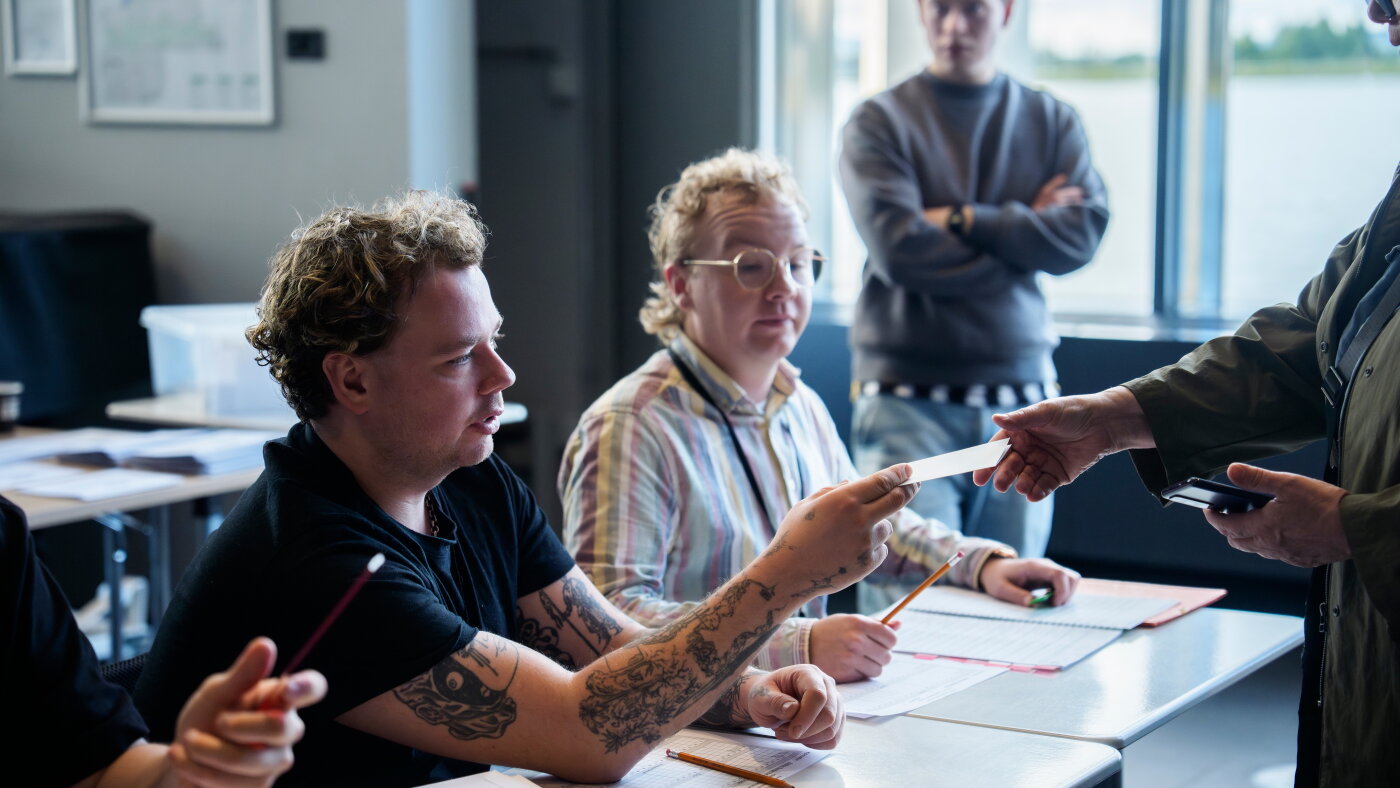
A poll worker helps a voter at a polling station inside City Hall in Reykjavik, Iceland, Saturday, Aug. 29, 2026. Marco Di Marco/AP hide caption toggle caption Marco Di Marco/AP Voters in the small Nordic nation of Iceland cast their votes Saturday on whether to restart talks for the country to join the European Union. Polls closed at 10:00 p.m. local time and early results indicate an extremely close race, according to RÚV, Iceland’s broadcaster. Hours after the last votes were cast, the “yes” camp was leading by a narrow margin, it reported. This is not the first time Iceland has considered joining the EU. The government was in talks with the EU in 2013. Iceland had just emerged from a banking collapse after the global economic crisis. The talks stalled in part because Icelanders worried about losing sovereign control over their fisheries, their biggest export. If the “yes” vote wins, the country does not automatically become a member of the EU. Negotiations with Brussels would be reopened and, if an agreement is reached, there would be a second referendum on whether Iceland should join the economic pact. “This is a good day,” Prime Minister Kristrún Frostadóttir told a journalist outside a polling station in the capital of Reykjavik on Saturday. “We have reached the point where this is in the hands of the nation. Either we enter into these negotiations, look for a good agreement and then see what happens, or we leave aside the discussion about the European Union, at least for the moment.” Frostadóttir has led a pro-EU coalition government since the end of 2024. In a July interview with The Rest is Politics, a leading British podcast, he said the country already complies with 75% of EU rules. “Joining is not going to sink the country and joining is not going to fundamentally change every aspect of the Icelandic economy,” the prime minister said. But many in the country with a population of just 400,000 fear being drowned out by the other 27 nations in the economic pact. There are concerns that if Iceland becomes part of the EU, in addition to fishing limits, it would have to change its currency, the Icelandic krona, to the euro and join a single market.