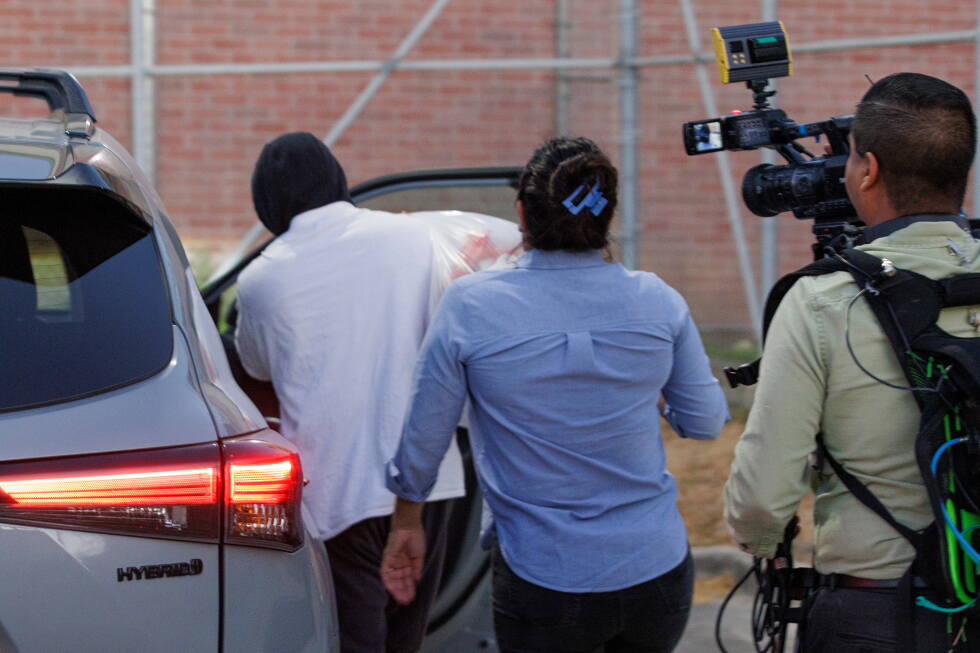
BROWNSVILLE, Texas (AP) — The release of an Immigration and Customs Enforcement officer from a Texas jail on Thursday despite Minnesota’s request for his return could set a dangerous precedent, increasing friction between states and helping criminal defendants avoid justice, legal experts said. Christian Castro was released from a detention center in Brownsville after Texas Governor Greg Abbott refused to immediately sign his extradition order. A federal judge also refused to block Castro’s release or order Abbott to sign the order. Minnesota officials say they believe Castro may flee to Mexico to avoid prosecution on charges that he shot a man and lied about it during an immigration crackdown in Minneapolis in January. Extradition from Mexico would require action by the Trump administration, which opened an investigation into Castro’s actions but has also argued that ICE agents have “absolute immunity” for their actions on duty. The confrontation between the two states is very unusual. Under federal law, states have little discretion to reject extradition requests from other states. Thousands of fugitives are sent to other states each year as a matter of routine. But Abbott, a Republican, said last week that he would not respond to Minnesota’s extradition request, citing the ongoing investigation into fraud in government social services programs in the state, which President Donald Trump used to justify his immigration crackdown there. The decision is alarming because it injects politics into the extradition process, said Marsh Halberg, a criminal defense attorney and former Minnesota prosecutor. “Something that has been a routine process can now become a political card,” he said in a telephone interview. In recent months, California and New York have rejected extradition requests from Louisiana for doctors accused of mailing abortion pills. But jurists say those cases are different because the doctors were not in Louisiana and never fled the state and became fugitives. Under federal law, the governors of New York and California had no duty to turn over the doctors, Georgetown University law professor Stephen Vladeck wrote on Substack. “Abbott just refuses to do his,” he said. Subscribe to Morning Wire: Our flagship newsletter breaks down the day’s biggest headlines. An email sent to Abbott’s office was not immediately returned, but he wrote in a Wednesday post on social platform X that Minnesota lawyers were not aware of the law. Castro is charged in Minnesota with assault and false reporting of a crime in the Jan. 14 shooting of 24-year-old Julio Cesar Sosa-Celis. Prosecutors in Hennepin County, where the county attorney is a Democrat, say he fired a gun through the front door of a Minneapolis home, shooting Sosa-Celis in the leg, and then falsely accused Sosa-Celis and another man of attacking an ICE officer with a broom handle and a snow shovel. altercation. “Upon conclusion of the investigation, officers may face disciplinary action, including termination of employment, as well as possible criminal prosecution,” the DHS statement said. After a Minnesota judge issued a national arrest warrant for Castro in May, authorities, including the Minnesota Bureau of Criminal Apprehension, arrested him in Texas’ Cameron County on May 29. Minnesota authorities have since requested his extradition, but he remained in custody in Brownsville, a city bordering Mexico. Under Texas law and barring extradition, Castro had to be released on Thursday after 90 days of detention. Although he is free, he remains a fugitive subject to arrest in Minnesota and other states. Abbott has exposed one of several loopholes in extradition laws that will likely lead to more conflicts between states in the future, said Ethan Lowens, a fellow at the University of Pennsylvania Carey Law School. Texas lawyers have argued that Abbott’s extradition decision is still pending, pending the outcome of an internal state investigation that considers whether Castro was legally a fugitive. U.S. District Judge Fernando Rodriguez Jr. wrote Wednesday that the court could not intervene without a final ruling from Abbott. Minnesota had asked him to force Castro’s extradition. Lowens said other governors could make similar arguments to avoid extradition requests they oppose. As states diverge on laws on abortion, gender-affirming health care and other issues, he said he expects such extradition conflicts to “emerge more and more.” ___González reported from McAllen, Texas, and Thanawala from Atlanta. Associated Press writer Kathy McCormack in Concord, New Hampshire, contributed to this article.___This article was corrected to correct Governor Abbott’s spelling in a reference.