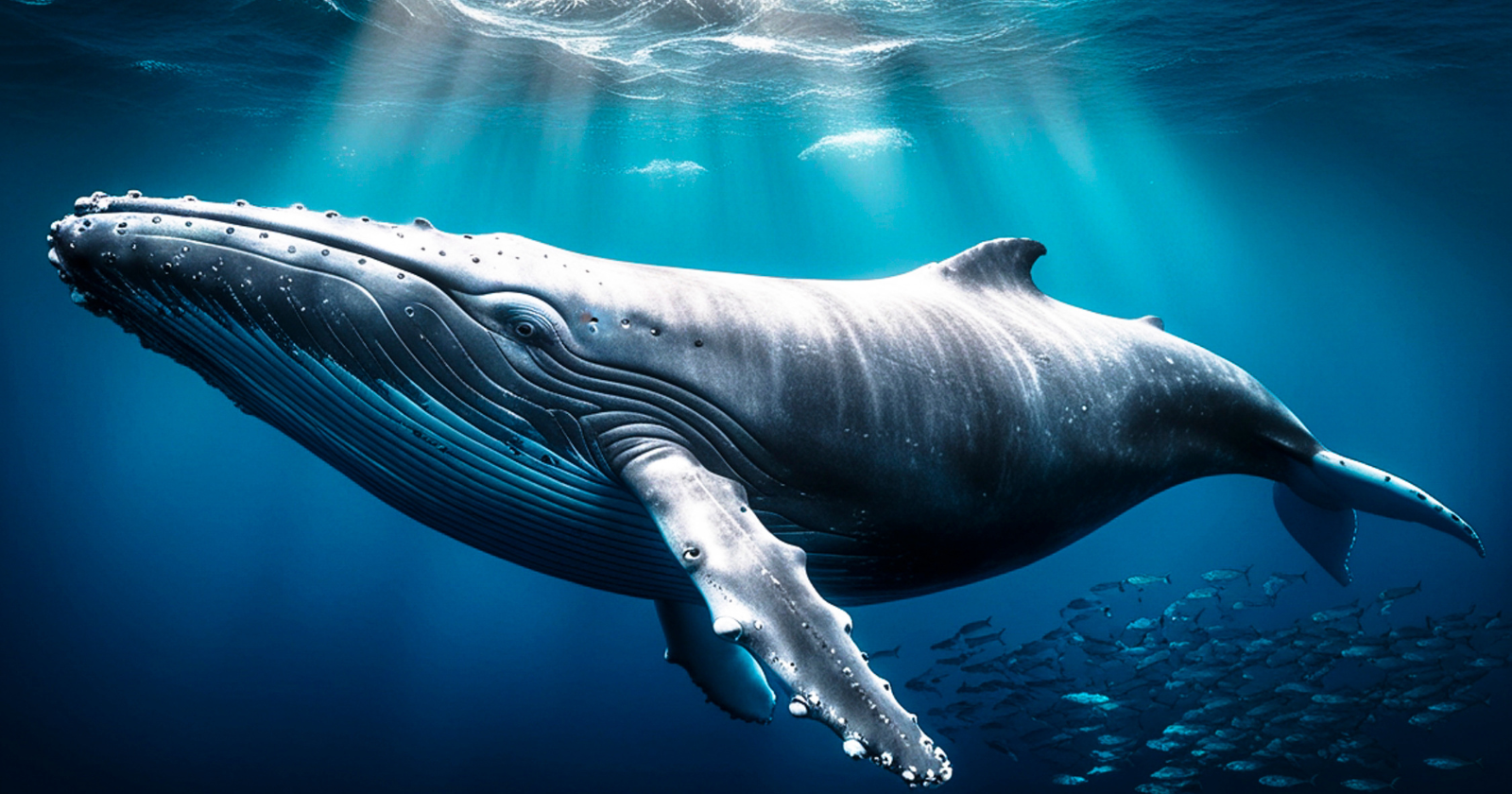
It’s not a story anyone would have believed if it weren’t so thoroughly documented. A pod of orcas in Antarctica is chasing a Weddell seal that has taken refuge on a small ice floe. The killer whales swim shoulder to shoulder to create a wave that drags the seal from the ice to the water. Death seems certain. And then, without warning, a pair of humpback whales arrive. The panicked seal swims towards them. A wave tosses him onto the chest of the nearest humpback, which at this point is rolling face up on the surface. The humpback arches its chest out of the water to keep the seal high and dry, out of reach of the frustrated killer whales circling below. When the seal begins to slide, the humpback gently pushes it towards its chest with a flipper. The seal eventually escapes onto another ice floe. The orcas, denied food, swim away. The marine ecologist who observed this in 2009 was, by his own later account, so baffled that it took him years to discover what he had actually seen. And what he ended up finding, once he started asking other researchers if they had witnessed something similar, was that it wasn’t something isolated. It’s a pattern. And these are species that humpbacks have no obvious reason to help. What the researchers actually documented According to a 2017 review article by Dr. Robert Pitman of NOAA’s Southwest Fisheries Science Center, with Volker Deecke, Christine Gabriele, and eleven other co-authors from research institutions around the world, published in Marine Mammal Science under the title “Humpback Whales Interfere When Mammal-Eating Orcas Attack Other Species: Mobbing Behavior and Altruism?” interspecific?”, the team compiled 115 documented interactions between humpback whales. whales and orcas over a sixty-two year period, from 1951 to 2012. Interactions came from researchers, whale watching operators, and wildlife photographers in multiple ocean basins. The numbers, once you sit down with them, don’t behave at all as you would expect. In 57 percent of the interactions, the humpbacks were the ones who initiated the process. They swam toward the orcas, not away. Ninety-five percent of the orcas involved were forms that fed on mammals rather than fish, meaning that the humpbacks reliably distinguished between the two ecological populations and only intervened when the orcas hunted warm-blooded prey. And in the interactions in which humpbacks approached orcas that were actively attacking something, 87 percent involved a kill or hunt in progress. If you like learning about the weird and wonderful facts about our animal kingdom, check out the video we made on the invisible wall that only elephants can see: What made the article really surprising is what happened next. When humpbacks arrived at the scene of an attack, only 11 percent of the time the prey was another humpback. The other 89 percent of the time, the orcas hunted something completely different. A seal. A sea lion. A porpoise. A gray whale calf. A minke whale. A sunfish. Across the entire data set, humpbacks were documented to interfere with killer whale attacks on ten different species, including six types of pinnipeds, three other cetacean species, and one bony fish. The interventions were not casual. The humpbacks traveled up to two kilometers to reach an attack in progress. They came roaring and bellowing. They positioned themselves between the orcas and the prey. They cut the queue. They hit the orcas with their fins, which on a fourteen-meter humpback are capable of causing real damage. In some cases they stayed for hours, refusing to leave until the orcas gave up. In one incident in Monterey Bay in May 2012, described in a National Geographic report on the specific case, at least fourteen humpback whales converged on a group of orcas that had killed a gray whale calf and spent hours preventing the orcas from feeding on the carcass. A humpback stood directly next to the dead calf, with its head pointed toward it and docking its tail whenever an orca approached. None of this makes obvious sense. Why they might do it, and why no one is quite sure The problem, on any simple reading of animal behavior, is that helping unrelated members of other species carries real costs and no obvious benefits. Humpbacks expend energy in the intervention. They put themselves at some risk, although adult humpbacks are large enough that orcas rarely attempt to attack them directly. They give up whatever they were doing before the fight broke out. And the animal whose life they end up saving has no way to return the favor. Gray whale calves do not grow up to rescue humpback whales. The seals don’t remember. Sunfish do not participate, in any meaningful sense, in a reciprocal ecosystem of mutual aid. Pitman’s own explanation, as expressed in an interview with Science Magazine at the time the article was published, is that humpbacks are probably not doing this deliberately in the sense we normally understand by that word. Their hypothesis is that they have developed a very simple rule. Something like: when you hear an orca attack, go and harass it. The rule almost certainly developed as a defense of humpback calves, because mammal-eating killer whales sometimes prey on young humpbacks, and intervening adult humpbacks can drive them away. Over evolutionary time, the humpbacks that intervened saved more offspring and left more offspring. The rule was set. What the rule does not do, in Pitman’s reading, is distinguish between an attack on a humpback calf and an attack on anything else. The humpback hears the orcas chasing their prey. The humpback is going to break it. If the prey turns out to be a seal or gray whale calf, so be it. The humpback has already committed to the intervention when it arrives, and the underlying behavioral rule has no subroutine to retreat once the species involved turns out to be unrelated. Which, if accepted, is a genuinely deflationary explanation. It is not altruism in the noble sense. It is a simple decision rule that produces seemingly altruistic results because the rule was never sophisticated enough to distinguish who was worth saving and who was not. Some researchers find that explanation completely satisfactory. Others don’t. Alisa Schulman-Janiger, one of Pitman’s co-authors, has suggested that some individual humpbacks involved have been attacked by orcas in the past and may be responding to something closer to remembered trauma than a simple fixed rule. Others have noted that the level of coordination in some interventions, particularly the Monterey Bay incident with fourteen humpback whales arriving from different directions, is difficult to explain by a rule that is activated only by hearing the acoustic signature of an orca. And Pitman himself has admitted that the possibility of something like involuntary altruism, in which humpbacks have no intention of helping but end up doing so as a byproduct of a behavioral rule, doesn’t quite rule out the possibility that something closer to intention is also in the mix. The actual conclusions of the article are unusually careful. According to the text of the article, interspecific altruism cannot be ruled out. Which does not mean that humpbacks are behaving altruistically towards other species. It is claimed that after 115 documented interactions over sixty-two years, the researchers were unable to clearly reduce the pattern to a simpler explanation. Something is happening out there. It looks a lot like a species deciding, reliably and at a cost to itself, to help members of other species who have nothing to offer in return. Whether that is the same thing that humans mean when they use the word altruism is a question that no one, based on current evidence, can answer. Kiran Athar writes about the ordinary corners of the natural world where science and questions of meaning intersect. This article is based on peer-reviewed research in Marine Mammal Science and contemporary coverage in Science Magazine and National Geographic.